Studio: 20th Century Fox
Running time: 248 minutes
Cleopatra (1963)
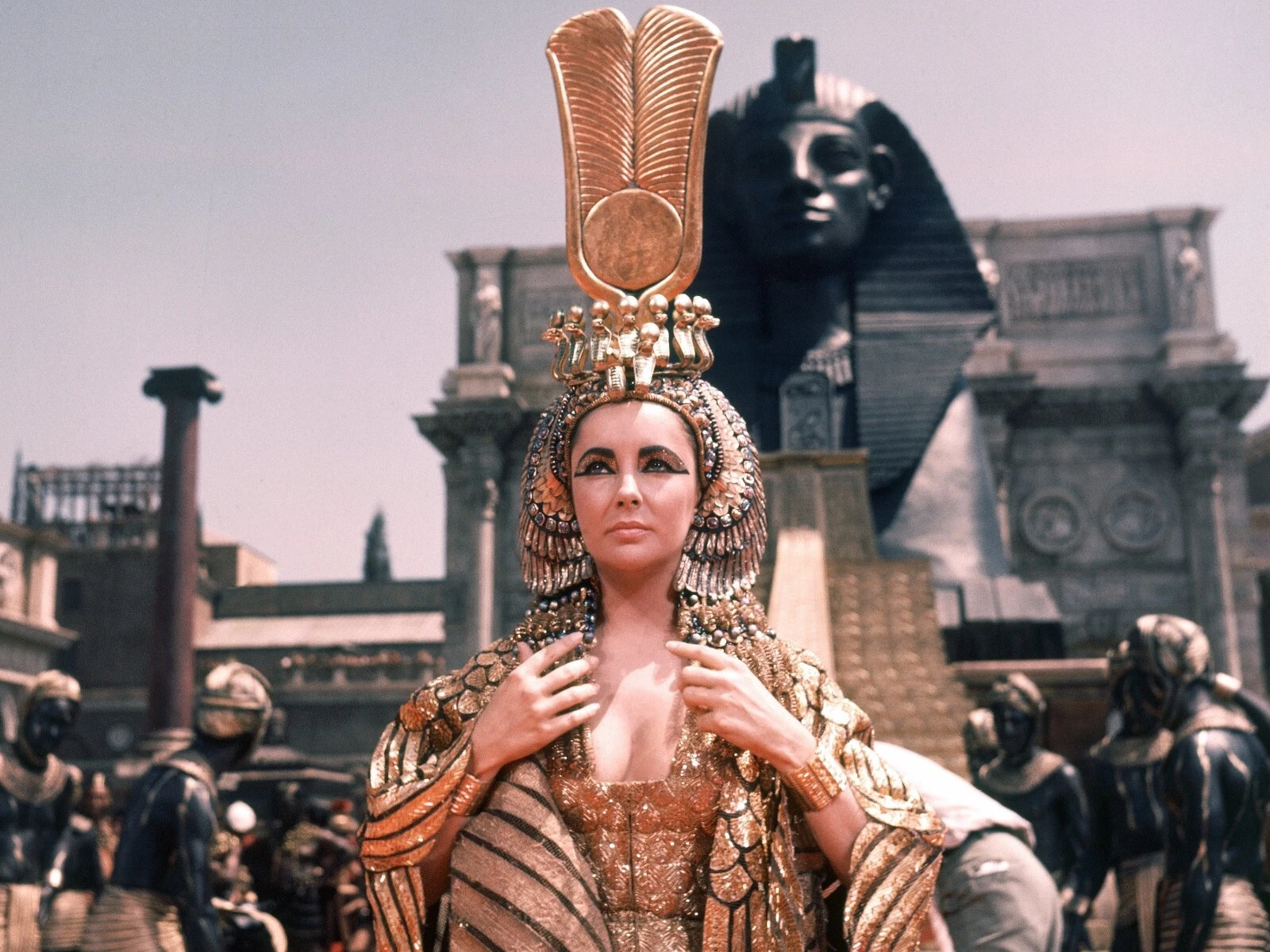
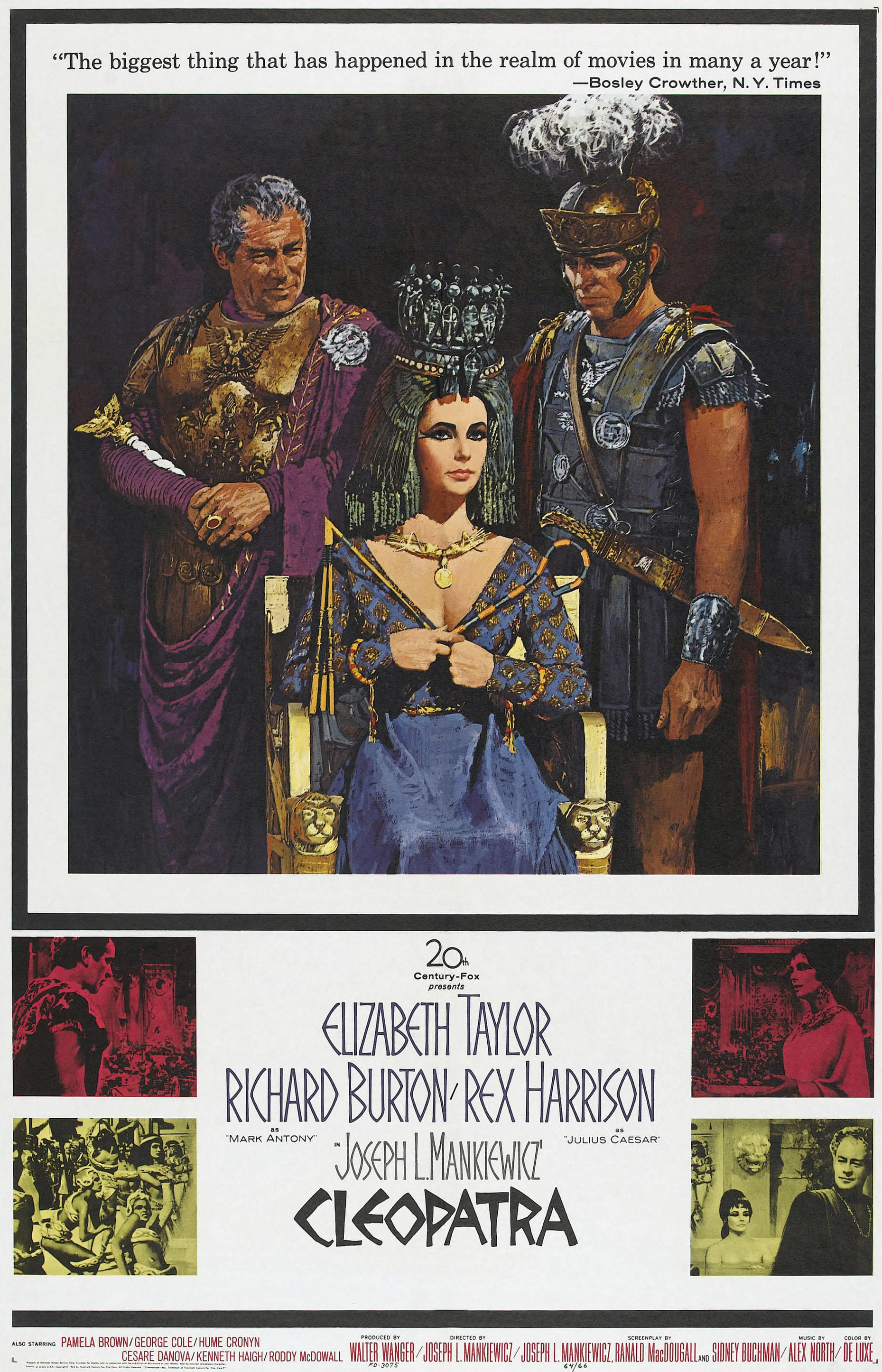
“Elizabeth Taylor, Richard Burton and Rex Harrison star in this sweeping tale of power and betrayal—the legendary story of the Queen of the Nile and her conquest of Julius Caesar and Marc Antony. Here is the truly unforgettable portrayal of the beguiling beauty who seduced two of Rome’s greatest soldiers and changed the course of history. Breathtaking in scope and grandeur, the picture won Oscars for cinematography, art direction, costumes, sets and special effects.” [From the DVD]
Cast
Cleopatra: Elizabeth Taylor
Mark Antony: Richard Burton
Julius Caesar: Rex Harrison
High Priestess: Pamela Brown
Flavius: George Cole
Sosigenes: Hume Cronyn
Apollodorus: Cesare Danova
Brutus: Kenneth Haigh
Octavian: Roddy McDowall
Rufio: Martin Landau
Agrippa: Andrew Keir
Germanicus: Robert Stephens
Eiras: Francesca Annis
Pothinus: Gregoire Aslan
Ramos: Martin Benson
Theodotos: Herbert Berghof
Phoebus: John Cairney
Lotos: Jacqui Chan
Charmian: Isabelle Cooley
Achilles: John Doucette
Canidius: Andrew Faulds
Cimber: Michael Gwynn
Circero: Michael Hordern
Cassius: John Hoyt
Euphranor: Marne Maitland
Casca: Carroll O’Connor
Ptolemy: Richard O’Sullivan
Calpurnia: Gwen Watford
Decimus: Douglas Wilmer
Queen at Tarsus: Marina Berti
High Priest: John Karlsen
Caesarion (age four): Loris Loddi
Octavia: Jean Marsh
Marcellus: Gin Mart
Mithradates: Furio Meniconi
Caesarion (age twelve): Kenneth Nash
Caesarion (age seven): Del Russel
Valvus: John Valva
Archesilaus: Laurence Naismith
First Officer: John Alderton
Second Officer: Peter Forster
Crew
Director: Joseph L. Mankiewicz
Producer: Walter Wanger
Screenwriters: Joseph L. Mankiewicz, Ranald MacDougall, and Sidney Buchman
Based upon Histories by: Plutarch, Suetonius, and Appian, and The Life and Times of Cleopatra by C. M. Franzero
Cinematographer: Leon Shamroy
Second Unit Photographers: Claude Renoir and Pietro Portalupi
Production Designer: John De Cuir
Art Directors: Jack Martin Smith, Hilyard Brown, Herman Blumenthal, Elven Webb, Maurice Pelling, and Boris Juraga
Set Decorators: Walter M. Scott, Paul S. Fox, and Ray Moyer
Special Photographic Effects: L. B. Abott and Emil Kosa, Jr.
Choreographer: Hermes Pan
Musical Score: Alex North
Editor: Dorothy Spencer
Miss Taylor’s Costumes: Irene Sharaff
Additional Costumes: Vittorio Nino Novarese
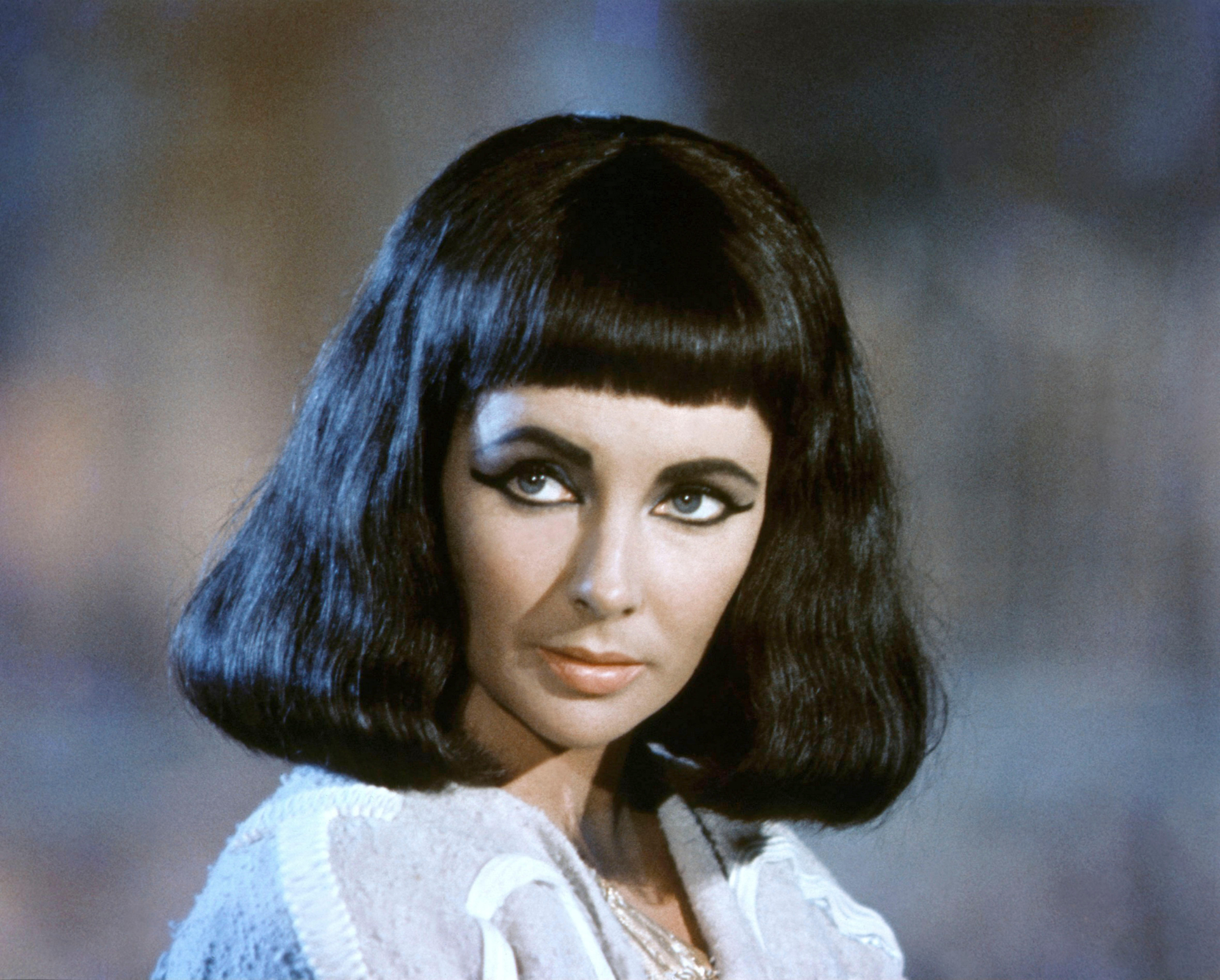
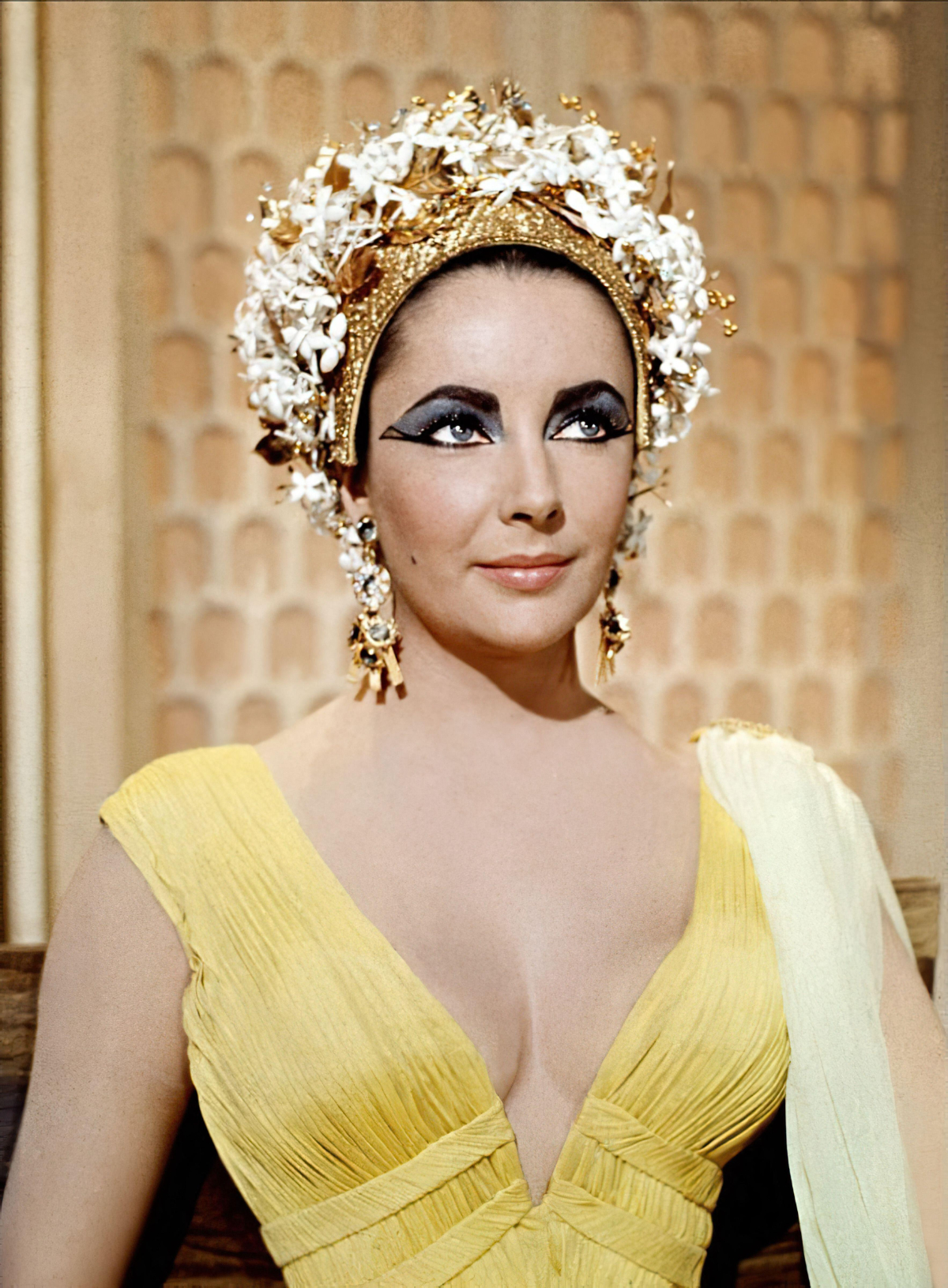
Miss Taylor’s Hairstyles: Vivienne Zavitz
Did You Know?
Pre-Production
Veteran producer Walter Wanger long dreamed of bringing the story of the fabled Queen of the Nile to the big screen and believed there was only one actress who possessed the necessary qualities: Elizabeth Taylor. “She is the only woman I have ever known who has the necessary youth, power, and emotion.”
“If someone’s dumb enough to offer me a million dollars to make a picture, I’m certainly not dumb enough to turn it down.” —Elizabeth Taylor
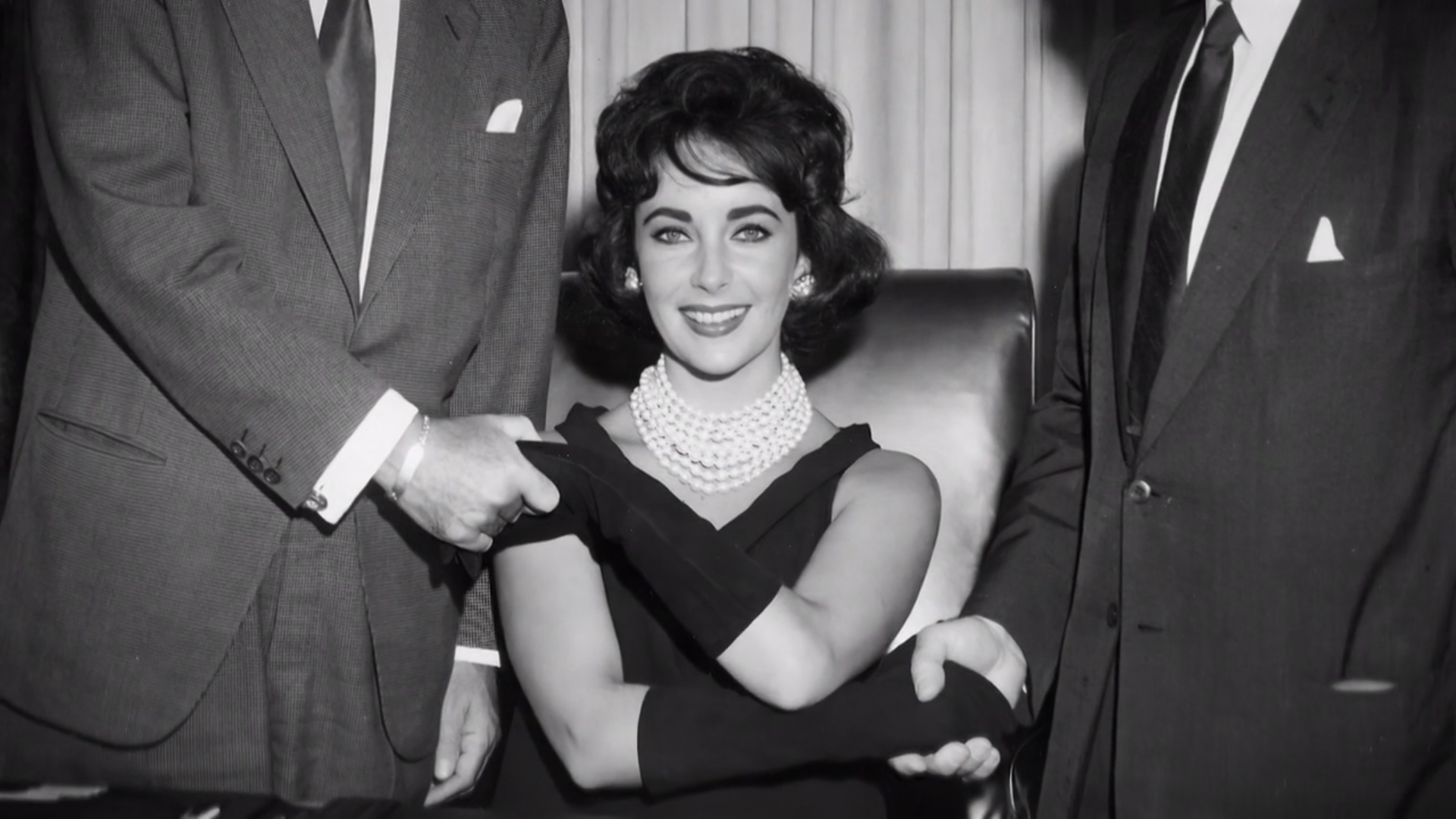
On September 1, 1959, Elizabeth agreed to make Cleopatra for a then an unheard-of one million dollars and 10 percent of the film’s absolute gross, making her the highest-paid film star in the world.
“I was in the bathtub and I yelled the figure out through the door to my assistant,” she recalled. “I said, ‘Yeah, for a million bucks and ten percent of the gross.’ They came back and said okay and I just let out a yell and sort of went under the water screaming.
“That’s how the first million dollars in films was made. It was a joke.”
But what was no joke was how Elizabeth shrewdly negotiated her record-shattering contract, which ultimately saw her walk away with a mind-boggling $7 million dollars. Let’s go behind the scenes. Fox agreed to pay her $125,000 per week for sixteen weeks, and then $50,000 each week if the film was to go into overtime (which it did, big time). She also received $3,000 a week for living expenses, 10% of the film’s absolute gross, and other various perks.
Elizabeth’s record-breaking contract helped usher in a new era of star power, where the stars called the shots, not the studios.
Elizabeth’s contract also stipulated that the film be shot using Todd-AO. Developed by her late husband, Mike Todd, Todd-AO produced a crystal clear, highly resolved widescreen image. Other classic films shot in this format include Oklahoma! (1955), South Pacific (1958), The Alamo (1960), The Sound of Music (1965), Doctor Dolittle (1967), Hello, Dolly! (1969), and, of course, Mike’s own iconic Best Picture Academy Award winner Around the World in 80 Days (1956).
Production
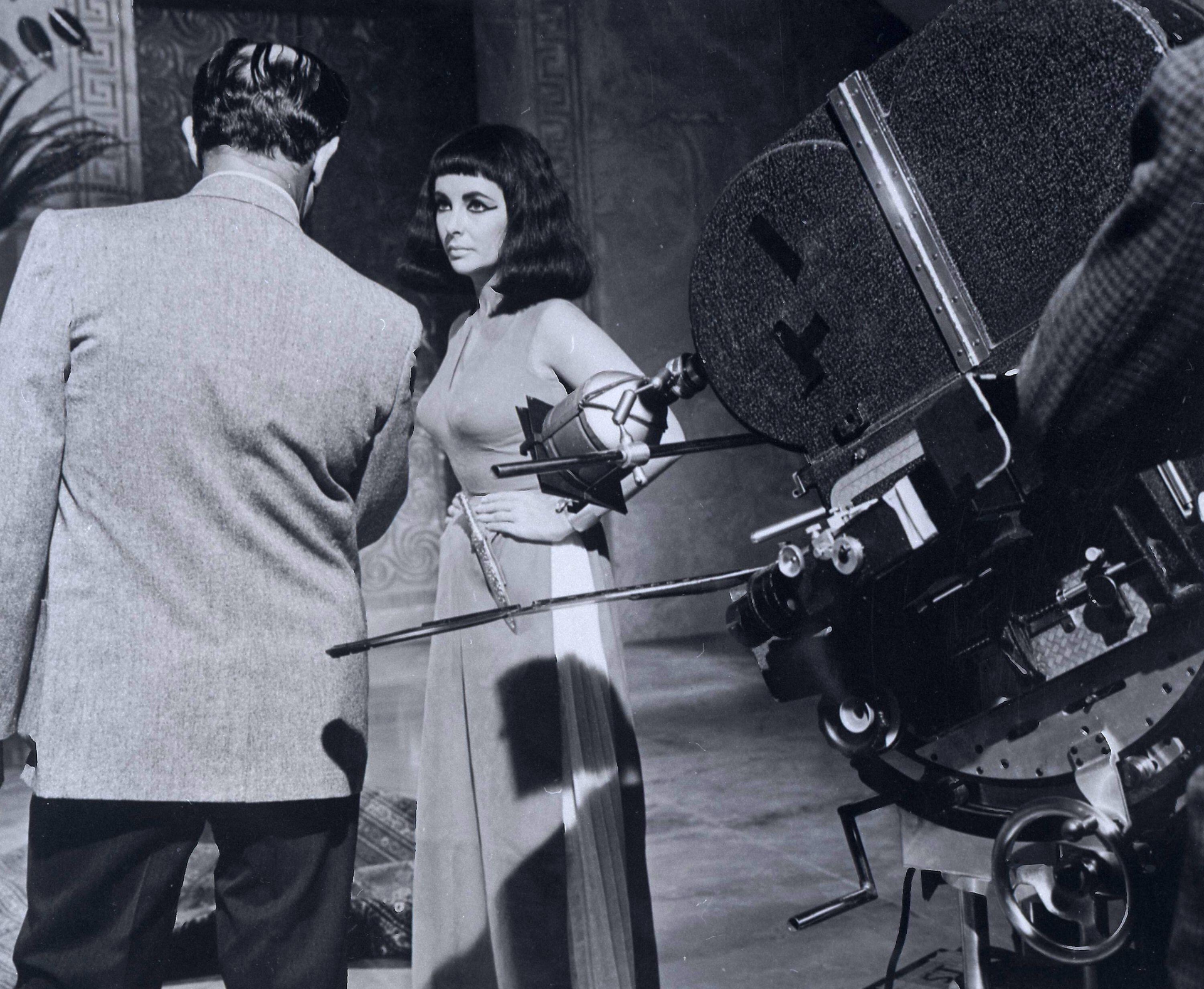
Cleopatra went through a number of changes, both in front of and behind the camera. Veteran director Rouben Mamoulian was originally at the helm of the film, and Elizabeth was set to star opposite Stephen Boyd (Mark Antony), Peter Finch (Julius Caesar), and Keith Baxter (Octavian). Filming had been underway at England’s Pinewood Studios for more than three and a half months when Mamoulian resigned and was replaced by Joseph L. Mankiewicz, who had directed Elizabeth to an Oscar nomination a few years earlier in Suddenly, Last Summer (1959). After she nearly died of pneumonia in London in March 1961, it was decided that filming would move to Cinecittà Studios, outside Rome. And in a twist of fate that would shape Elizabeth’s destiny, the roles of Antony, Caesar, and Octavian would instead be played by Richard Burton, Rex Harrison, and Elizabeth’s old friend Roddy McDowall.
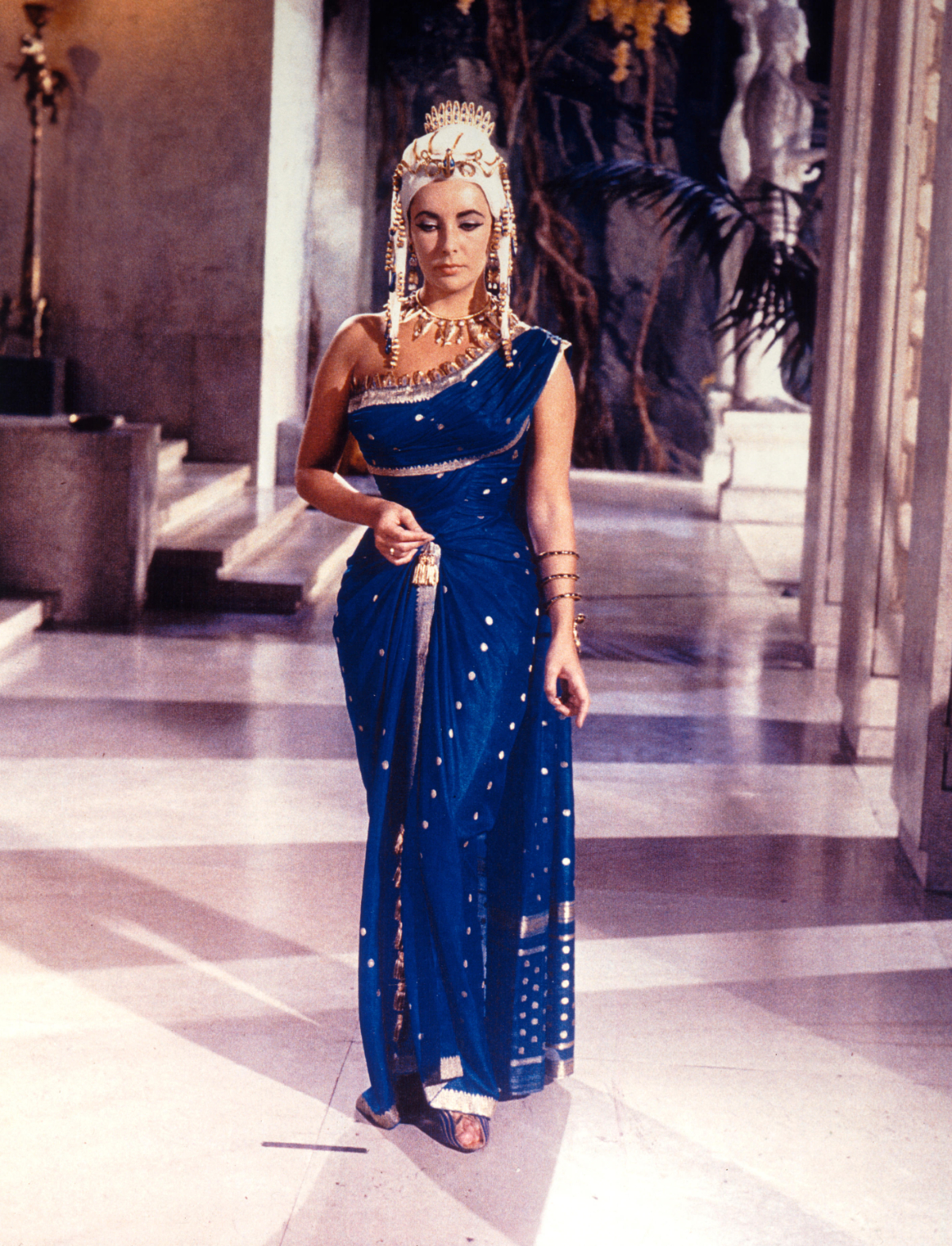
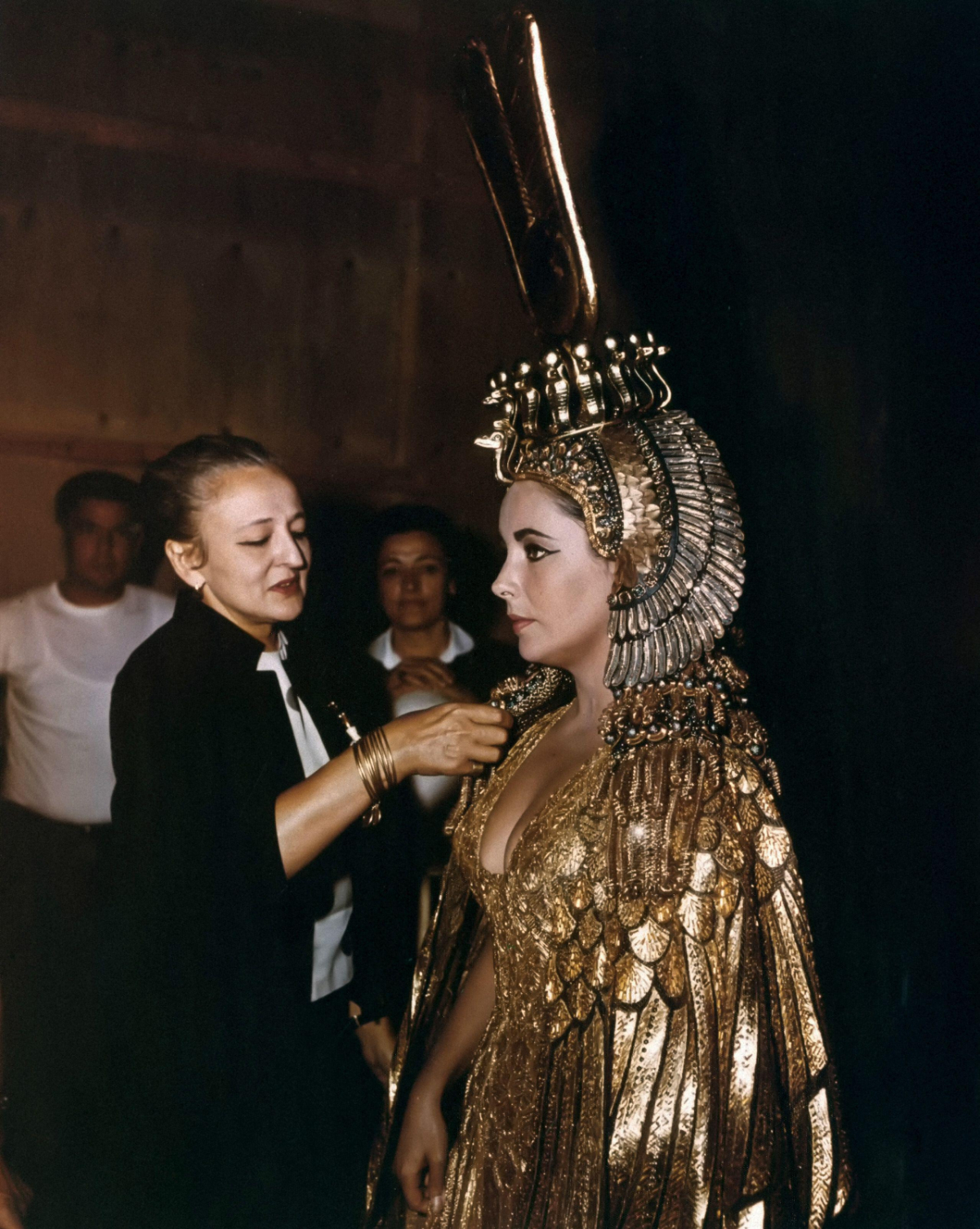
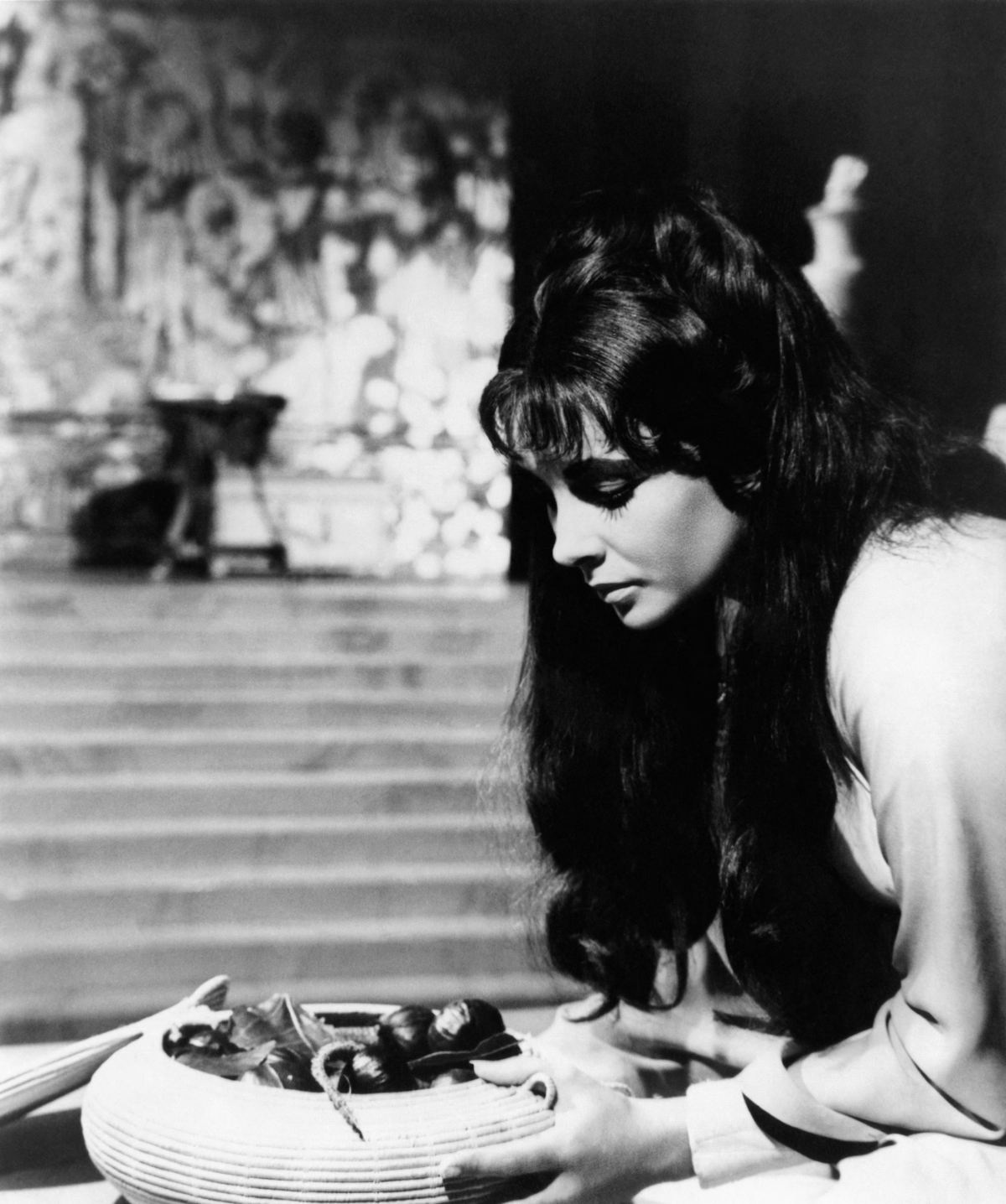
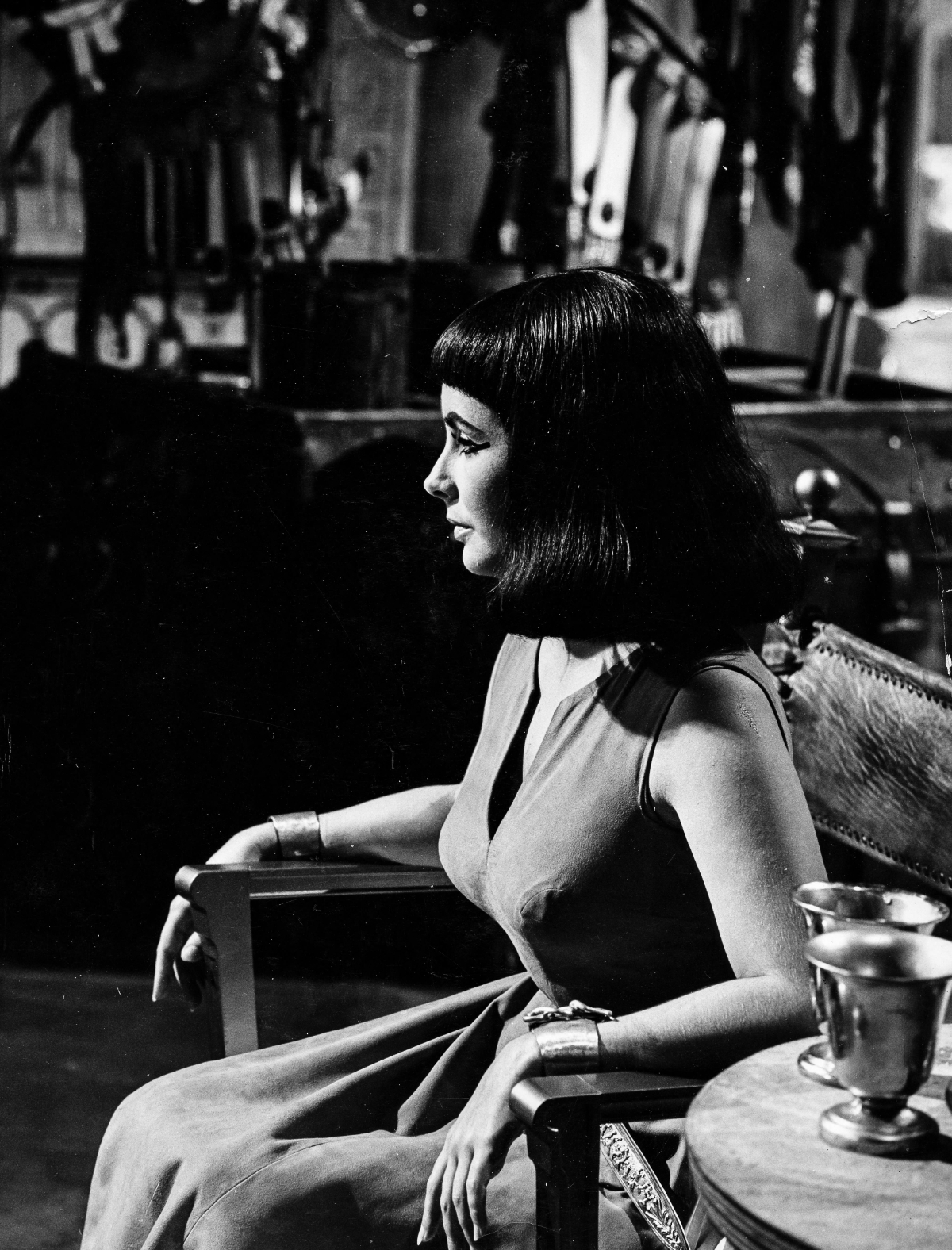
Irene Sharaff’s costumes for Elizabeth Taylor in Cleopatra (65 changes appear on screen—a Guinness World Record held for years), were some of the most iconic and influential in film history. It earned her an Oscar for Best Costume Design, Color, which she shared with the film’s other two designers, Vittorio Nino Novarese and Renié. However, Sharaff wasn’t the first designer assigned to create Elizabeth’s wardrobe in the film. The legendary Oliver Messel, who had designed Vivien Leigh’s costumes for Caesar and Cleopatra (1945), was brought on to create Elizabeth’s costumes, wigs, and elaborate headdresses.
Elizabeth was “enthusiastic” about Messel, who she had previously worked with on Suddenly, Last Summer (1959). Messel was that film’s production designer and uncredited costume designer, responsible for imagining its Southern gothic atmosphere, including cousin Sebastian’s primeval garden. However, when production on Cleopatra was shut down and moved from England to Rome, Messel was replaced by Sharaff in April 1961. Sharaff would repurpose several of Messel’s headdresses, but would otherwise start from scratch as Mankiewicz rewrote the script.
“Irene Sharaff, who had many successful films and Broadway shows to her credit, and who had a rapport with Elizabeth Taylor, was called in to replace Oliver,” explained Stanley Hall, who made the wigs dreamt up by Messel. “She redesigned every costume and reshaped every wig. I don’t think her task was easy, but she bore it with great style and dignity.”
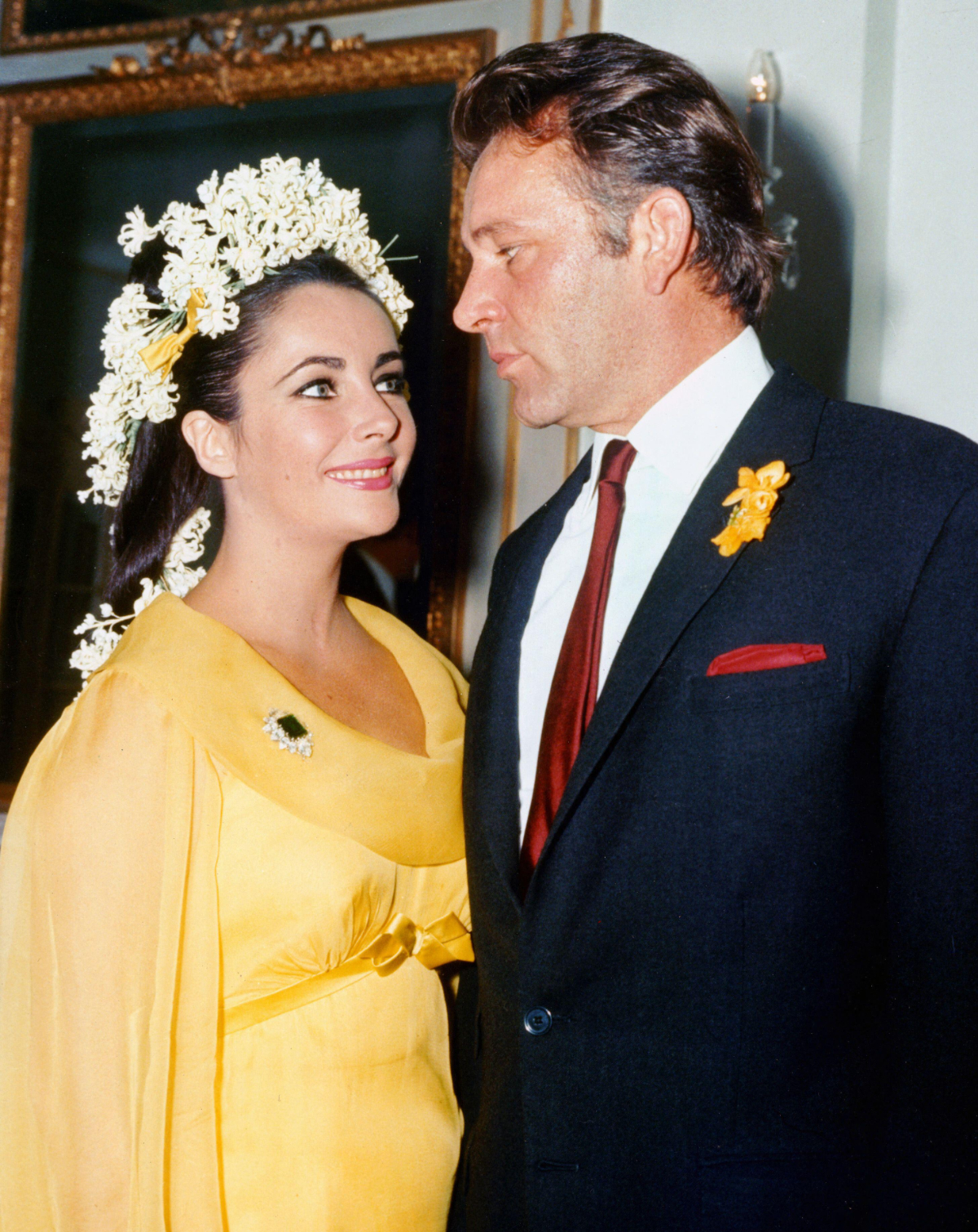
Cleopatra was the beginning of a beautiful partnership between Elizabeth and Sharaff. Sharaff would go on to design Elizabeth’s costumes for The Sandpiper (1965), Who’s Afraid of Virginia Woolf? (1966), and The Taming of the Shrew (1967), and of course the dress she wore for her 1964 Montréal wedding to Richard Burton. The colour of the wedding dress was inspired by the costume Sharaff had designed for Elizabeth to wear when Cleopatra hosts the Roman senate.
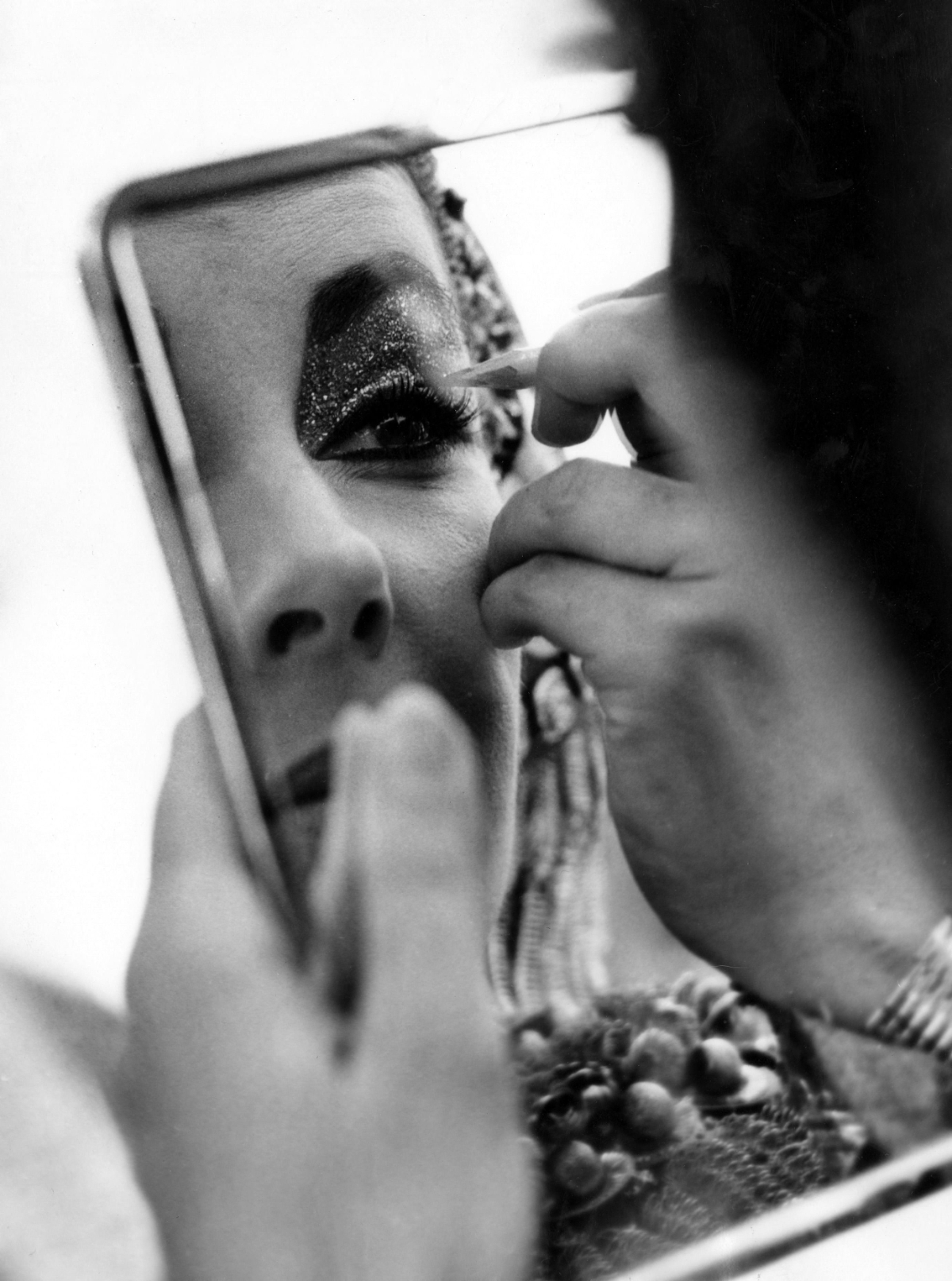
Elizabeth’s eye makeup in this film set a fashion for years to come, and still resonates to this day. She applied her own makeup during the production of this, and many other, iconic films. As she explained to designer Michael Kors in a 2006 interview for Harper’s Bazaar: “Alberto De Rossi prepared the sketches, but his back went out before filming began, and he had to have surgery. I had studied his techniques, so I copied what I had seen him do. When I was younger, for a long time I didn’t wear any makeup in films; when I did start to wear makeup, I always did it myself.”
Elizabeth Taylor and Richard Burton’s relationship, which began during the making of Cleopatra set the world ablaze. In her memoir, Elizabeth recalled the early days of their love:
“The first day I saw Richard Burton on the Cleopatra set, there was a lot of hemming and hawing, and he said hello to Joe Mankiewicz and everyone. And then he sort of sidled over to me and said, ‘Has anybody ever told you that you're a very pretty girl?’ And I said to myself, Oy gevaldt, here’s the great lover, the great wit, the great intellectual of Wales, and he comes out with a line like that. I couldn’t believe it. I couldn’t wait to go back to the dressing room where all the girls were and tell them.
“The way I began falling in love with Richard was very funny, really. He was kind of a legend in the theater and in films. He is a pro to the extent—well, it kind of boggles your imagination. For instance, I know of no other film actor who knows the whole script, everybody’s lines, the day before he starts working. Now, that’s a sweet, enchanting mania. I mean, he really is a banshee, but completely captivating.
“I had met Richard before at Stewart Granger’s house. My first impression was that he was rather full of himself. I seemed to remember that he never stopped talking and I had given him the cold fish eye. So I figured that now Richard would come along, the Old Vic actor, and sort of throw cues to Rex if he dried up, and before I even opened my mouth he’d probably be throwing me my cues. And I was really very resentful, probably because I envied his Shakespearean background, and the fact that he was not a movie star but a genuine actor.
“Well, the first day we were to work together I’ve never seen a gentleman so hung over in my whole life. He was kind of quivering from head to foot and there were grog blossoms—you know, from booze—all over his face. He ordered a cup of coffee to sort of still his trembling fits and I had to help it to his mouth, and that just endeared him to me. I thought, Well, he really is human. He was so vulnerable and sweet and shaky and terribly giggly that with my heart I ‘cwtched’ him—that’s Welsh for ‘hug.’”
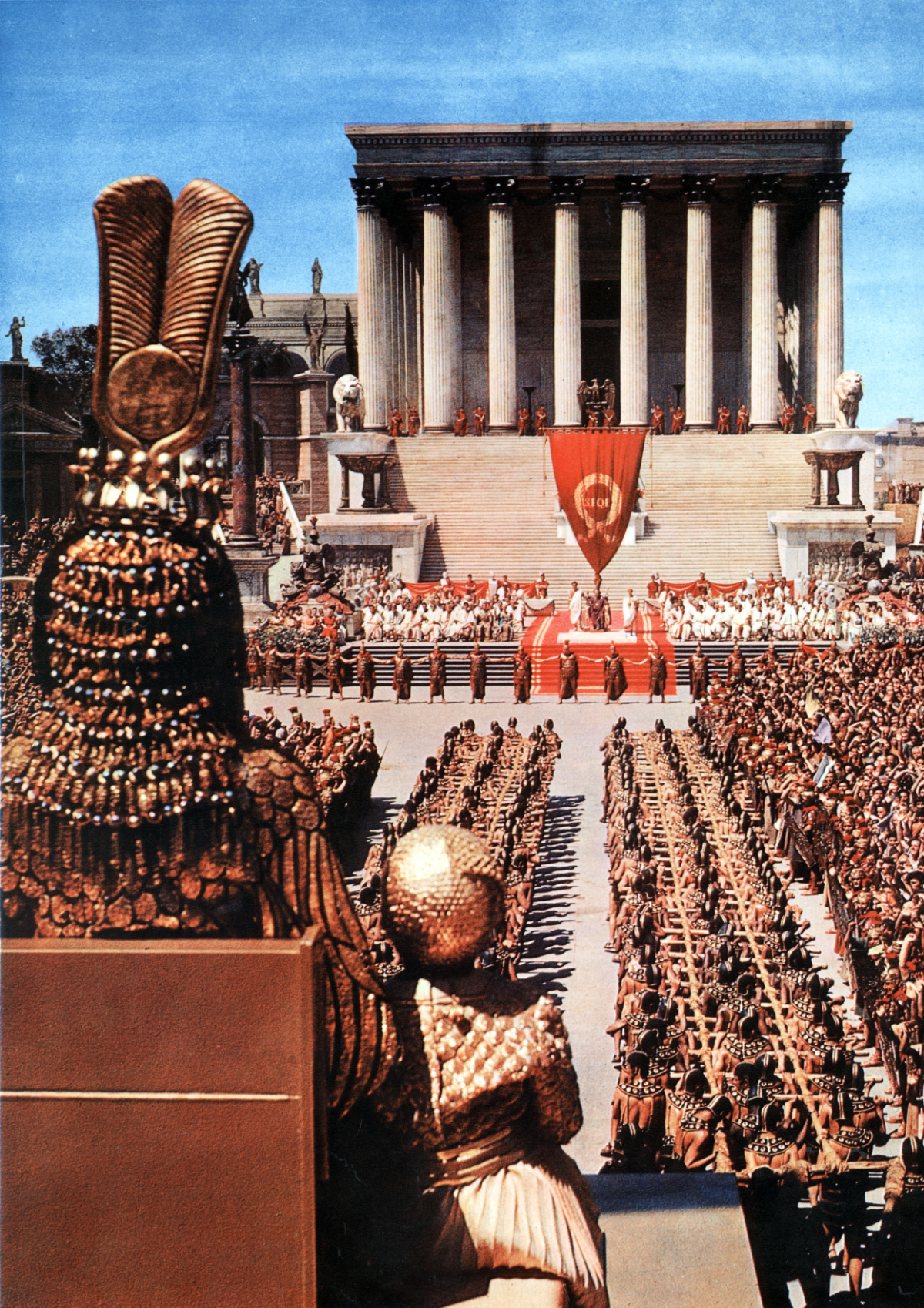
Armed guards were installed during the filming of Cleopatra’s entry into Rome to protect Elizabeth against possible assassination after the Vatican newspaper denounced her affair with Richard Burton as “erotic vagrancy”. The effort was in vain. Rather than shout the Egyptian queen’s name as directed, the extras cheered “Leez! Leez!” As one historian put it, “That’s when the sexual revolution of the sixties was truly born. Liz had conquered the pope.”
By the way, the Roman Forum set, which played host to Cleopatra’s spectacular entrance and was elaborately reconstructed at Cinecittà Studios outside Rome—was more than twice the size of the original!
Many know that Elizabeth was paid a then record one million dollars to portray the fabled Queen of the Nile in Cleopatra. However, even when you’re the highest paid film star in the world, that doesn’t guarantee that the president of the studio will actually know your name. One night at dinner, Elizabeth grew suspicious when Fox president Spyros Skouras kept referring to her as “Cleopatra,” and a humourous exchange ensued.
“You don’t know my name, do you?” Elizabeth asked. “You can’t remember my name!”
“You are Cleopatra!” Skouras replied.
“You’re paying me a million dollars,” Elizabeth said, “and you can’t remember my name. Spyros, tell me my name! I’ll give you half the money back!”
“Ehh . . . ehh . . . ,” Skouras stammered, “you are Cleopatra!”
Needless to say, Elizabeth kept her million dollar paycheque, and as the film went into overtime and she also received a percentage of the gross, would earn considerably more.
Post-Production, Premiere, and Beyond
Director Joseph L. Mankiewicz envisioned Cleopatra as two films: Caesar and Cleopatra and Antony and Cleopatra, in the grand tradition of Shaw and Shakespeare. Fox refused, reasoning that two separate films would be a logistical nightmare and audiences were most interested in seeing Elizabeth and Richard share the screen (Antony only briefly appears in the first half).
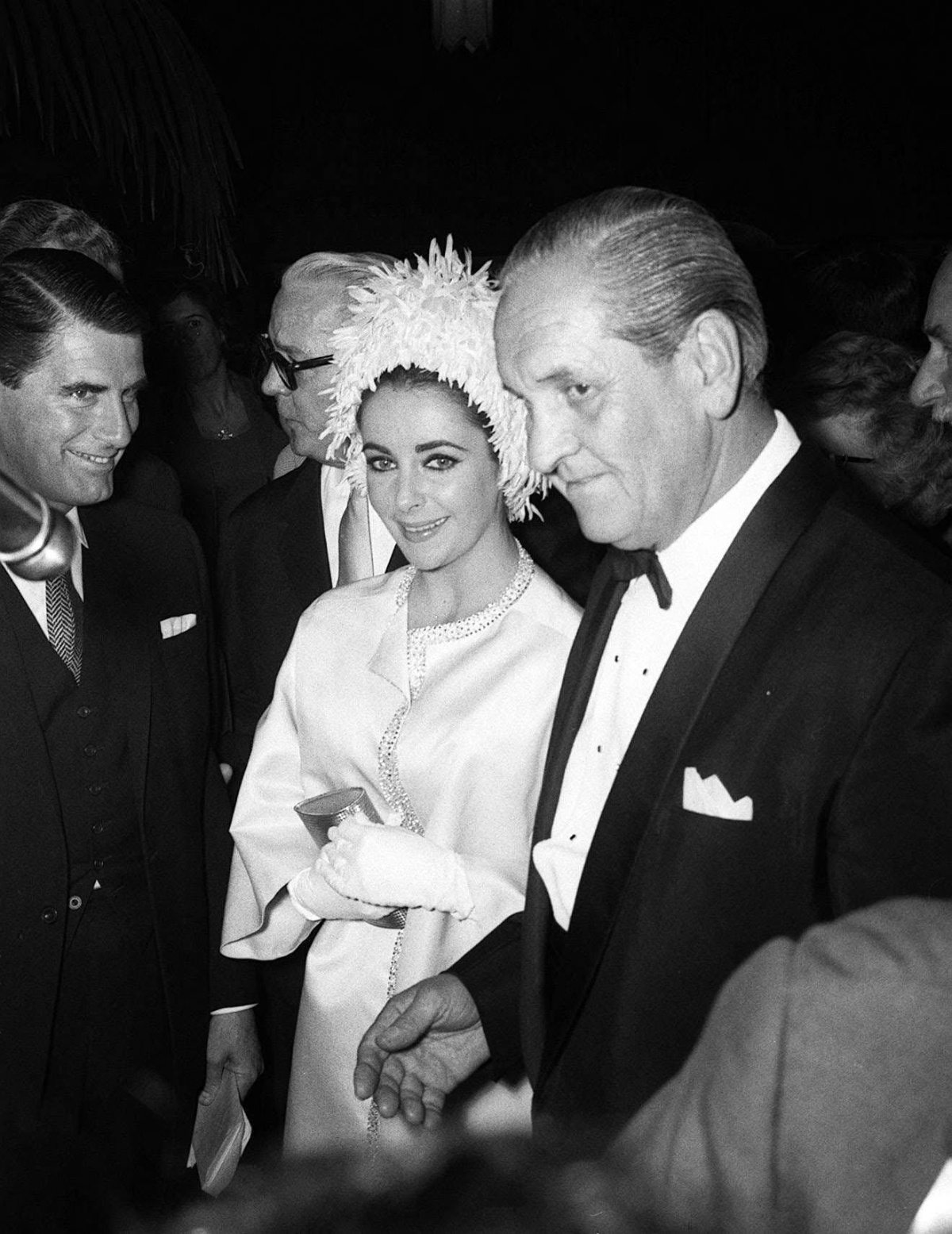
The initial rough cut of the film ran five hours and twenty minutes. With Fox president Darryl F. Zanuck breathing down his neck, Mankiewicz cut an additional 77 minutes—and much of the film’s characterization. The film finally premiered in its 243-minute roadshow length at New York’s Rivoli Theatre on June 12, 1963.
In the mid-1990s, a world-wide search was carried out in the hope of restoring the film to a six-hour director’s cut length. While a few scraps have turned up—including the Egyptian queen in exile at her seaside camp, which would have been our first glimpse of Elizabeth in the film if Mankiewicz had had his way, as well as B-roll footage—the search was otherwise futile.
“As a cost-cutting measure, the studio decided in the late 1970s to get rid of all of its trims and outs from its older pictures,” explained Schawn Belston, then Senior Vice President, Library & Technical Services, at 20th Century Fox. “All the trims and outs from 1978 back were destroyed. There wasn’t yet the idea of alternate versions for DVD or Blu-ray. There was no market value for this material and there wasn’t any vision for there ever to be any.”
He concludes: “I think it speaks to the reputation of the movie that people want more of it.”
Cleopatra, the most hotly anticipated film of its day, had its world premiere at New York’s Rivoli Theatre on June 12, 1963. While reviews were mixed, the New York Times praised it as “a surpassing entertainment, one of the great epic films of our day”.
While Elizabeth’s initial impression of the film wasn’t favourable—she didn’t see the roadshow version of the film, but rather a further truncated three hour and forty-seven minute cut at its London premiere that August—her opinion later mellowed. Richard recorded the following diary entry in 1971, when the family sat down to watch what was presumably the roadshow length version of the film: "E saw Cleopatra last night with all the kids. I popped in at one point for about ten seconds and went away and slept for another couple of hours. No reflection on the film! As a matter of fact E said this morning that the film is not at all bad – marvellous spectacle and all that.”
Elizabeth’s final verdict on the most famous film of its day? “Surely that film must be the most bizarre piece of entertainment ever to be perpetrated—the circumstances, the people involved, the money spent. I bared my soul for that role. Richard gave everything he had. Half of it ended on the cutting room floor. I refused to see the film but was persuaded to go to the London premiere. They had cut the film down [from its premiere roadshow length] to three hours, and I only just managed to get back to the Dorchester where I threw up.”
At an astronomical $44 million, Cleopatra was the most expensive film of its day and remained so for decades after, eclipsing Mutiny on the Bounty (1962), which cost a mere $17 million (peanuts!). However, not all of it ended up on screen.
At one point, Cleopatra was the only 20th Century Fox film in production. “They had no place else to put the overhead,” recalled Tom Mankiewicz, son of director Joseph L. Mankiewicz, who took a break from college to work on the film. “And dad always used to joke [as] we would be driving out to the set, ‘Right now, the head of Fox in Hong Kong is taking two hookers to lunch and it’s being charged to my picture. There’s no other place to put it.’”
“Later I got to see the studio’s breakdown on the money waste,” said Elizabeth. “They had $3 million for ‘miscellaneous,’ and $100,000 for paper cups. They said I ate 12 chickens and 40 pounds of bacon every day for breakfast. What?”
Adjusted for inflation, Cleopatra remains one of the most expensive films ever made.
It was the top grossing film of 1963 and one of the top 10 highest-grossing films of the decade. The film would make $38.04 million by March 1966. It would finally break even when the television rights were sold to ABC for an impressive $5 million—another world record.
Cleopatra went on to receive nine Academy Award nominations, including Best Picture, winning four. And it would, of course, bring about one of the most celebrated partnerships of all time, both on- and off-screen: Elizabeth Taylor and Richard Burton.
More than sixty years on, Cleopatra endures for many reasons. Its monumental impact on fashion and popular culture. Elizabeth’s million dollar payday, breaking the glass ceiling and making her the highest paid film star in the world (she would walk away with an eye-watering $7 million dollars due to her shrewdly negotiated contract). For bringing together one of the 20th century’s most celebrated on- and off-screen partnerships. Its literate and intelligent script. And, as an example of a type of grand filmmaking on a scale that has never been achieved before or since.