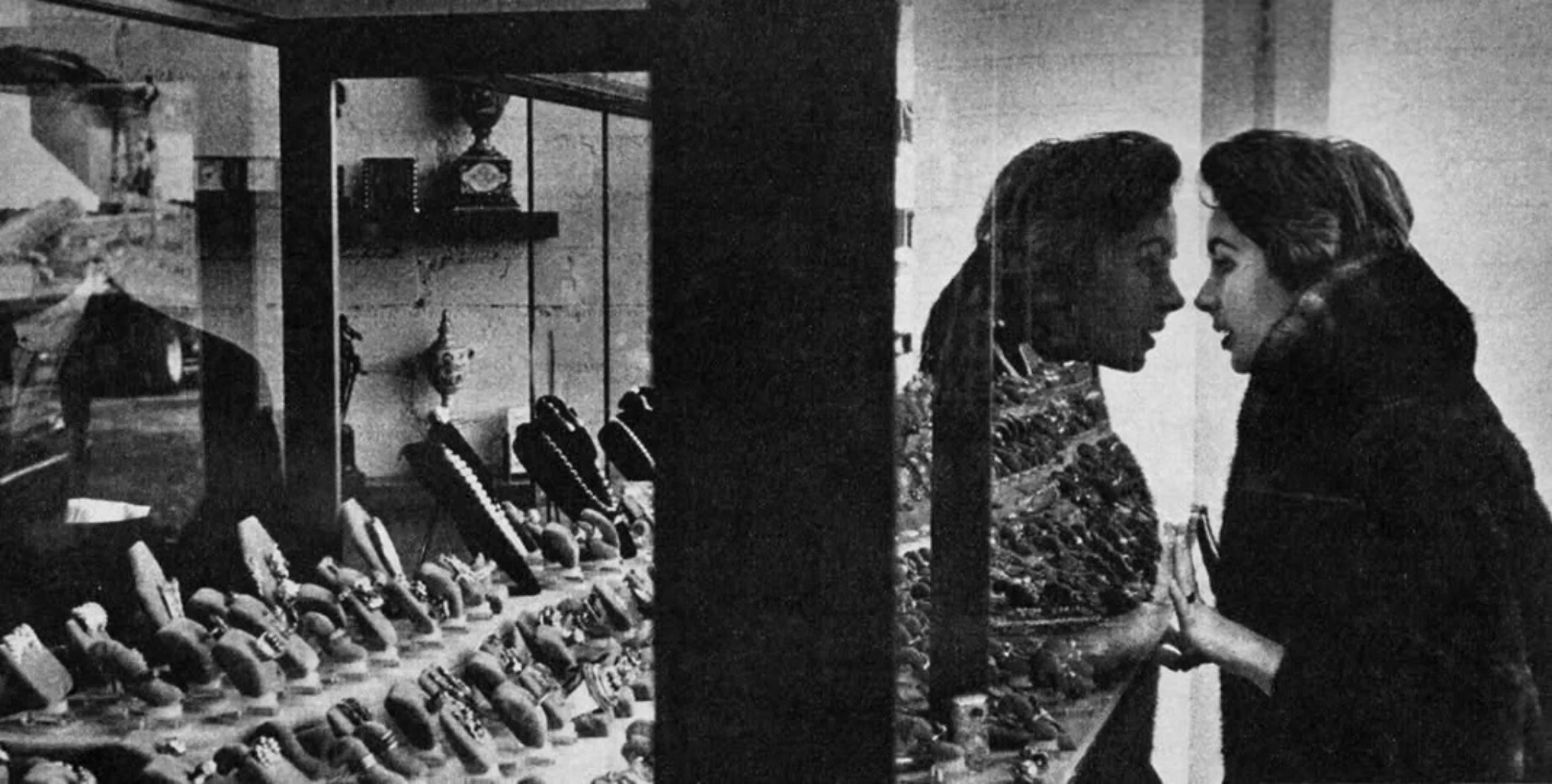
Elizabeth’s Love Affair With Jewelry
“I adore wearing gems, but not because they are mine.
You can’t possess radiance, you can only admire it.” —Elizabeth Taylor
Elizabeth’s love affair with jewelry started very early, as she herself once explained: “My mother says I didn’t open my eyes for eight days after I was born, but when I did, the first thing I saw was an engagement ring. I was hooked.”
She would go on to amass one of the world’s great private collections—believed to be second only to that of Queen Elizabeth II. It boasted creations from the world’s great jewelry houses and designers—Boucheron, Bulgari, Cartier, Chopard, Gerard, JAR, Ruser, Schlumberger, Tiffany, Van Cleef & Arpels, and David Webb—and such pieces of incredible historical provenance as the La Peregrina pearl, the Taj Mahal diamond, and many others.
Christie’s François Curiel, who was entrusted with appraising Elizabeth’s staggering collection, remembered: “I shall never forget the trays and trays of jewelry that were presented to us… At first, it was the sheer volume that struck me, but gradually as I examined each piece, I was impressed by the quality and variety in the collection. And quality was the common denominator for every piece, regardless of stone or size.” He was equally impressed by Elizabeth’s knowledge of the craftsmanship and provenance of each gem.
Over the course of her incredible life, Elizabeth was the recipient of jewelry from many special people and even purchased pieces for herself. But her two great loves, Mike Todd and Richard Burton, indulged her passion for jewelry most.
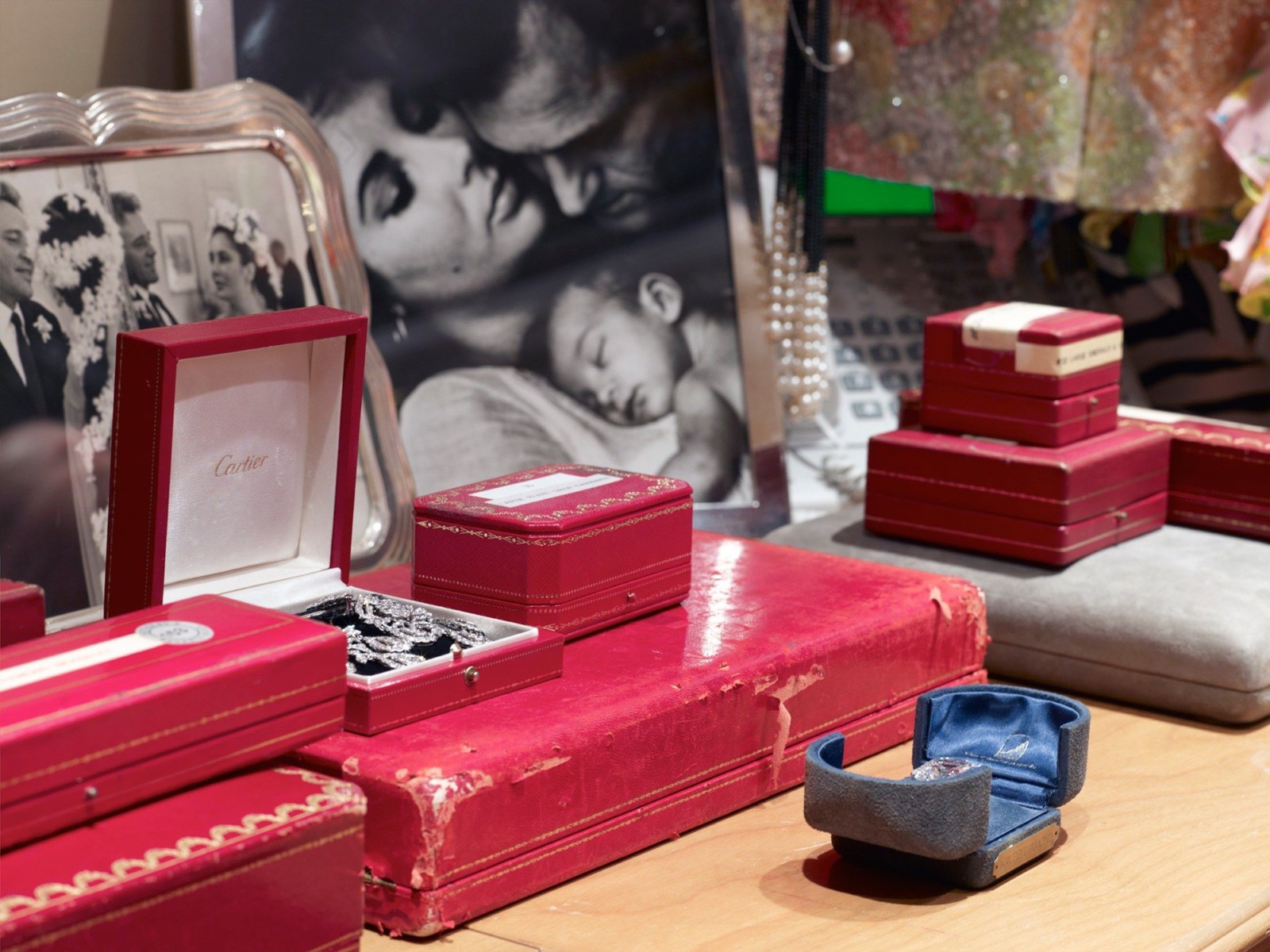
Saturday Night Presents
On January 23, 1957, Elizabeth Taylor and Mike Todd were photographed at New York’s Idlewild Airport. They were en route to Mexico, where, just days later, they would be married in an intimate ceremony near Acapulco. Elizabeth removed her glove to show off her dazzling 29 and 7/8 carat engagement ring, which she would affectionately dub her “ice-skating rink.” She would later joke: “Mike insisted I say 29 and 7/8, because 30 would have been vulgar.”
Mike didn’t need a special occasion to surprise his wife with jewelry—every day was a special occasion, or some sort of anniversary. “I’ve had so many anniversaries, I’ll soon be as old as Mike,” she once teased. Another time, when asked about a new piece of jewelry she was wearing, she explained: “Oh, that’s just a Saturday night present”. Mike’s friend, the actor Kirk Douglas, would recall one particular surprise Mike once pulled off: “Spread atop the grass was an extraordinary array of jewels: necklaces, bracelets, rings, earrings—all encrusted with precious stones and shimmering like a mirage in the late-morning sun. Mike had gotten Van Cleef & Arpels to set up the display before Elizabeth woke up. Then he led her out to it and said, ‘Go ahead. Pick whatever you want.’ It wasn’t her birthday; it wasn’t their anniversary; it wasn’t a holiday. Mike didn’t need a reason to indulge his passion for his young wife.”
Among the jewelry Mike lavished on Elizabeth was an antique Belle Époque diamond necklace and a diamond tiara. “You’re my queen, and I think you should have a tiara,” he told her. She wore it publicly for the first time at the 1957 Academy Awards (and again later that year at the Cannes Film Festival), when Mike’s blockbuster hit Around the World in 80 Days swept the Oscars, and he took home the Best Picture statuette. Tiaras, as Elizabeth later recalled, weren’t then in vogue, “but I wore it anyway, because he was my king.”

Another gift from Mike has an equally wonderful backstory. The two were window shopping in Paris’s Place Vendôme when Elizabeth came across the most exquisite pair of chandelier earrings. They were made of artificial paste diamonds, but she didn’t care, and cajoled Mike into buying them for her. Months later, as the two prepared to attend a party, Elizabeth fastened the pendants and noticed that something seemed different. Mike had replaced the paste diamonds with real ones as a surprise. “Mike was so incredibly inventive and loved to surprise me in so many different ways,” she said, adding: “We were a bit late for the party. . . .”
Mike also lavished Cartier rubies and diamonds on a pregnant Elizabeth while the couple stayed at Villa Fiorentina in Saint-Jean-Cap-Ferrat and eagerly awaited the arrival of their daughter, Liza. “I was in the pool, swimming laps at our home, and Mike came outside to keep me company,” Elizabeth recalled. “He was holding a red leather box, and inside was a ruby necklace, which glittered in the warm light. It was like the sun, lit up and made of red fire. First, Mike put it around my neck and smiled. Then he bent down and put matching earrings on me. Next came the bracelet. Since there was no mirror around, I had to look into the water. The jewelry was so glorious, rippling red on blue like a painting. I just shrieked with joy, put my arms around Mike’s neck, and pulled him into the pool after me.
“It was a perfect summer day and a day of perfect love.”
It Began with Bulgari
“I introduced Elizabeth to beer, she introduced me to Bulgari,” Richard Burton would joke, referring to the legendary jeweller in the Via dei Condotti in Rome.
Richard, like Mike, would, in Elizabeth’s words, “use any excuse” to surprise her with a piece of jewelry. “I never discussed jewelry with Richard,” she said. “It was given spontaneously.”
He acquired the 33.19 carat, Asscher cut Krupp diamond ring in 1968 from New York’s Parke-Bernet Galleries after a fierce bidding war that included the venerable jeweller Harry Winston, who had previously owned the flawless diamond before selling it to Vera Krupp. The Krupps had supplied the Nazis with arms during the war. “When it came up for auction in the late 1960s,” Elizabeth explained, “I thought how perfect it would be if a nice Jewish girl like me were to own it.” It would go on to become Elizabeth’s most treasured piece of jewelry, rarely leaving her finger.
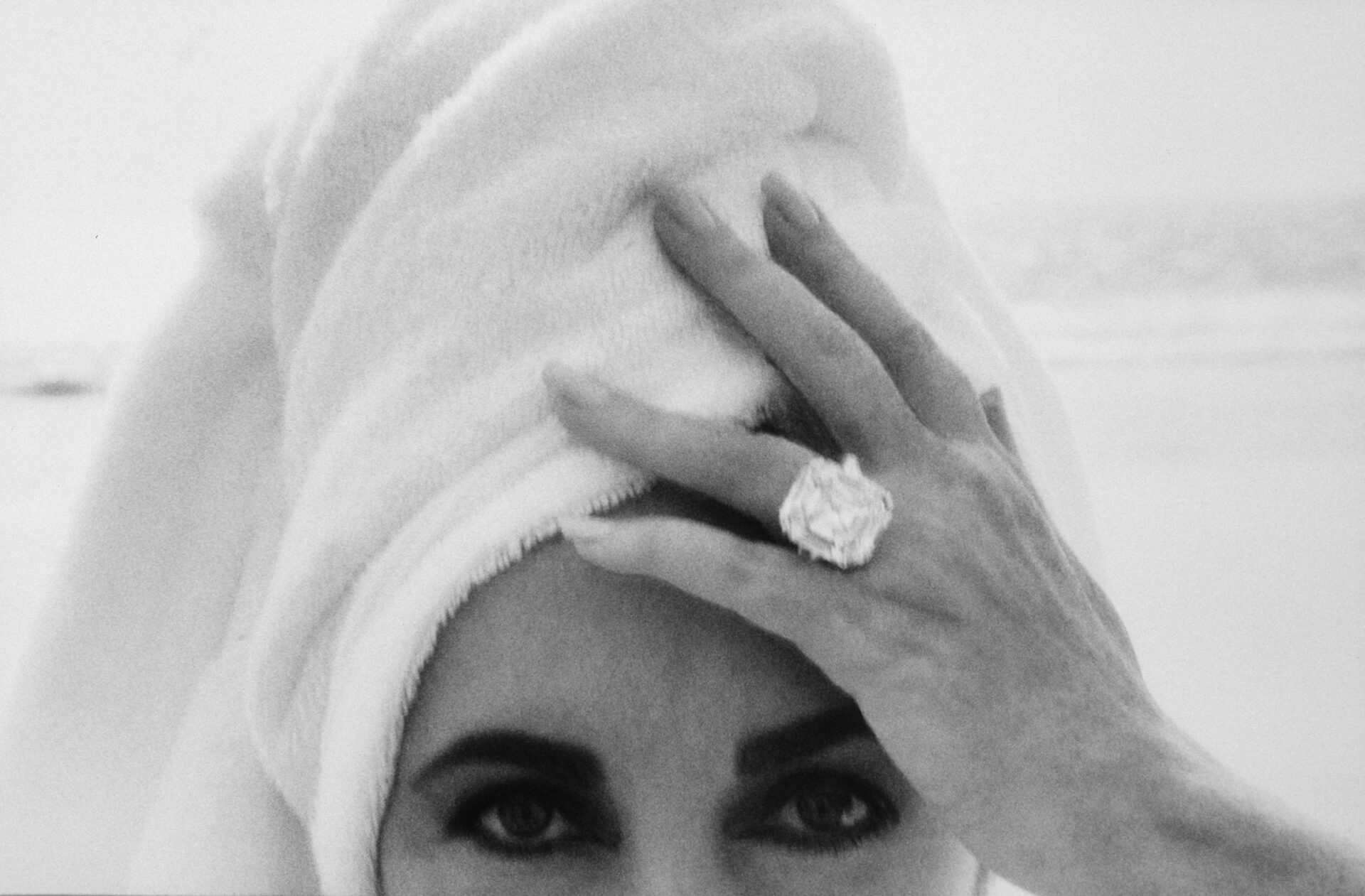
The following year, Richard bought Elizabeth the 69.42 carat, inch thick diamond that came to be known as the Taylor-Burton diamond for $1.1 million, making it the world’s most expensive diamond at the time. According to Richard, the catalyst for the purchase was a comment he passed on the size of Elizabeth’s hands. “That insult last night is going to cost me,” Richard recorded in his diary. “Betcha!”
However, acquiring the diamond would prove more difficult than he initially anticipated. On the day of the auction, a fierce bidding war ensued. Among those vying for the diamond was Aristotle Onassis. When the hammer fell, the ring went to Cartier for $1,050,000—$50,000 more than Richard was prepared to pay, or so he thought. Richard quickly made a deal with the famed jeweller, who sold him the ring for $1.1 million—making a tidy $50,000 profit on a diamond they had owned for approximately a day.
The purchase agreement stipulated that Cartier would display the ring at its New York and Chicago boutiques. An estimated 10,000 people lined up each day to catch a glimpse of the newly minted Taylor-Burton diamond, which was guarded by a machine gun.
Elizabeth initially wore the Taylor-Burton diamond as a ring—which famously got stuck on Lucille Ball’s finger on an episode of Here’s Lucy—but she quickly commissioned Cartier to design a necklace to suspend it from. It was complete in time for her to wear it to the Scorpio Ball, held in honour of Princess Grace’s fortieth birthday—but first, it had to be delivered. Three men—two of them decoys to throw off any potential jewel thieves—each bearing a “diamond,” made the trip to the Burtons’ yacht, the Kalizma.
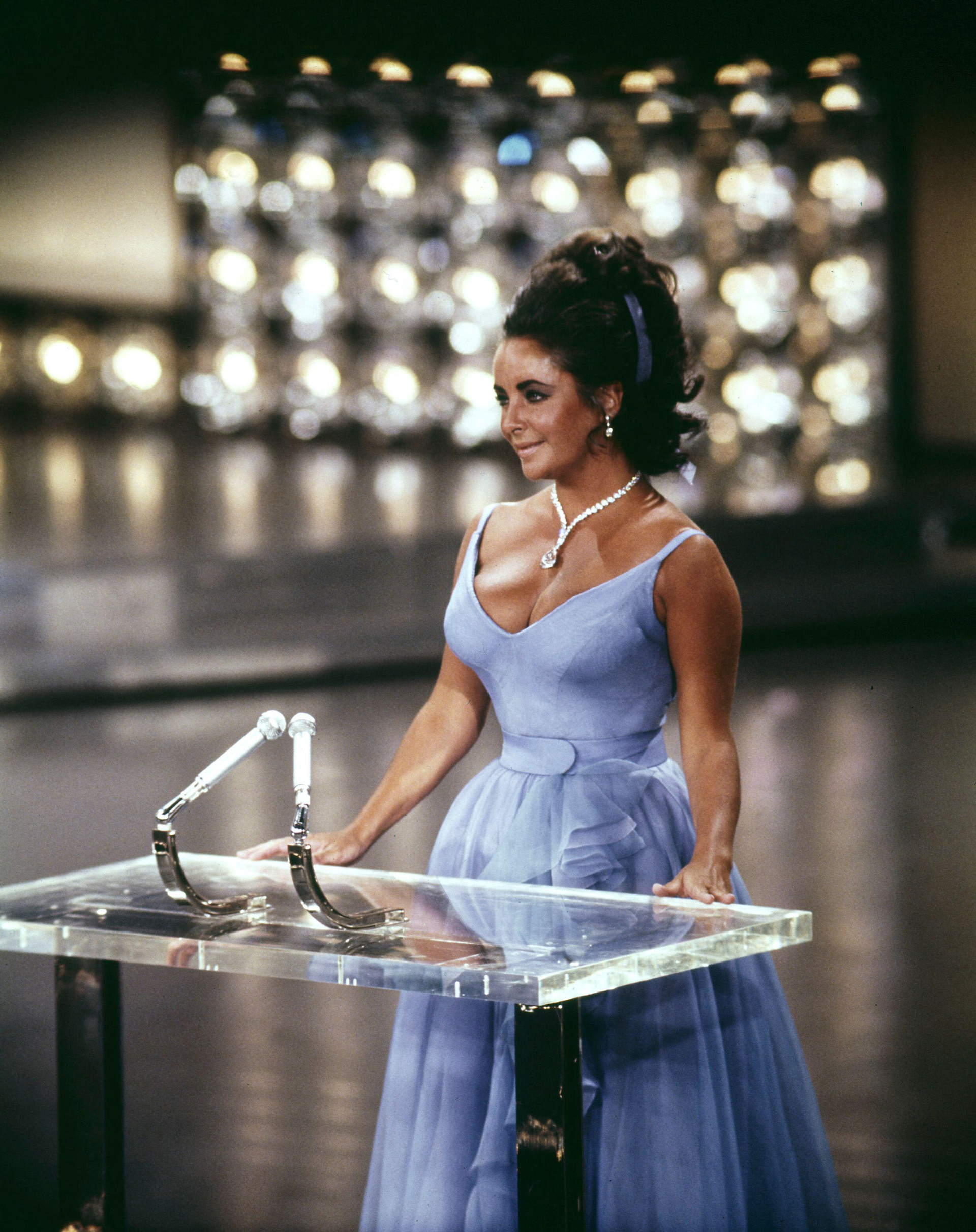
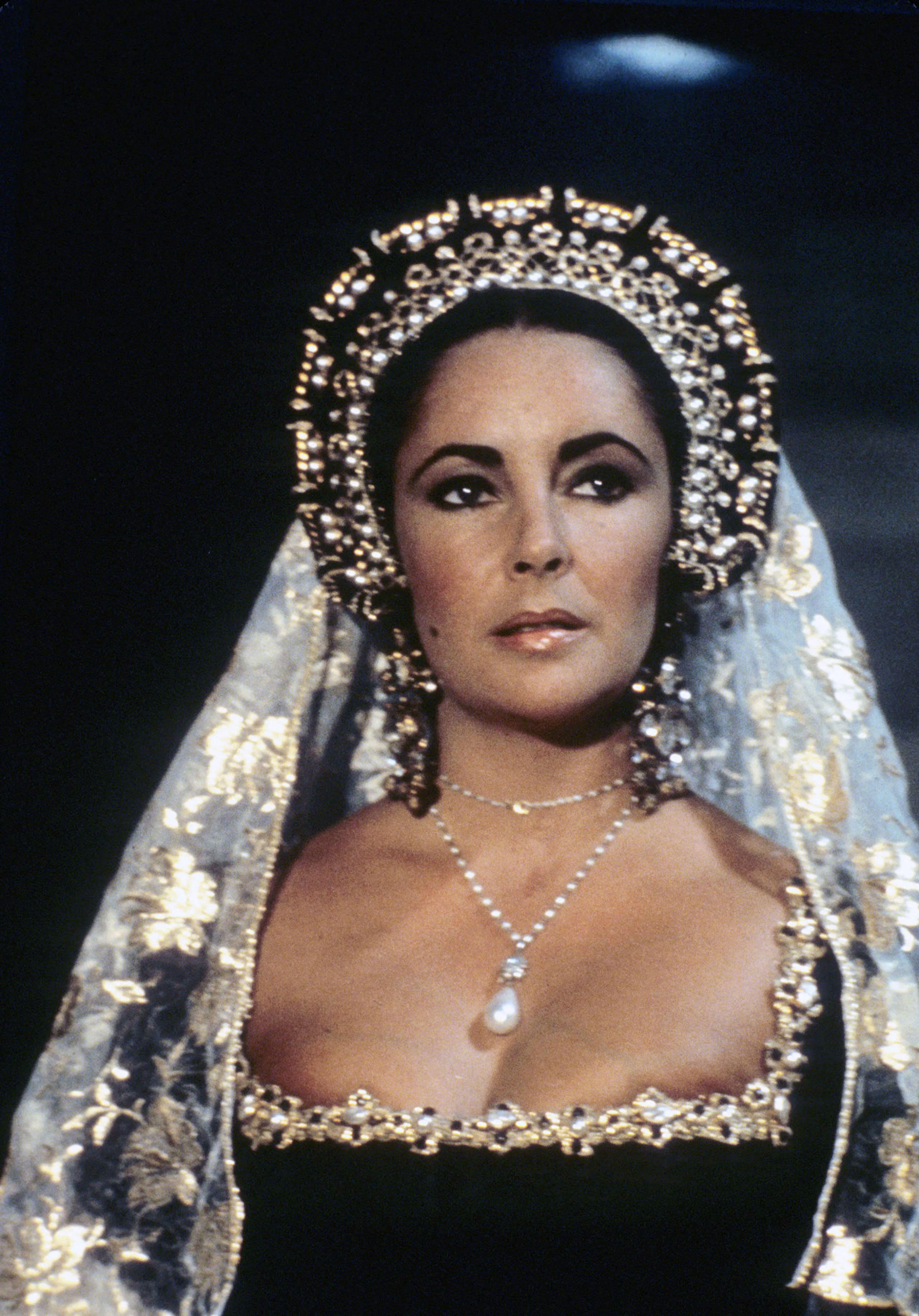
Richard was fascinated by the historical provenance behind many of the pieces he gave Elizabeth. La Peregrina pearl, the “wanderer,” for example, earned its discoverer, an enslaved person, his freedom in the sixteenth century. It was given as a wedding gift from Spain’s Phillip II to his wife, England’s Mary Tudor, and later found its way into the jewelry boxes of Queen Margarita and Queen Isabel. (The seventeenth-century Spanish court painter Diego Velázquez would immortalize the pearl adorning these queens.) Shortly after it came into Elizabeth’s possession, panic would ensue when the pearl went missing. She found it in the mouth of one of her dogs, and it was weeks before she summoned the courage to tell Richard what happened. Another priceless gem, the Taj Mahal diamond, which the seventeenth century Mughal emperor Shah Jehan gave to Queen Mumtāz in 1621, was a fortieth birthday present for Elizabeth in 1972. It’s inscribed with the words “Love Is Everlasting” in Parsee.
“I would have liked to buy the Taj Mahal for Elizabeth,” Richard said, “but it would have cost too much to transport it.”
Big Girls Need Big Diamonds
Gentlemen Prefer Blondes’ Lorelei Lee loved finding new places to wear diamonds. Elizabeth Taylor turned it into an art form—often with a little help from her imaginative hairstylist, Alexandre de Paris. It was nothing for him to simply weave a string of pearls through her legendary locks, or do something a little more elaborate. For the reopening of the iconic Lido nightclub in Paris, for example, he created an elaborate hairstyle to complement her gold Balenciaga sari, and incorporated the Night of the Iguana brooch, a gift from Richard, as its crowning glory. Back in the City of Lights three years later, for the premiere of The Taming of the Shrew at the Palais Garnier, she wore jewelry every bit as opulent as the legendary opera house. “E wore a diadem specially created for her by the De Beers company of Van Cleef and Arpel [sic], designed by Alexandre, which cost $1,200,000,” Richard wrote in his diary. “With her other jewellery she wore a total of roughly $1,500,000. When we left the hotel, surrounded by 8 guards, all the hotel guests were forming an aisle to the street.”

A Temporary Custodian
Whether loaning a treasured piece to a museum or allowing an admirer to try something on, Elizabeth was always generous in sharing her collection. When one of Richard’s Hamlet co-stars broke their zipper, Elizabeth didn’t think twice about handing over her Bulgari emerald and diamond brooch for them to use instead of a safety pin to prevent a wardrobe malfunction. In 2002, Elizabeth invited her fans into her jewelry vault with the publication of My Love Affair with Jewelry, a lavishly illustrated coffee-table book filled with memories of some of her most treasured pieces, and the important people who gave them to her.
“As I look at some of my jewels I realize what a very lucky girl I am,” she said. “Sometimes I wonder what will become of everything, because just like the Duchess of Windsor’s collection, they will all be up for auction one day. They will be scattered to the four corners of the world, and I hope that whoever buys each piece loves it as much as I do and takes care of it and realizes that having jewelry is a temporary gift. In truth, we ‘owners’ are just the caretakers. Nobody owns beautiful paintings. Nobody ever owns anything this beautiful. We are only the guardians.”
Elizabeth considered herself merely a “temporary custodian” of her jewelry. It was her wish that, after her death, the bulk of her collection be auctioned so others could enjoy and appreciate the pieces as much as she had. Held at Christie’s New York in December 2011, the six auctions comprising The Collection of Elizabeth Taylor—including the Legendary Jewels (I), Jewelry (II), and Online Only Auction, the first in the legendary auction house’s storied history—shattered records, fetching a total of $156,756,576.
For Elizabeth Taylor, diamonds weren’t a girl’s best friend. People were. As she herself once put it: “You can’t cry on a diamond’s shoulder, and diamonds won’t keep you warm at night. But they’re sure fun when the sun shines.”