Elizabeth on the Radio
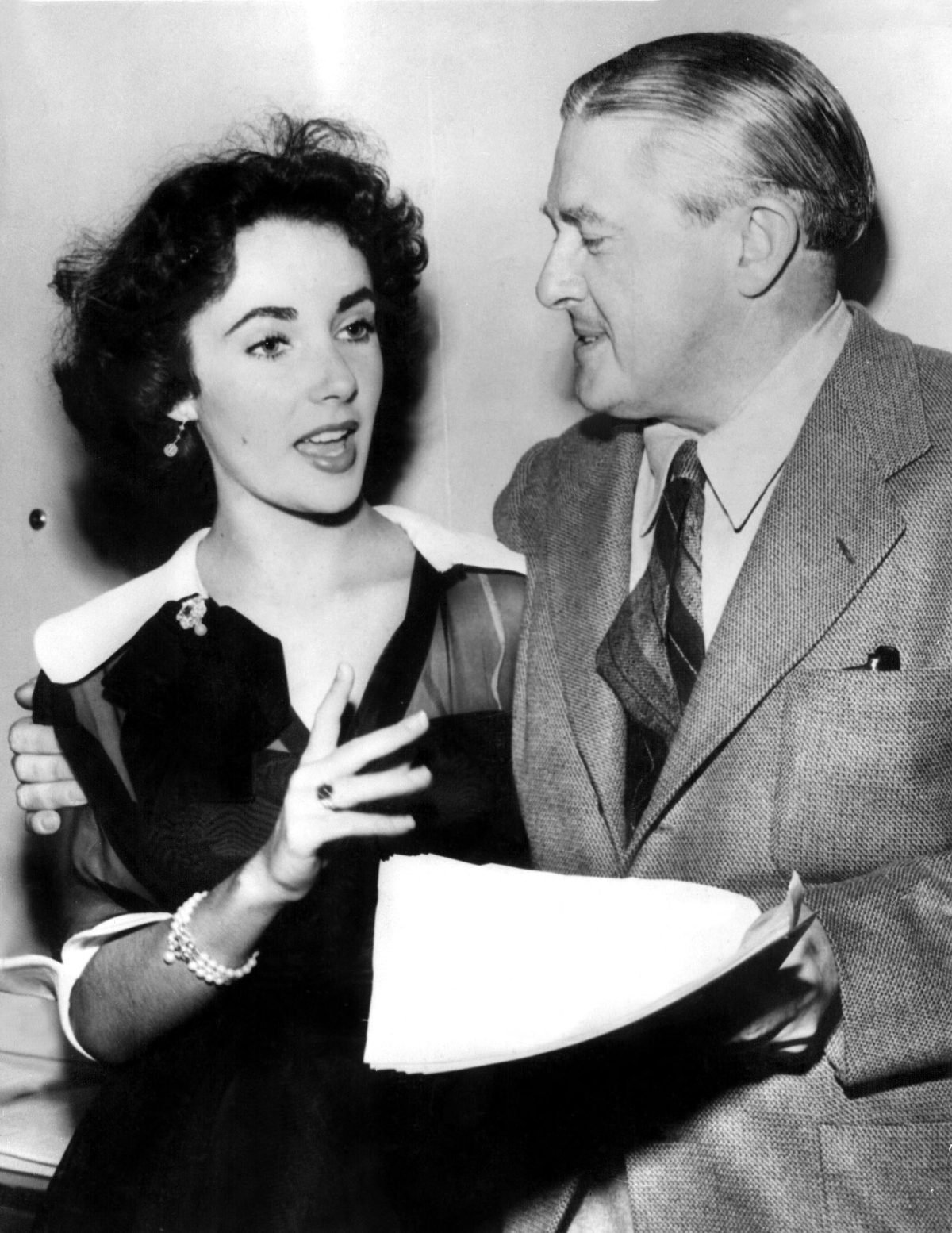
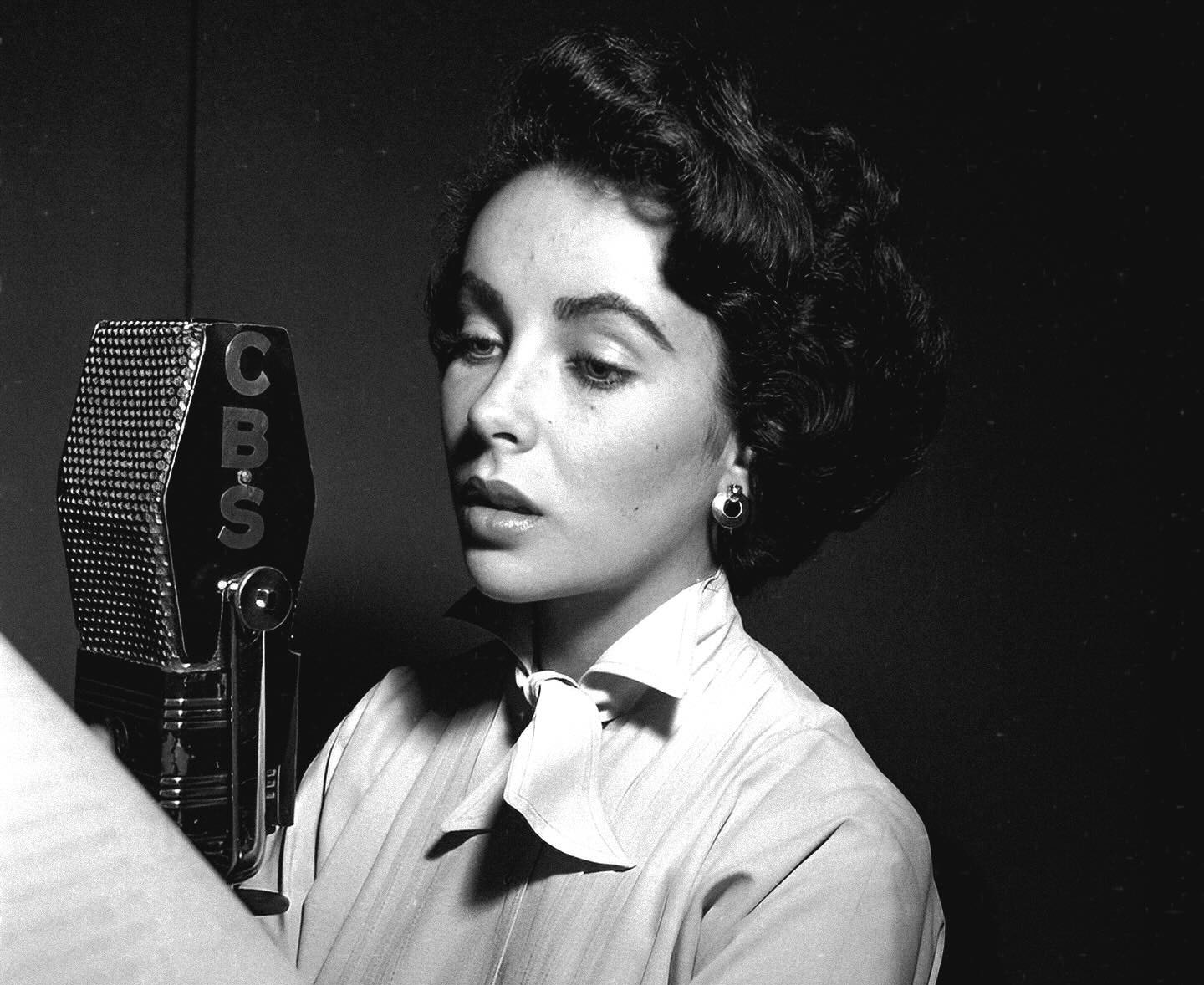
In the 1940s, Elizabeth’s first decade at MGM, radio was a fixture in nearly every home in America. Performing in this medium—typically before a live studio audience and for those listening from home—was unrivaled exposure for the movie studios’ array of contract players, as well as an opportunity to promote their latest releases. Elizabeth’s radio show appearances were also a great way for her to earn some extra pocket money. For radio plays, she could earn $3,000 per appearance—more than she was making each week at MGM. It also gave her the chance to reprise some of her best film roles of the period (National Velvet, Cynthia), bring to life new (to her) characters in adaptations of Morning Glory and I, Mary Peabody, and shine a light on important causes, such as the March of Dimes.
While what follows is not an exhaustive list of Elizabeth’s radio appearances (details can be hard to come by—if you spot any that are missing, please get in touch!), read on to learn more about many of them and listen to a handful below!
Command Performance
Broadcast: March 8, 1945 on AFRS
Running time: 30 minutes
Guest starring: Frank Sinatra (himself, M.C.), Frances Langford (herself), Elizabeth Taylor (herself), Margaret O’Brien (herself), Roddy McDowall (himself), and Peggy Ann Garner (herself)
In what was probably her first radio appearance, Elizabeth got her start the easy way—playing herself! Command Performance, which began in 1942, shortly after the United States entered World War II, featured guest stars specifically requested by the brave men and women of the United States Armed Forces. The March 8, 1946 show was emceed by Frank Sinatra and also featured Frances Langford.
“Little Elizabeth Taylor” is eager for the autograph of her “very favourite singer.” “You mean the little girl who was so wonderful in National Velvet?” asks Frank when told that Elizabeth wants his autograph. “Gee, I didn’t know she was one of my fans. Well, tell her to come right in…” Confusion and jokes at Sinatra’s expense ensue. It turns out that the autograph Elizabeth wants is that of Frances Langford—not the other Francis. In fact, Elizabeth doesn’t even recognize Sinatra. Once she realizes it’s him, she immediately telephones her fellow fan club members (devoted to Andy Russell, not Sinatra) to gush about her encounter, and even more cracks at Sinatra’s appearance follow.
Also appearing as Sinatra’s other “devoted worshippers” are fellow child stars Margaret O’Brien, Roddy McDowall, and Peggy Ann Garner, all of whom Elizabeth had or would go on to co-star with on the big screen.
March of Dimes Campaign (Title Unknown)
Broadcast: January 1946 on CBS
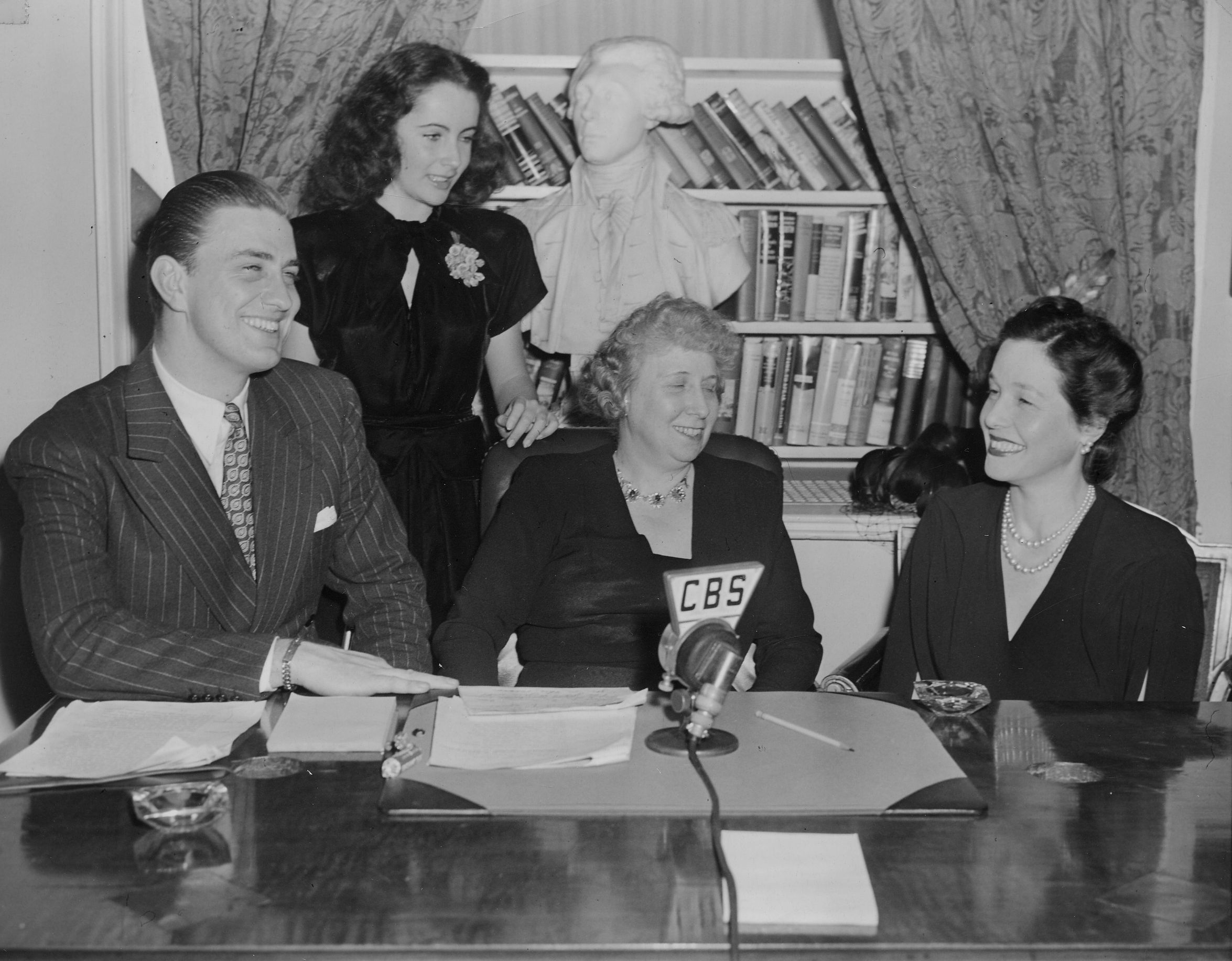
Elizabeth travelled to Washington, D.C., to appear in a radio broadcast from the White House on January 7, 1946, helping to kick off a March of Dimes campaign. She appeared alongside First Lady Bess Truman, actress and writer Cornelia Otis Skinner, and Franklin Delano Roosevelt Jr., whose father, former President Roosevelt, co-founded the March of Dimes, originally the National Foundation for Infantile Paralysis, in 1938, to fight polio.
Elizabeth later explained how nervous she felt when she arrived at the White House. “When we finally did get there I felt as if butterflies were dancing or horses prancing inside my tummy,” she said.
Her nerves were likely responsible for a humorous anecdote associated with the broadcast. At one point, Elizabeth realized that she was in her stocking feet. She had, either consciously or unconsciously, slipped out of her shoes. As cameras recorded the event for posterity, she managed to locate one shoe, and then the other—under the chair in which Bess Truman was seated for the broadcast. She wasn’t having any luck retrieving it, however; rather, she was pushing it further under the First Lady’s chair. “I began to panic because I thought I cannot all of a sudden disappear from sight and dive under her chair because it’s almost by her foot. . . . I had to crouch on one leg. Fortunately, I had ballet training. . . . I hooked my toe around the heel and brought it back very slowly, and finally got my foot in it. Like one of the longest moments in my life.”
National Velvet | Lux Radio Theatre
Broadcast: February 3, 1947 on CBS
Running time: 60 minutes
Cast: Mickey Rooney (Mi Taylor), Elizabeth Taylor (Velvet Brown), Donald Crisp (Mr. Brown), Jane Scott (Mrs. Brown), Norman Field (Ede), Charles Seel (Joe), Truda Marson (Edwina/Woman), Lois Boniston (Malvolia), Johnny McGovern (Donald), Alec Harford (Greenford), Jack Edwards, Jr. (Tim), Herbert Rawlinson (Constable), George Neise (Doctor/Man), and Jerry Barnes (Dog)
On February 3, 1947, Elizabeth reprised the role of Velvet Brown in a Lux Radio Theatre adaptation of National Velvet, the film that catapulted her to stardom when it premiered just over two years earlier. She was reunited with Mickey Rooney and Donald Crisp, her co-stars in the film, for the performance. The story hardly needs any introduction. Elizabeth stars as a young English girl who, masquerading as a male jockey, rides her horse, The Pi, to victory in the prestigious Grand National, but is later disqualified when it’s discovered that she’s a girl.
Following the dramatization, Elizabeth tells Lux Radio Theatre producer William Keighley about the bond she formed with King Charles, who played The Pi in the film. “Well, I certainly loved him, just as much as Velvet did in the story,” she explains. King Charles, of course, famously came to be hers after filming wrapped. Donald Crisp also reminds Keighley and his listeners that Elizabeth is a bestselling author, referring to Nibbles and Me, published the previous year.

Louella Parsons
Broadcast: July 13, 1947 on KECA, ABC Radio in Los Angeles
Elizabeth stopped by for a chat with Louella Parsons on her fifteen-minute Sunday night radio program for Jergens Lotion. Nearly forty years later, Elizabeth would portray Parsons on the small screen in Malice in Wonderland (1985), a TV film about the legendary rivalry between her and fellow gossip queen Hedda Hopper.
Cynthia | Lux Radio Theatre
Broadcast: June 23, 1947 on CBS
Running time: 60 minutes
Cast: Elizabeth Taylor (Cynthia Bishop), George Murphy (Larry Bishop), Mary Astor (Louise Bishop), Gil Stratton, Jr. (Rickey), Bill Johnstone (Professor), Leo Cleary (Fred), Lois Corbett (Carrie/Teacher), Josephine Graham (Stella), Norman Field (Dingle), Billy Roy (Willis), Noreen Gammill (Sadie/Nurse), Stanley Farrar (Man), and Charles Seel (Man)
To generate buzz for the upcoming release of Cynthia, which was due to hit screens the following month, Elizabeth reprised the film’s title role for Lux Radio Theatre. She stars as a cloistered high school student who, after years of missing out on typical teenage extracurricular activities due to poor health, begins to show a will of her own—with a little encouragement from her mother. She was reteamed with Mary Astor and George Murphy, who portrayed her parents in the film, for what was the closing night of Lux Radio’s twelfth season.
Morning Glory | Hallmark Playhouse
Broadcast: April 7, 1949 on CBS
Running time: 30 minutes
Cast: Elizabeth Taylor (Eva Lovelace), Gerald Mohr (Louis Easton), and Jonny Barrett (Joseph)
On April 7, 1949, Elizabeth performed in Hallmark Playhouse’s radio adaptation of Pulitzer Prize-winning playwright Zoe Akins’ Morning Glory. She starred as Eva Lovelace, the role that earned future co-star Katharine Hepburn the first of her Best Actress Oscars. “In a play like this, an extra special something depends upon the actress who takes the chief part,” explains the show’s host, James Hilton, “and for this reason we are especially lucky in having with us Miss Elizabeth Taylor.”
Eva Lovelace is a confident yet down on her luck young actress from small-town Vermont who had packed her bags for New York with dreams of Broadway stardom. Her run of bad luck continues until she eventually lands the role of a general understudy in a Broadway show. On opening night, when the play’s temperamental star refuses to perform, Eva gets her big chance. She goes on in her place and is a triumphant success—becoming the new first lady of the theatre. “I don’t want to be [just] a morning glory,” Eva says, “a flower that fades before the sun is very high.” Eva has arrived and is here to stay.
As she was performing on Hallmark Playhouse, it was only fitting that Elizabeth gave a quick plug during the broadcast for her Hallmark Little Women paper doll. She shares that an artist sketched her in costume as Amy on the set during the making of the film. Little Women opened in theatres that month.
I, Mary Peabody | Cavalcade of America
Broadcast: March 21, 1950 on NBC/Dupont Radio
Running time: 30 minutes
Cast: Elizabeth Taylor (Mary Peabody) and the Cavalcade Players
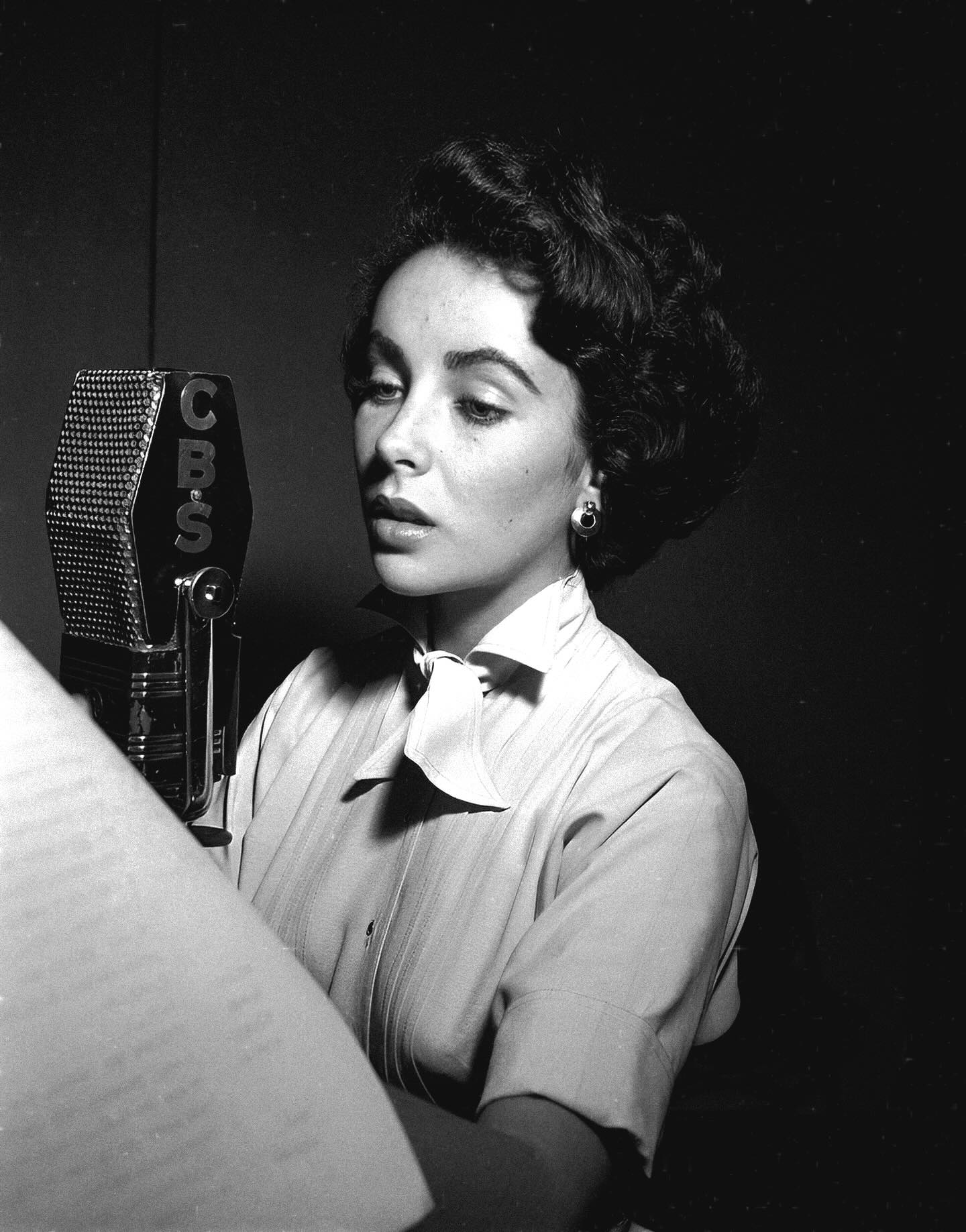
Elizabeth, acting alongside the Cavalcade Players, starred in the title role in Cavalcade of America’s radio play of I, Mary Peabody, based on Louisa Hall Tharp’s bestselling biography of three remarkable sisters, The Peabody Sisters of Salem, published the same year. It was recorded at New York’s Belasco Theatre.
The year is 1833, and the painfully shy schoolteacher Mary Peabody has fallen for the famous educator, Horace Mann, another boarder in the Boston rooming house where she lives with her two sisters. Her feelings for Horace intensify after she becomes his secretary. After returning from an overseas voyage, Mary learns that her elder sister, Elizabeth, had dissuaded Horace from writing to her while she was gone, telling him that Mary is focused on her career as a teacher and is not interested in marriage. This emboldens Mary to confront her sister for the first time in her life. Horace, who overhears the heated conversation between the two sisters, asks Mary to be his wife.
The three Peabody sisters went on to enjoy brilliant careers, as Elizabeth as Mary tells her listeners. Sophia, the youngest, became a renowned painter and married the writer Nathanial Hawthorne. Elizabeth founded “the first kindergarten in America.” As for Mary and Horace, they set out west, where they founded Antioch College. Although dispersed geographically, they remained close in heart.
Elizabeth Taylor’s performance in I, Mary Peabody coincided with the release of her latest film, Conspirator.
West of the Hill | Hallmark Playhouse
Broadcast: September 21, 1950 on CBS
Running time: 30 minutes
Elizabeth starred in an adaptation of Gladys Hasty Carroll’s 1949 novel West of the Hill for CBS’s Hallmark Playhouse. She presumably played Molly, who, according to the book’s dust jacket “had grown up in an atmosphere of poverty, loneliness, and fear among the fishermen who worked along the coast, shut off from the inland farms by a great forest-covered hill. ‘West of The Hill’ meant happiness to Molly—an impossible dream. But the dream came true when she bundled up her few rags and rode off with stalwart young Brad Hartwell, fish peddler and farmer.
“When the two of them, newly married, settled down in an old red farmhouse, Molly was shy as a young fawn, with a child-like innocence, and nothing to hold to but her love for Brad. The neighbors whispered, ‘Such crazy goin’s-on!’—and shook their heads. But Molly learned with a quick intelligence and a loving heart, and soon found her place among them.”
In an incident that could only happen to Elizabeth Taylor, her car caught fire while she was en route to a rehearsal for this episode of Hallmark Playhouse. Fortunately, she was unharmed and had quite the story to share with the show’s host, James Hilton.