The Activist
In 1985, Elizabeth found her life’s purpose when she began waging what she described as a very “personal war” in the fight against AIDS—a battle that would continue for the rest of her life and help define her legacy.
“I decided that with my name I could open certain doors, that I was a commodity in myself—and I’m not talking as an actress,” she explained. It also helped Elizabeth put her mind-boggling fame into perspective—that all of the years spent in the unrelenting glare of the spotlight had been for a higher purpose. “I could take the fame I’d resented and tried to get away from for so many years—but you can never get away from it—and use it to do some good,” she continued. “I wanted to retire, but the tabloids wouldn’t let me. So I thought, If you’re going to screw me over, I’ll use you.”
Through a combination of dogged determination and unparalleled star power, Elizabeth Taylor, the first globally recognized celebrity AIDS activist, raised the public’s consciousness and helped eradicate the stigma around AIDS.
Read on to learn how she did it.
A Commitment to Life
“Never has a disease left so many helpless, leaving loved ones and families reaching out only to frustration and fear”.
On September 19, 1985, Elizabeth Taylor delivered these powerful words at Los Angeles’s Westin Bonaventure Hotel during AIDS Project Los Angeles’s Commitment to Life dinner. APLA approached Elizabeth in January of that year to lend her support to the event, which would be the first major AIDS celebrity fundraiser. Not only did Elizabeth agree, but she and her publicist, Chen Sam, would help plan the dinner from a small office they rented. “I didn’t want to be honorary,” Elizabeth explained. “I wanted to actually do the work, make the phone calls, because this was going to be a toughie.”
In the early 1980s, health officials, including the Centers for Disease Control and Prevention, identified and began tracking a new disease that came to be known as acquired immunodeficiency syndrome (AIDS). Although AIDS was soon recognized in diverse groups—including gay and bisexual men, people with hemophilia, people who injected drugs, blood transfusion recipients, and infants born to infected mothers—the disease was initially and inaccurately labeled “gay cancer” or “gay-related immune deficiency” (GRID) because many of the earliest recognized cases occurred among gay men. This misconception contributed to widespread stigma and delayed public and political responses in many places.
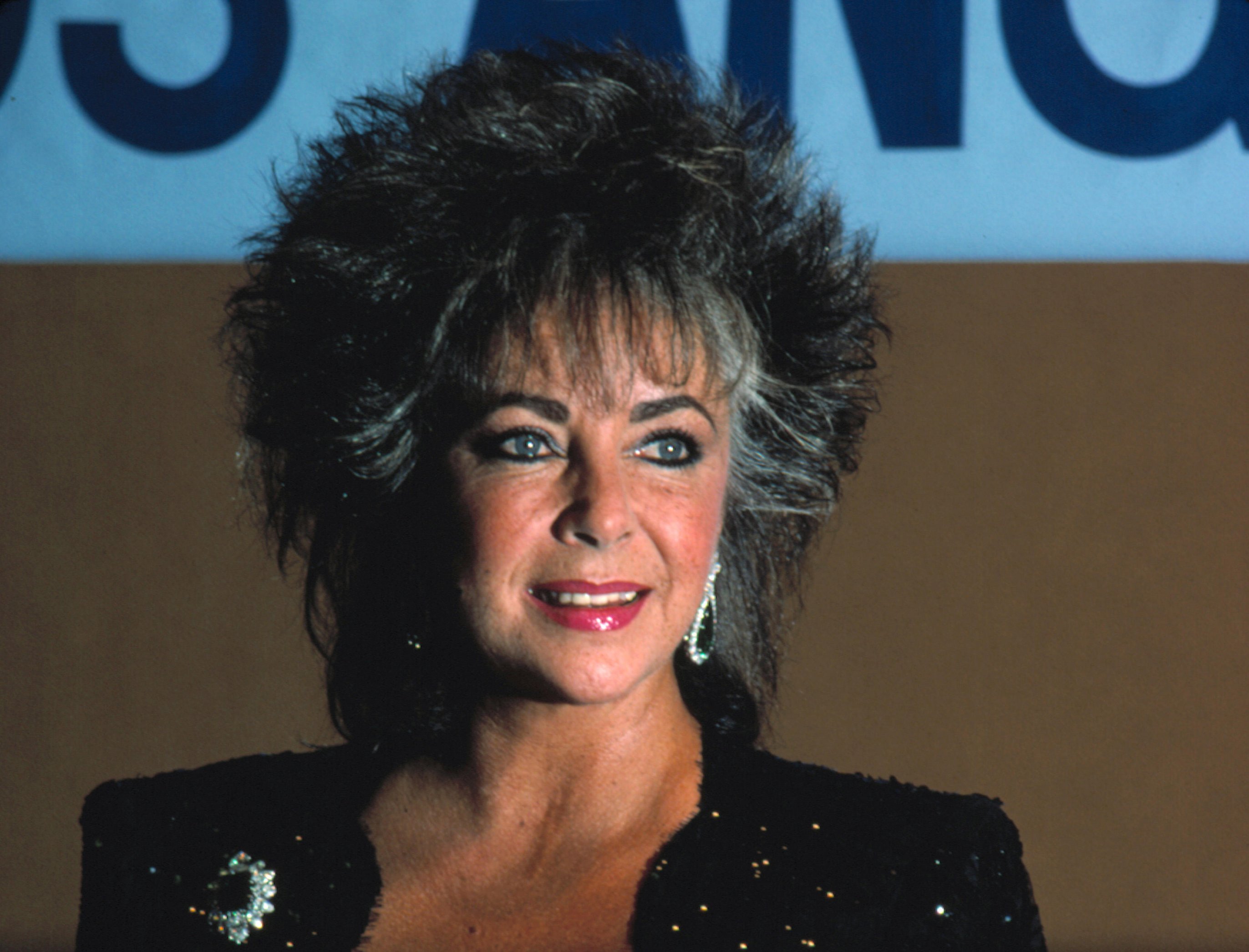
The apathy made Elizabeth furious and indignant. “I remember complaining, ‘Why isn’t anybody doing anything? Why isn’t anyone raising money?’ And it struck me like lightning: ‘Wait a second, I’m not doing anything.’”
But do something she would. As she rolled up her sleeves and got to work, she would also experience the bigotry surrounding the disease firsthand when attempting to recruit longtime friends and peers to lend their support for the dinner. “I have never had so many ‘no’s said to me,” remembered Elizabeth. “They didn’t want to come to the evening, didn’t want to be associated. Some very big names [said no].” “People not only slammed doors in my face and hung up on me, but I received death threats. Something happened to the world, and I think it was massive fear.”
“But when I saw the kind of hypocrisy that was going on, I thought it was terrible,” Elizabeth said. “The industry knew homosexuals were being hit hard, but instead of extending a loving hand and saying, ‘You helped me get to where I am today, without you I wouldn’t have made it,’ they turned their backs.”
She was persistent, and the Commitment to Life dinner eventually attracted high-profile celebrities such as Sammy Davis, Jr., Carol Burnett, Stevie Wonder, Shirley MacLaine, Rod Stewart, George Hamilton, Gina Lollobrigida, Diahann Carroll, and former First Lady Betty Ford, who was honoured at the event. The evening raised a staggering $1.3 million for AIDS Project Los Angeles.
Elizabeth was just getting started.
Laying the Foundation for amfAR
While Elizabeth was hard at work planning the Commitment to Life dinner, she, along with Dr. Michael Gottlieb, APLA’s Bill Misenhimer, and Chen Sam, hit upon the idea of establishing a national AIDS foundation. It would focus on patient care and raise desperately needed research funds.
“We were an unlikely group,” Dr. Gottlieb recalled. “Me, a doctor who’s spent his life in laboratories; Bill Misenhimer, a Xerox executive turned activist who was openly gay; and the greatest living movie star in the world. But that night it all jelled. We were like kids, coconspirators. We sat there saying, ‘We must do something!’”
When Dr. Mathilde Krim, a New York-based research scientist, heard whispers about what they were planning, Krim approached the group about joining forces with her AIDS Medical Foundation.

In September, Elizabeth, Gottlieb, and Krim held a press conference to announce the formation of the National Foundation of AIDS Research, of which Elizabeth was national chairman. Her dear friend and two-time co-star, Rock Hudson, who was dying of AIDS, donated $250,000 to help establish the foundation, which would later become amfAR. Hudson would die of the disease less than two weeks later.
Elizabeth learned that Rock had AIDS several weeks before the rest of the world did, on July 25, 1985. She later recounted her emotional final visit with Rock. “It was like God had taken him into another room and he seemed very at peace, and his memory had sort of channeled itself into the past, and he could remember all kinds of things that tickled him and made him laugh, and we talked about making chocolate martinis and all the things that were fun and wild. . . . He didn’t know that he was dying. God had taken that away from him. He didn’t know.”
It’s a common misconception that Elizabeth’s involvement in the fight against AIDS was due to Rock Hudson. However, his diagnosis certainly inspired her to redouble her efforts and made the cause even more personal. Rock was the first of many of Elizabeth’s loved ones to be touched by AIDS. Others would include her secretary, Roger Wall, and her daughter-in-law, Aileen Getty. “Without the love of Elizabeth Taylor in my life, I would probably be dead—if not physically, most certainly emotionally,” Aileen said. She also shared that Elizabeth’s “instinct to love has given me the power and will to live.”
A Personal War
Elizabeth’s star power was invaluable in the fight against AIDS, especially in those early years. “It was great for the scientists, the people fighting at the lab bench and at the bedside,” said amfAR’s Sally Morrison, who would also work as Elizabeth’s publicist. “It’s very demoralizing work. Then she shows up. It’s very meaningful for them.” Dr. Krim said in 1996 that “She meant a lot to this because she was somebody people knew, people admired, people respected, and she spoke up to the public, directly to the public, and she had more of an impact than any of us could have”.
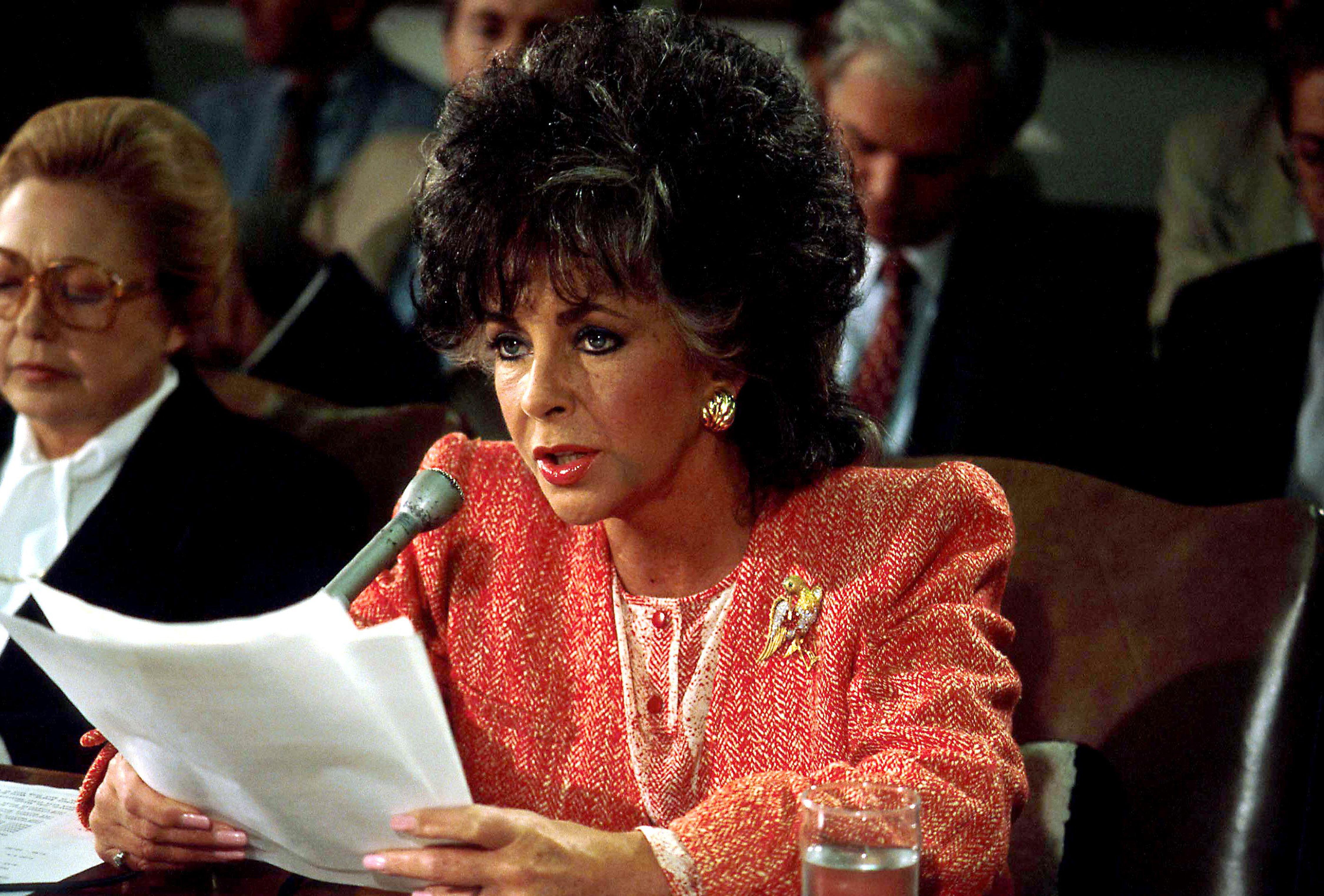
On May 8, 1986, she testified before the US Senate Appropriations Labor and Health Subcommittee in Washington, D.C., desperately appealing to Congress to join the fight. In June 1992, she was back on Capitol Hill, testifying before Congress to plead with Senators to fully fund the Ryan White CARE Act after the United States government failed to spend the almost $1 billion per year it had authorized for the program in 1990. “We need the money, and we will not be silent until that money is found,” she vowed.
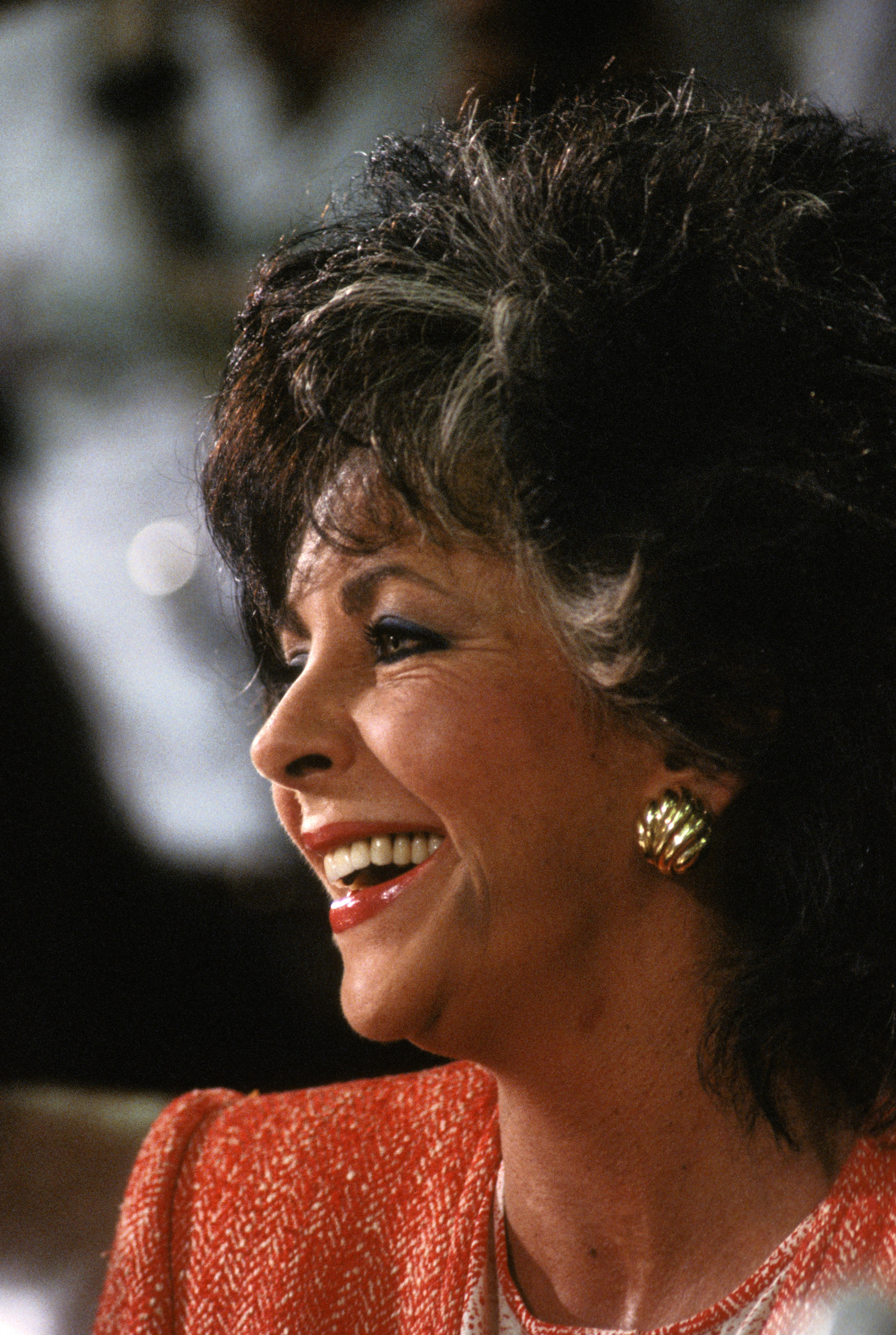
She also convinced President Reagan to be the keynote speaker at an amfAR dinner in 1987—inconceivably, this was only the second time Reagan had actually mentioned AIDS publicly. She did not shy away from speaking truth to power, and she did it in a way only Elizabeth Taylor could. Elizabeth famously made headlines around the world when, at the Eighth International AIDS Conference in Amsterdam in 1991, she said: “I don’t think President Bush is doing anything at all about AIDS. In fact, I’m not even sure if he knows how to spell ‘AIDS.’” Several years later, she was also critical of President Clinton’s handling of the AIDS pandemic.
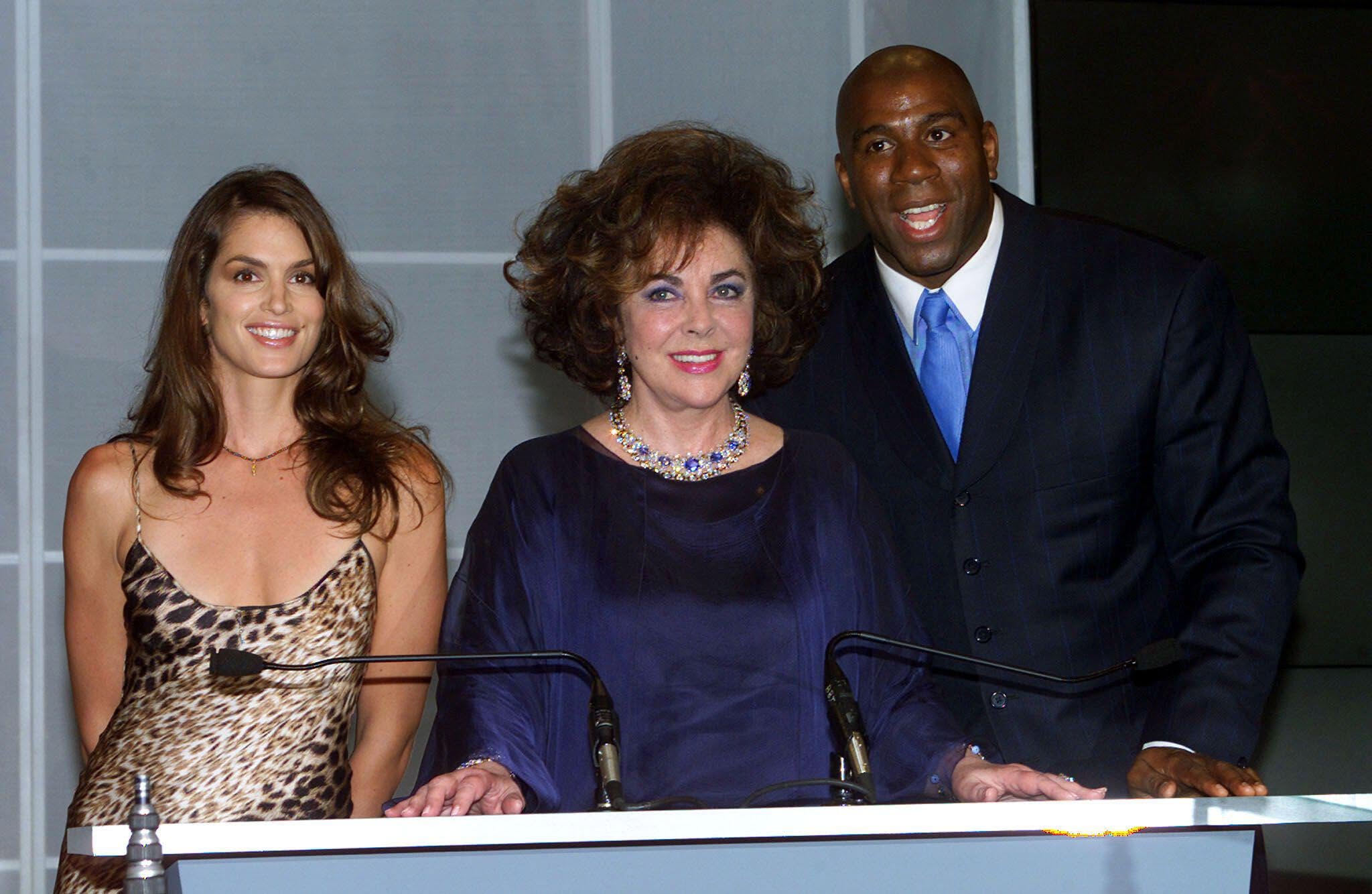
Elizabeth’s fight against AIDS was not limited to just the United States—it was truly global. She travelled the world on her mission of achieving an AIDS-free world, meeting with influential leaders, such as Japanese Prime Minister Yasuhiro Nakasone, and taking centre stage at important fundraisers, where she would coax million-dollar cheques from powerful friends. It was estimated that, with an appearance from Elizabeth, a major fundraising event could pull in ten times what it could hope for without her participation. (Once AIDS fundraising became more commonplace, Elizabeth would not appear at an event that would bring in less than half a million dollars. “You don’t want to take the Elizabeth Taylor mystique, and make it commonplace,” Bill Misenhimer explained.)
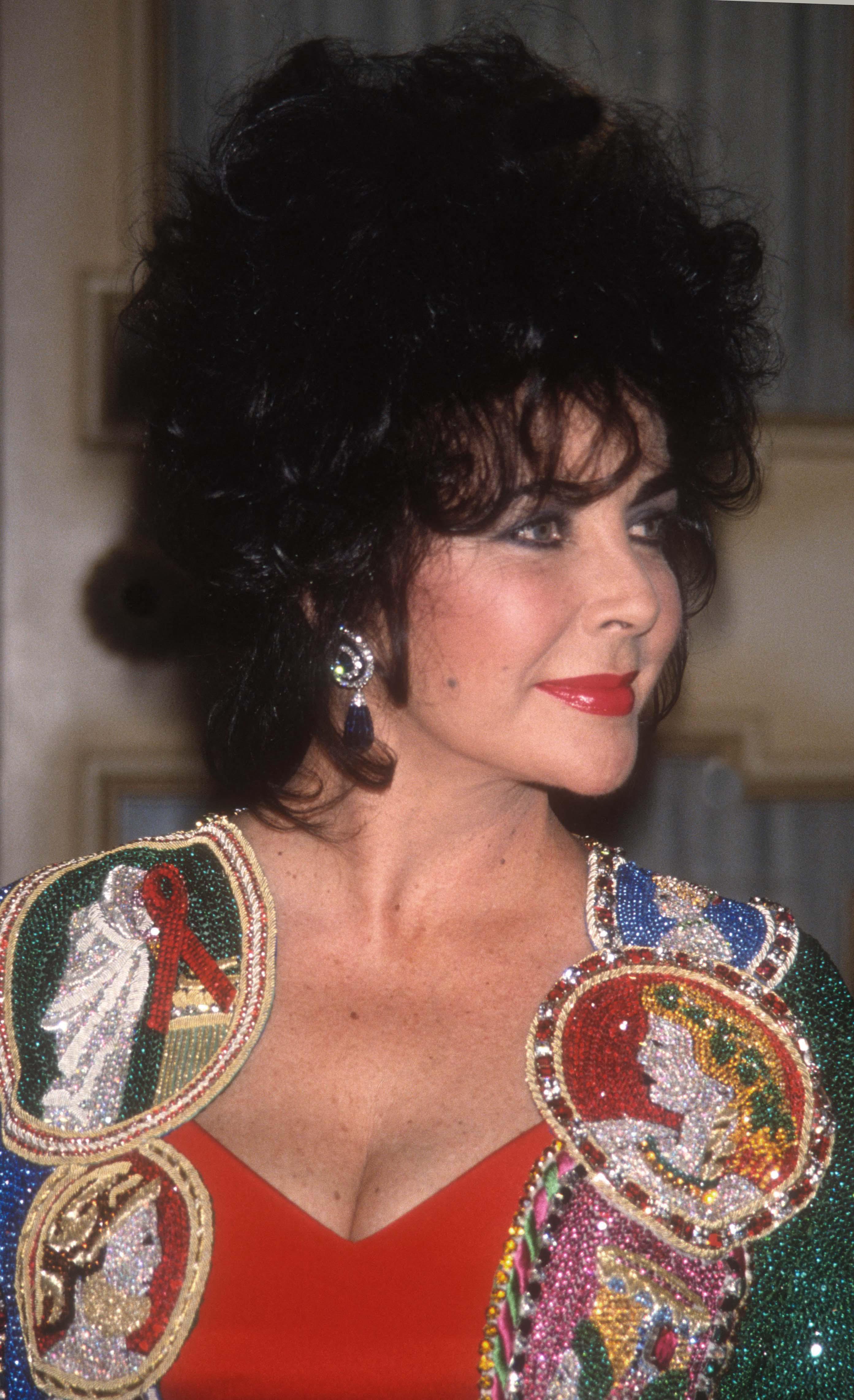
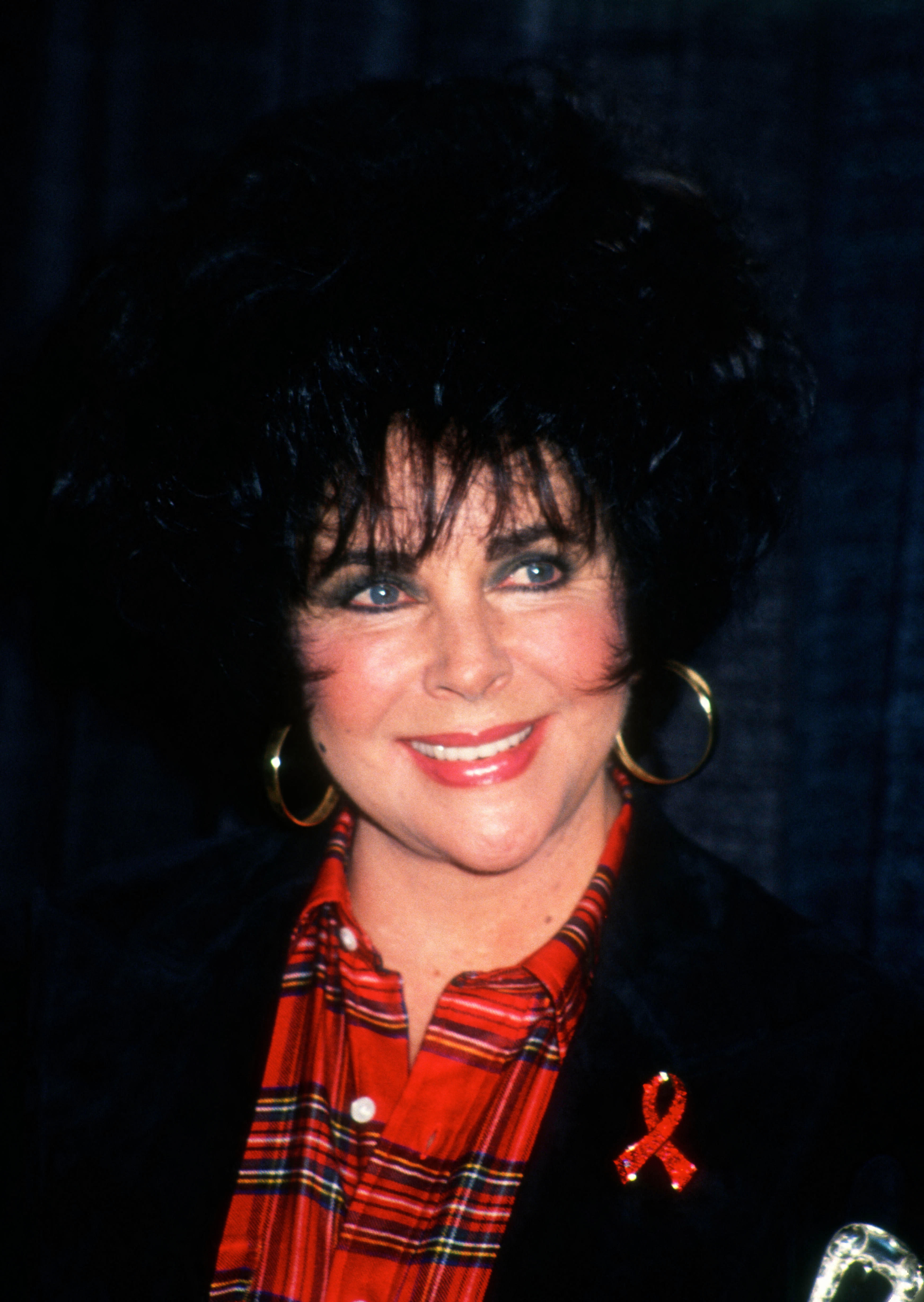
Elizabeth also spoke unflinchingly about avoiding needle sharing and the importance of safe sex, including before 70,000 people cramming London’s Wembley Stadium in April 1992 for The Freddie Mercury Tribute Concert. “It’s our moral responsibility to educate people about safe sex,” she said on another occasion. “People shouldn’t stop having sex—I’d be the last person in the world to advocate that—but safe sex is important.” She also encouraged the public to get tested regularly. “I feel it is important that people should not be afraid to be tested for AIDS. I have an annual physical and have been tested for the disease, and the test results are negative.”
INSERT PHOTO
Elizabeth Taylor AIDS Foundation (ETAF) Is Born
At the heart of Elizabeth’s AIDS activism was always patient care. She made countless unpublicized visits to hospices around the world, where she connected with patients and staff alike. “Right from the beginning she would visit people with AIDS, getting involved with them, talking and listening, making them feel supported and loved,” said Aileen Getty, a tireless AIDS advocate herself. “This was always on her own time, and the press never knew that she was actively working with the people.” “If you go in and actually see the people and say to them, ‘What is it I can do to help you?’ and they tell you—that’s what makes your heart bleed real blood,” Elizabeth said.
“I went to a hospice in the Borghese Gardens in Rome, and I said to the guys—there were no women there—‘What is it you would really like?’ And one beautiful-looking young man said, ‘I would like someone to come in here and just put his arms around me and make me feel like a human being.’”
PHOTO: Elizabeth attends a screening of Captain Planet and the Planeteers at a Los Angeles children’s hospital for children who are HIV positive and their families in October 1992. She made a guest appearance on the animated series as the mother of a high school student with AIDS
Patient care is at the core of The Elizabeth Taylor AIDS Foundation. Although she remained devoted to amfAR, Elizabeth established ETAF in 1991 with proceeds from the $1 million sale of exclusive photos taken at her wedding to Larry Fortensky.
Elizabeth arranged for her trust—and later her estate—to cover The Elizabeth Taylor AIDS Foundation’s operating expenses, so 100% of donations could go directly to its HIV/AIDS programs. ETAF, Elizabeth explained, “researches all the requests. We weed them out, and find out about their overhead. If their overhead is exorbitant, I don’t give them money because I know it’s going into somebody’s pocket. My foundation is for the individual. I want the money to get to the sick who can’t get out of bed”. Caring For Babies With AIDS, the Chinese Academy of Social Sciences, LIFE, and Mother Saradadevi Social Service Society are just a few of the organizations that ETAF has supported since its inception.
The Fight Continues
Elizabeth remained as committed as ever to finding a cure for AIDS, although declining health in the final decades of her life left her feeling frustrated that she couldn’t do more. However, her work always continued behind the scenes even as her public appearances became less frequent. She continued to valiantly appear most years at Macy’s Passport, a fundraiser that was close to her heart—she was its Founding Chair. World AIDS Day 2007 saw Elizabeth return to the stage for the first time in nearly a quarter of a century to perform the play Love Letters alongside James Earl Jones, a benefit that raised over a million dollars for ETAF.
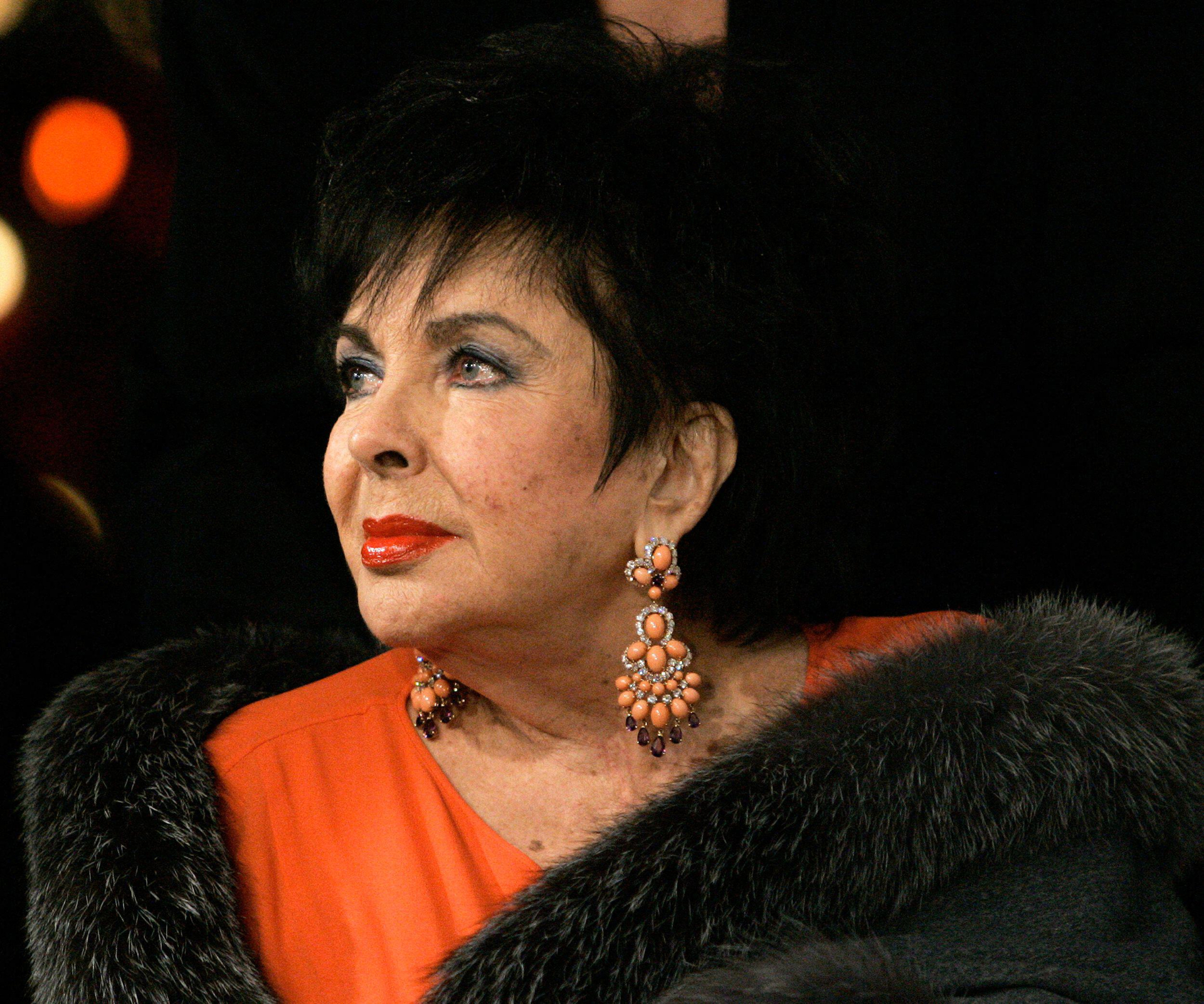
Her frustration over her physical limitations was matched by her indignation over the public’s and politicians’ growing complacency toward AIDS. “It’s still out there,” she reminded readers in an interview in 2006. “It is still a pandemic. It has not slowed down. I know people have forgotten. They take things for granted—especially the young people, between 15 and 24.” “We have a map at amfAR that blackens out areas of the world where AIDS has killed,” she said on another occasion. “If you could see how completely out of control it is in Africa, Asia, and India. It is spreading so rapidly. It’s frightening”.
Carrying the Torch
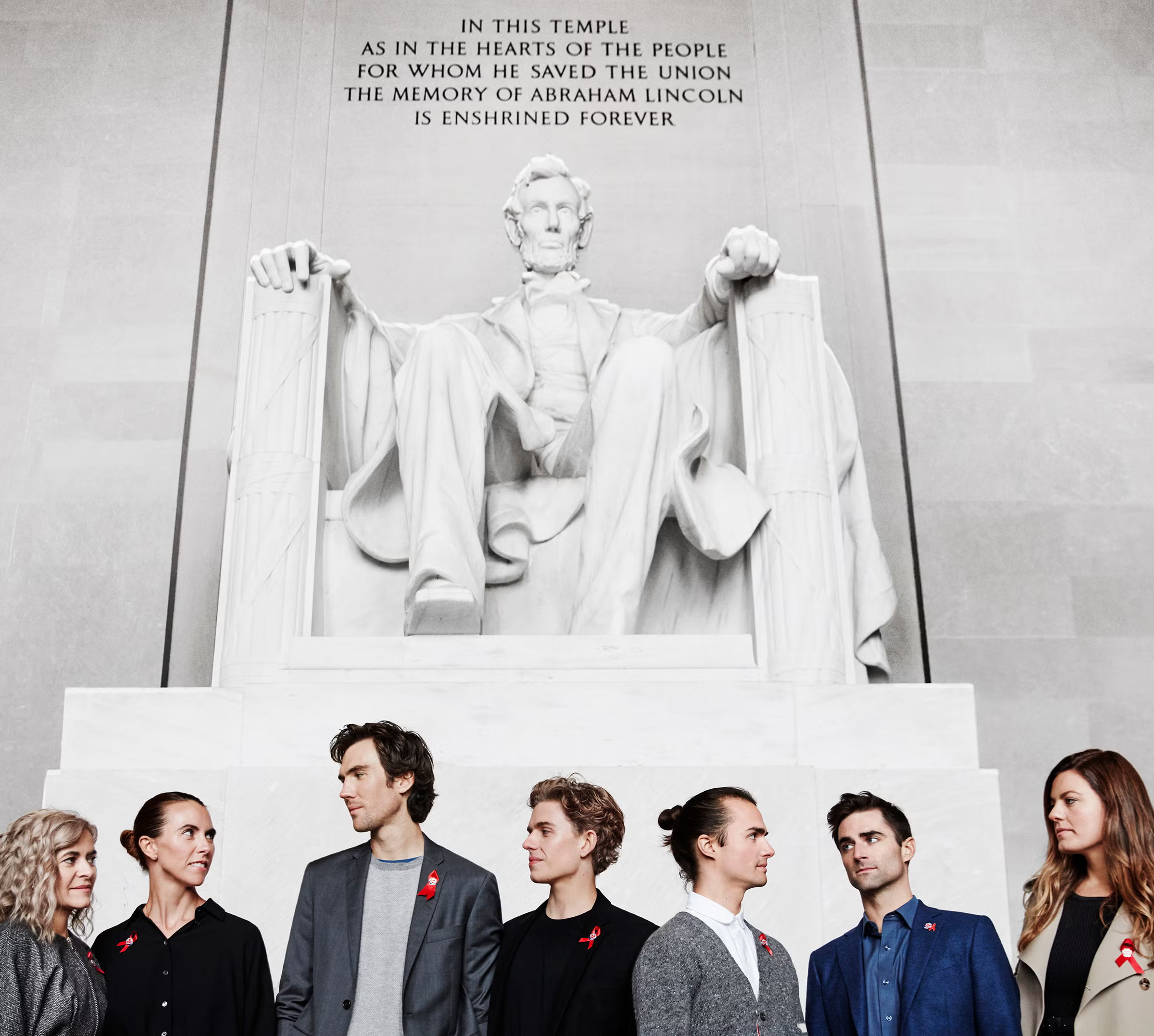
Elizabeth Taylor died in 2011, but her fight continues. At the time of her death, Elizabeth had “raised hundreds of millions of dollars for research and patient care”. Her family, especially her grandchildren and great-grandchildren, have continued her life’s work, and The Elizabeth Taylor AIDS Foundation continues to thrive in its mission to “support direct-service initiatives for people living with HIV.”
By taking a stand when so few were willing and ignoring threats made against her life, Elizabeth Taylor used her platform to save an inestimable number of lives and helped to eradicate the stigma and ignorance surrounding the disease. Her pioneering role in the fight against AIDS was recognized around the globe—from France’s Legion d’Honneur and the Academy of Motion Picture Arts & Sciences’ Jean Hersholt Humanitarian Award, to being invested as a Dame Commander of the Most Excellent Order of the British Empire by Queen Elizabeth II. “I hope with all of my heart that in some way I have made a difference in the lives of people with AIDS,” she said in 2005. “I want that to be my legacy. Better that than for the mole on my cheek.”
If she were here today, Elizabeth would undoubtedly be the first to remind us that the fight is far from over. It’s up to all of us to carry her torch, and it doesn’t cost a dime to make a difference.