Studio: Metro-Goldwyn-Mayer (MGM)
Running time: 187 minutes (roadshow), 166 minutes (theatrical)
Raintree County (1957)
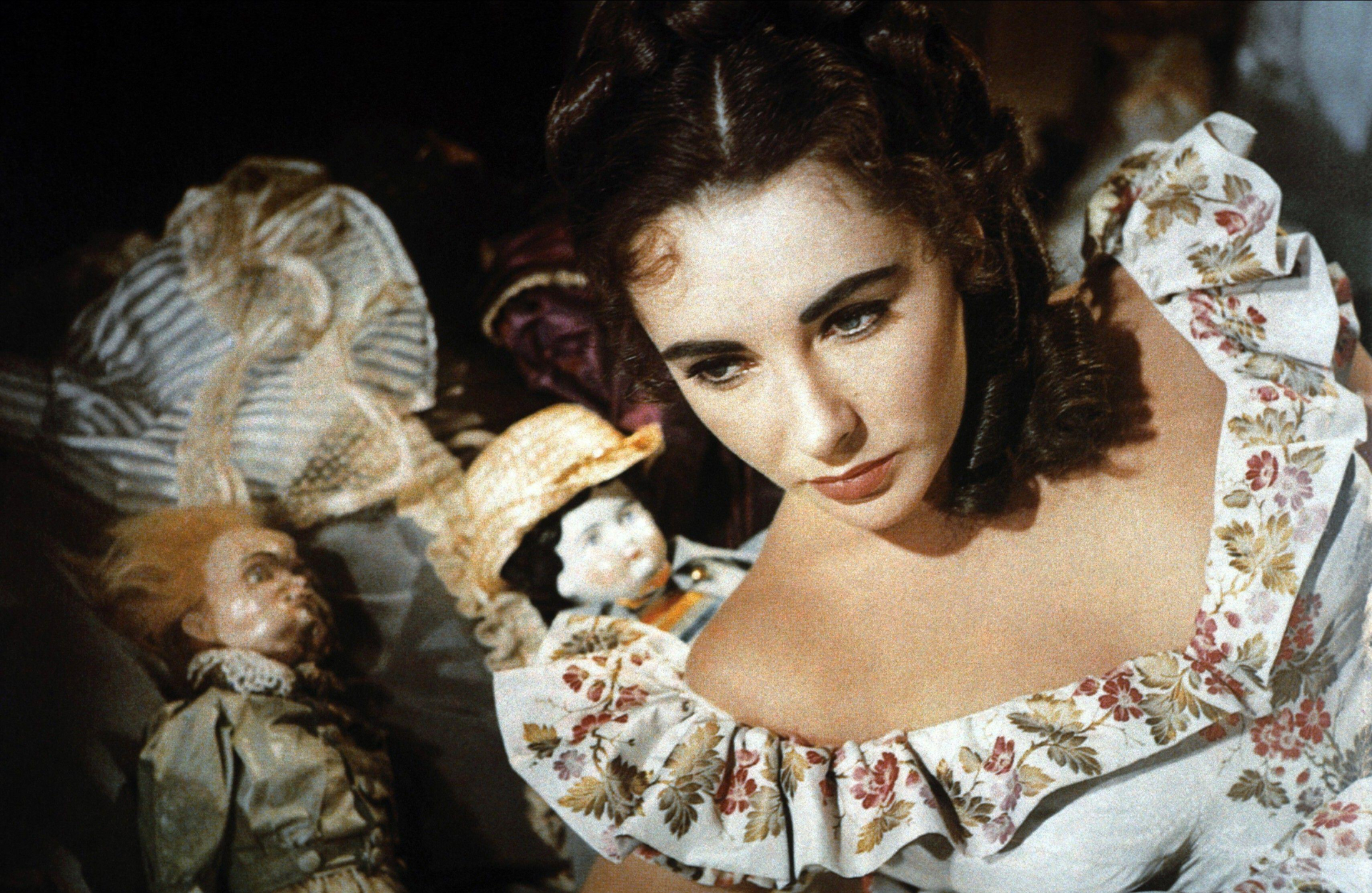
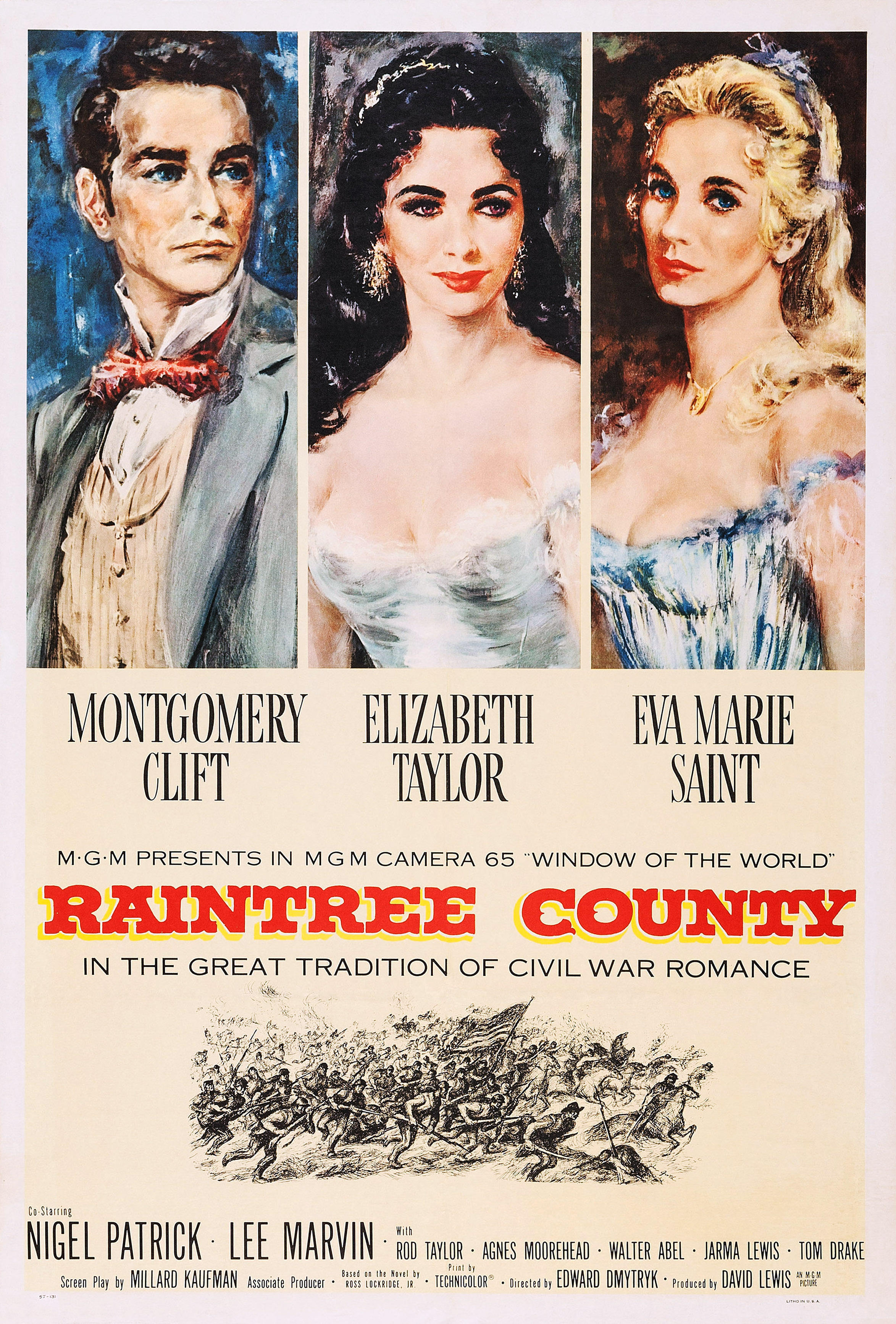
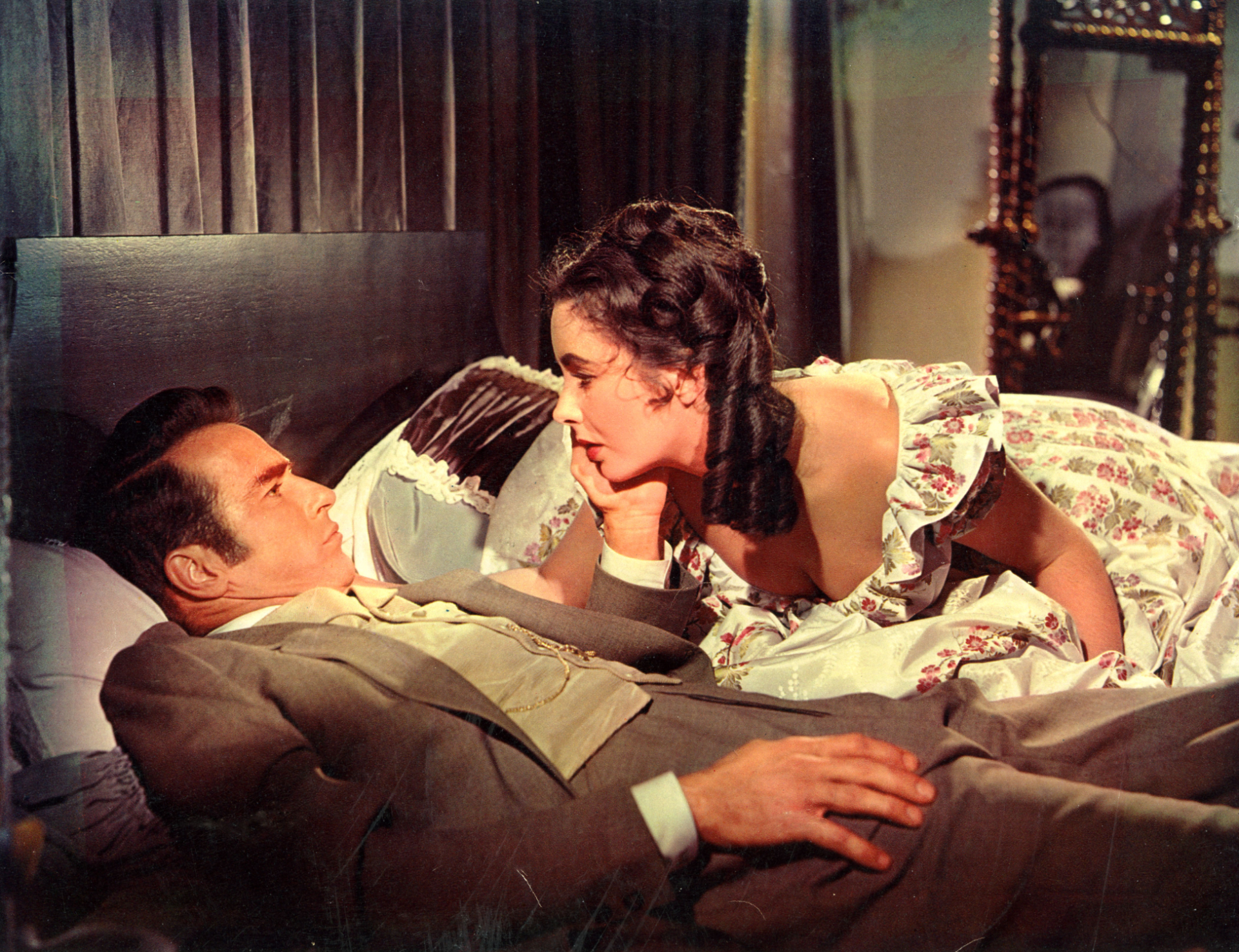
“Elizabeth Taylor and Montgomery Clift are passionate lovers caught up in the tumultuous events surrounding the Civil War in Millard Kaufman’s epic screen adaptation of Ross Lockridge, Jr.’s prize-winning best-seller. Taylor was nominated for a Best Actress Academy Award for her gripping portrayal of a troubled Southern belle. As Susanna Drake, she cannot escape the haunting memory of her mother setting fire to their plantation in retaliation for her father’s affair with a mulatto servant. Equally troubled is idealistic Johnny Shawnessy (Clift), who leaves behind his childhood sweetheart (Eva Marie Saint) in order to marry Susanna. But Susanna becomes more and more obsessed with the belief that she is the illegitimate daughter of her father’s servant, and takes drastic measures to alleviate her anguish. With the whole nation in turmoil around them, Johnny and Susanna desperately search for the true meaning and purpose of their lives. Directed by Edward Dmytryk and filmed in M-G-M’s revolutionary Camera 65, this magnificent picture is ‘of major stature all the way’ (Variety).” [From the laserdisc]
Cast
John Wickliff Shawnessy: Montgomery Clift
Susanna Drake: Elizabeth Taylor
Nell Gaither: Eva Marie Saint
Professor Jerusalem Webster Stiles: Nigel Patrick
Orville “Flash” Perkins: Lee Marvin
Garwood B. Jones: Rod Taylor
Ellen Shawnessy: Agnes Moorehead
T. D. Shawnessy: Walter Abel
Barbara Drake: Jarma Lewis
Bobby Drake: Tom Drake
Ezra Gray: Rhys Williams
Niles Foster: Russell Collins
Southern Officer: DeForrest Kelley
Lydia Gray: Myrna Hansen
Bartender: Oliver Blake
Cousin Sam: John Eldredge
Soona: Isabelle Cooley
Parthenia: Ruth Attaway
Miss Roman: Eileene Stevens
Bessie: Rosalind Hayes
Tom Conway: Don Burnett
Nat Franklin: Michael Dugan
Jesse Gardner: Ralph Vitti (Michael Dante)
Starter: Phil Chambers
Man with Gun: James Griffith
Granpa Peters: Burt Mustin
Madam Gaubert: Dorothy Granger
Blind Man: Owen McGiveney
Party Guest: Charles Watts
Union Lieutenant: Stacey Harris
Jim Shawnessy (age two and a half): Donald Losby
Jim Shawnessy (age four): Mickey Maga
Pantomimist in Blackface: Robert Foulk
Photographer: Jack Daly
Old Negro Man: Bill Walker
Bearded Soldier: Gardner McKay
Crew
Director: Edward Dmytryk
Producer: David Lewis
Screenwriter: Millard Kaufman
Based on the Novel by: Ross Lockridge, Jr.
Cinematographer: Robert Surtees
Art Directors: William A. Horning and Urie McCleary
Set Decorators: Edwin B. Willis and Hugh Hunt
Musical Score: Johnny Green
Songs by Johnny Green and Paul Francis Webster: “Never Till Now” and “The Song of Raintree County” (sung during the credits by Nat King Cole)
Editor: John Dunning
Costumes: Walter Plunkett
Did You Know?
The stars of Raintree County received a warm Kentucky welcome when they arrived in the state for location filming. The Danville High School band struck up “My Old Kentucky Home,” the governor had proclaimed it “Raintree County Day,” and Elizabeth and Monty were made honourary Kentucky Colonels.
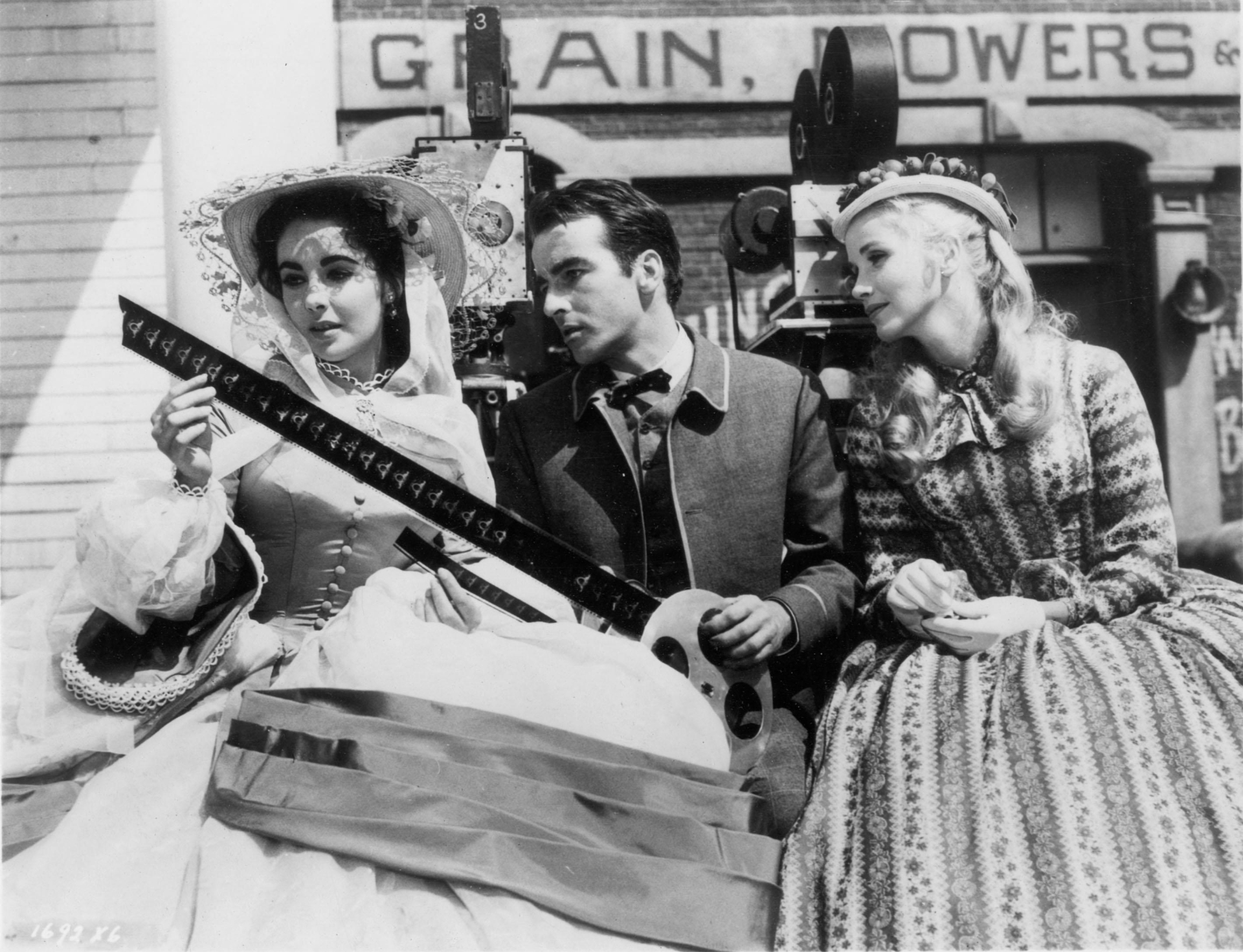
Raintree County was the first film shot in MGM Camera 65, a process that used a mammoth 65mm camera to photograph a very wide, highly resolved image. Despite marketing the film as being the first to utilize the new process that offered a “window of the world,” it was not released as a 65mm film. Ironically, theatres capable of screening MGM Camera 65 were still showing Mike Todd’s enormously popular Around the World in 80 Days (1956), so it was instead issued in 35mm, which cropped information on both sides of the frame. The first film audiences saw in true MGM Camera 65 was Ben-Hur (1959) and, to date, Raintree County has still never been seen in its intended 65mm format.
On May 12, 1956, six weeks into the filming of Raintree County, Montgomery Clift was involved in a near fatal car accident after leaving a dinner party at the home of Elizabeth and Michael Wilding. His “car had crashed into a telephone pole about a block and a half down the hill.” Elizabeth, who rushed to the scene, later recalled that the car “doors were jammed shut, but we could see that Monty’s head looked like it had been mashed right into the steering wheel and the windshield was all broken, the dashboard was all smashed. He was bleeding from the head so much that it looked like his face had been halved.”
After someone prised one of the car doors open, Elizabeth “crawled into the car and lifted him away from the steering wheel. I found that he was breathing and moaning. ... I held his head and he started coming to. You could hardly see his face. It was like pulp. He was suffering terribly from shock, but he was absolutely lucid. There was a tooth hanging on his lip by a few shreds of flesh, and he asked me to pull it off because it was cutting his tongue.”
“Elizabeth prevented the photographers from taking Monty’s picture by the foulest language I have ever heard,” said Rock Hudson, who was also a guest at Elizabeth’s home that evening and was on the scene of the accident. “She shocked them out of taking it.” Finally, after 45 minutes, the ambulance arrived. Elizabeth rode with Monty to the hospital and, when they finally arrived, she remembered that “his head was so swollen that it was almost as wide as his shoulders. His eyes by then had disappeared. His cheeks were level with his nose. The whole thing was like a giant red soccer ball.”
It was discovered that Monty’s “jaw had been broken in four places, his nose in two places, and he was badly cut around the eyes. And his upper lip—it was like a spoon had gouged a great big hunk out of his mouth and teeth.”
Elizabeth threatened to quit the film (and risk being put on suspension) if MGM refused to wait for Monty to fully recover. The studio agreed, and filming on Raintree County wouldn’t resume until two and a half months after the accident.
Elizabeth and Mike Todd’s love flourished long distance over the telephone while she was on location for Raintree County.
“Over those five weeks of phone calls, Mike Todd and I really came to know one another,” Elizabeth explained. “I had never in all my life talked as I did with him. There was nothing we did not discuss—ourselves, Broadway, Hollywood, food, people, travel, our likes and dislikes, sex, everything. Mike thought he was hard, but as I listened to him, I knew that I had never met anyone with such integrity, honesty, and feeling.”
Mike whisked Elizabeth away during a break in shooting. She admitted in 1966 that she was nervous about their in person reunion, but any anxiety melted away immediately upon seeing Mike. “He was waiting with his arms open, and I flew into [them], and it was like I had been there always.” They became engaged on that trip, and the rest, as they say, is history.
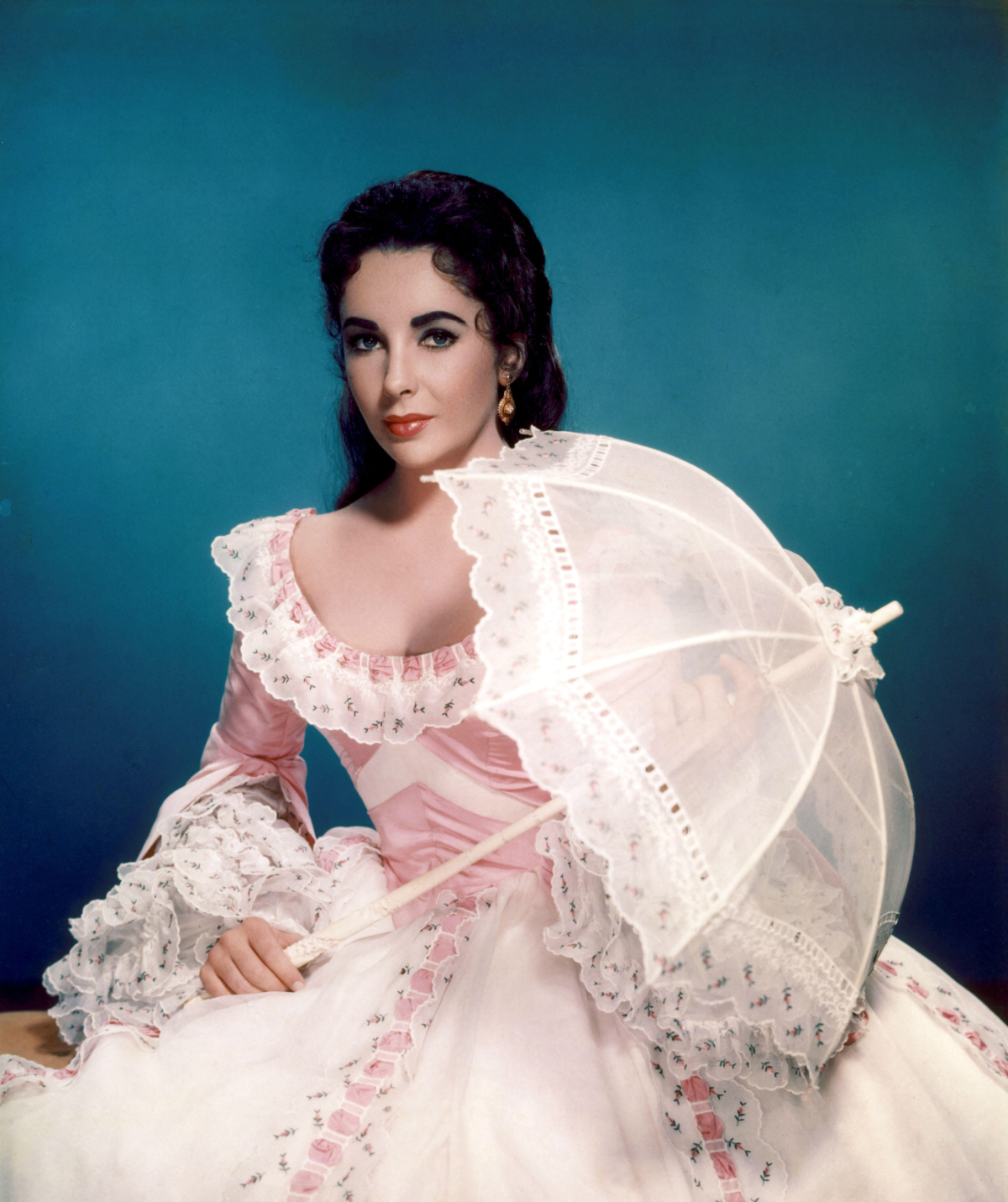
Legendary costume designer Walter Plunkett (Gone with the Wind) strove for authenticity with his Civil War-era costumes, using fabrics faithful to the period, hoop skirts, and camisoles. Elizabeth found it difficult to breathe while laced into them—especially as the lighting could make the temperature increase as much as fifteen degrees—and on one occasion even fainted. Plunkett’s work on the film garnered him an Academy Award nomination. Elizabeth had previously worn his costumes in Little Women (1949), another MGM film set against the backdrop of the American Civil War.
The cost of Raintree County swelled to $5.3 million, making it not only MGM’s costliest production up to that point, but also the most expensive film made entirely in the United States.
Elizabeth earned the first of four consecutive Best Actress Oscar nominations (she would receive a total of five) for her performance as the tempestuous Southern belle Susannah Drake in Raintree County. Tragically, her husband, Mike Todd, died a mere four days before the Academy Awards were due to be held. Naturally, Elizabeth was inconsolable and unable to attend the ceremony. Joanne Woodward took home the prize that year for The Three Faces of Eve. Although immersed in grief, Elizabeth sent Joanne a congratulatory bouquet of white orchids accompanied by a note that read: “I’m so happy and pleased for you, Love, Elizabeth Todd — and Mike, too.”