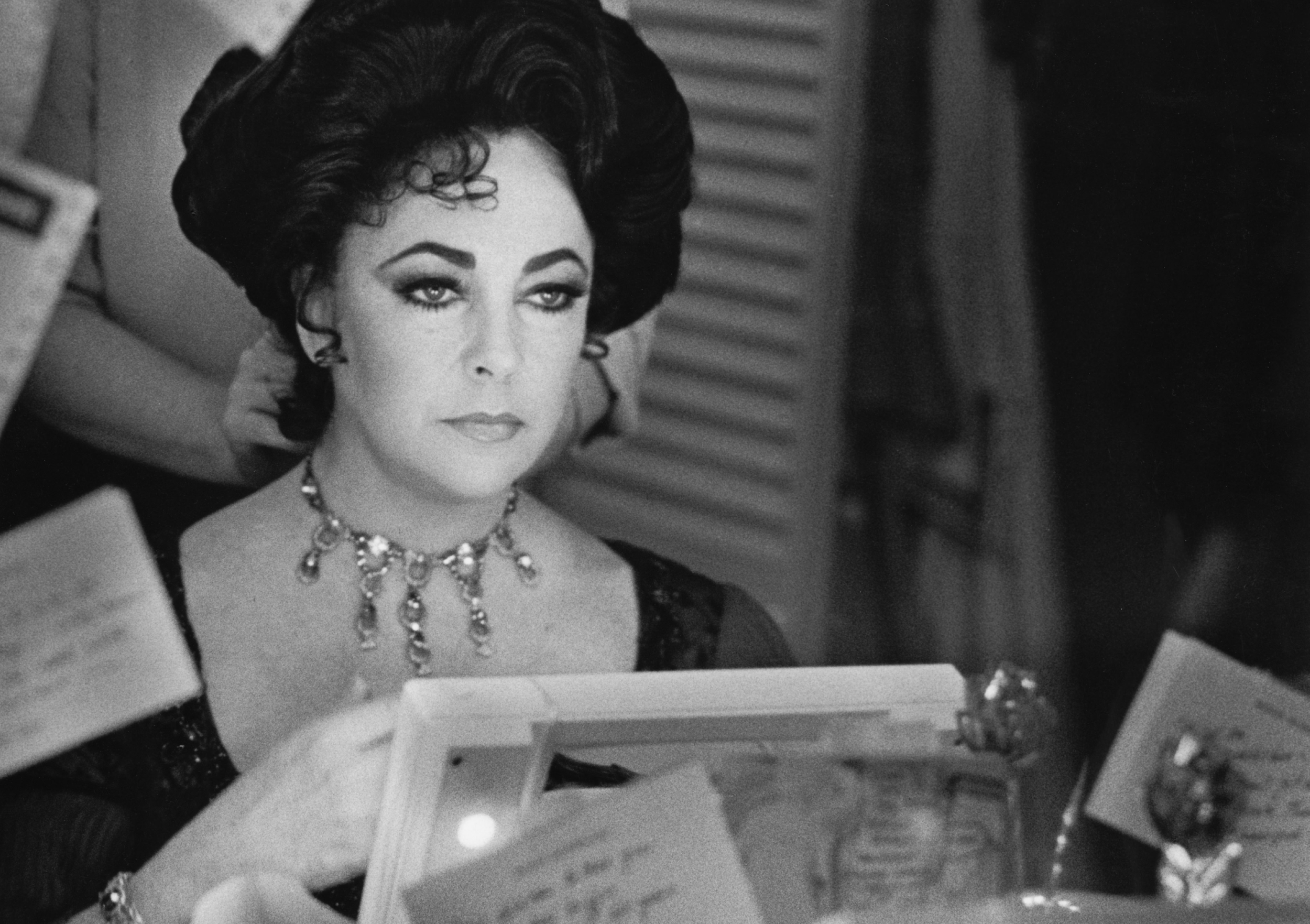
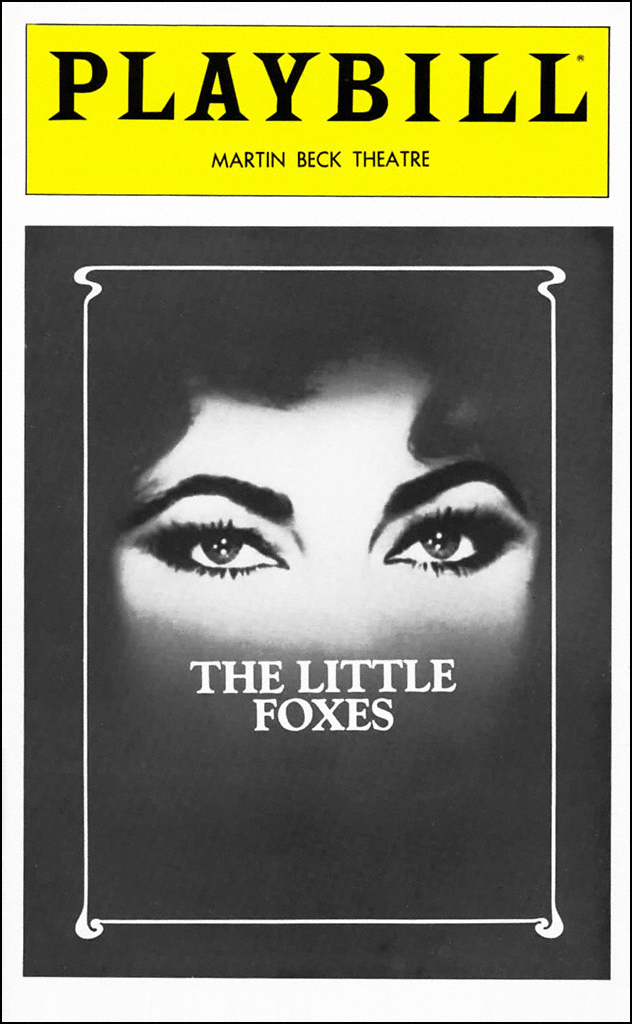
Zev Buffman
with Donald C. Carter and Jon Cutler
presents
ELIZABETH TAYLOR
in
THE LITTLE FOXES
The Little Foxes (1981-82)
“Picture a charming home in the South. Into this peaceful scene put the prosperous, despotic Hubbard family — Ben, possessive and scheming; Oscar, cruel and arrogant; Ben’s dupe, Leo, weak and unprincipled; Regina, wickedly clever — each trying to outwit the other. In contrast, meet lonely intimidated Birdie, whom Oscar wed for her father’s cotton fields; wistful Alexandria, Regina’s daughter; and Horace, ailing husband of Regina, between whom a breach has existed for years. The conflict in these lives has been caused by Ben’s ambition to erect a cotton mill. The brothers still lack $75,000 to complete the transaction. This, they hope, will come from Horace, who has been in a hospital with a heart ailment. Horace is beset by his relatives the first hour of his homecoming, but refuses to commit himself. Desperate, Leo and his father, Oscar, plan for Leo to take $80,000 worth of bonds from Horace’s safe-deposit box. However, knowing that he is to be short-lived, Horace has his box brought to him. Discovering the theft, he informs his wife that he has willed the bonds to her. He promises to say nothing about the left calling it a loan. Cruelly, Regina recalls their unhappy married life, causing Horace to be stricken with a severe heart attack. Regina refuses to get his medicine upstairs, hoping that the effort of climbing may prove fatal. Horace collapses. Then Regina blackmails her brothers into giving her 75% of the business instead of their planned 33 1/3%, or she will reveal their theft. We feel, however, that the crafty Ben holds the trump card by his parting remark, ‘What was a man in a wheelchair doing on a staircase?’” [From the Dramatists Play Service, Inc. edition of the play]
Cast
Broadway Cast
(in order of appearance)
Addie NOVELLA NELSON
Cal JOE SENECA
Birdie Hubbard MAUREEN STAPLETON
Oscar Hubbard JOE PONAZECKI
Leo Hubbard DENNIS CHRISTOPHER
Regina Giddens ELIZABETH TAYLOR
William Marshall HUMBER ALLEN ASTREDO
Benjamin Hubbard ANTHONY ZERBE
Alexandra Giddens ANN TALMAN
Horace Giddens TOM ALDREDGE
Standby for Miss Taylor and Miss Stapleton—Carol Teitel.
Understudies for Horace, Oscar, and William Marshall—Conrad L. Osborne; Leo — William Youmans; Addie—Louise Stubbs; Cal—Hugh L. Hurd.
Alexandra — WENDY ROSENBERG.
West End Cast
(in order of appearance)
Addie NOVELLA NELSON
Cal HUGH L. HURD
Birdie Hubbard SADA THOMPSON
Oscar Hubbard NICOLAS COSTER
Leo Hubbard WILLIAM YOUMANS
Regina Giddens ELIZABETH TAYLOR
William Marshall HUMBERT ALLEN ASTREDO
Benjamin Hubbard ROBERT LANSING
Alexandra Giddens ANN TALMAN
Horace Giddens J.D. CANNON
Crew
Settings by Andrew Jackness
Costumes by Florence Klotz
Lighting by Paul Gallo
General Management Theatre Now, Inc.
Hair Styles by Patrik D. Moreton
Casting by Julie Hughes and Barry Moss
Directed by Austin Pendleton
Synopsis of Scenes
The scene of the play is the living room of the Giddens house, in a small town in the South.
ACT ONE
The Spring of 1900, evening
ACT TWO
A week later, early morning
ACT THREE
Two weeks later, late afternoon
Tour Dates
Parker Playhouse, Fort Lauderdale (February 27, 1981-?)
Eisenhower Theater, Washington (March 1981-?; 47 shows)
Martin Beck Theater, New York (May 7, 1981-September 6, 1981; 123 sold out performances)
Saenger Theatre, New Orleans (September 8, 1981-September 1981)
Ahmanson Theater, Los Angeles (September 29, 1981-December 5, 1981)
Victoria Palace Theater, London (First preview: March 5, Opening: March 11, 1982-?; sixteen weeks)
About the Production
“I always planned to do a play at some point in my career,” Elizabeth Taylor said. “Did I think about the risk? For about half an hour. I don’t expect to fail. People pay their money and I have a responsibility to give them their money’s worth.”
Although Elizabeth had performed in World Enough and Time (1964), a charity poetry reading, and in a non-speaking role in Dr. Faustus (1966), both alongside Richard Burton, she didn’t make her serious stage debut until The Little Foxes in 1981.
Elizabeth met the man who would help her fulfill her ambition of acting onstage by happenstance. She was introduced to producer Zev Buffman while attending a performance of his production of Brigadoon at the National Theatre in Washington, D.C. She told Buffman that she had always wanted to act on stage. “We talked about the theater in general,” he recalled, “and then I popped the question—would she think about doing a play?—and she said yes. The grain of the idea was pretty well decided upon before the evening was over.”
But it was more than just a professional aspiration for Elizabeth. Challenging herself in this way was, at this stage in her life, when her self-esteem and self-worth were at their lowest ebb, something of a lifeline. “I decided I really wanted to live and I had to change myself,” she explained. “I thought the most challenging, difficult thing I could do would be to go on Broadway where I would have to whip my brain into shape and I’d have to whip myself into shape physically. And it was. It was the biggest challenge in the world. And I loved it.”
Selecting the Ideal Vehicle
When word got out that Elizabeth would be making her serious stage debut, rumours swirled that she would reprise—but this time on stage—her Academy Award-winning turn as Martha in Who’s Afraid of Virginia Woolf? (1966). Commenting on the prospect of her reprising Martha, Elizabeth’s husband, John Warner, said: “She already did the movie, and excellence is achieved only once.” Elizabeth agreed. “People always remember glowingly things you’ve done in the past, so why should I compete with myself?” Besides, she added, “The challenge of doing some thing new is more interesting.”
Elizabeth, alongside a group of actors, read through various properties, including Tennessee Williams’s Sweet Bird of Youth, William Goldman’s The Lion in Winter, Noël Coward’s Hay Fever, and Lillian Hellman’s The Little Foxes. The latter two plays emerged as the most serious contenders, with The Little Foxes ultimately chosen as the ideal vehicle.
That out of the way, the next hurdle would be convincing the play’s author, Lillian Hellman. The redoubtable Hellman had been notoriously choosy about approving actresses to take on her Regina in The Little Foxes—it had only been revived once on Broadway since its original 1939 production.
But, “Elizabeth,” the playwright said, “is the right person at the right age at the right time.”
In the Rehearsal Room
To helm her serious stage debut, Elizabeth hoped for either her Who’s Afraid of Virginia Woolf? director Mike Nichols (who had previously directed the lone Broadway revival of The Little Foxes and clearly knew the property well) or the Tony Award-winning director Joseph Hardy, who she worked with a few years earlier on the TV film, Return Engagement (1978). When both proved unavailable, Austin Pendleton, who had acted in Nichols’s Little Foxes production, was chosen.
Six weeks of rehearsals began at the John Golden Theatre in New York on January 29. Pendleton believed that “all of her best work in film was in parts that had been conceived for the theater.” He had an inspired idea for how to approach the material: “What if The Little Foxes became about appetite—too healthy, in this case, but still appetite—that turned into greed, before our eyes, as a result of what happens in the play? What if Regina started out as a hearty, hedonistic lady, not unlike what we all think of Elizabeth Taylor as being. . . .”
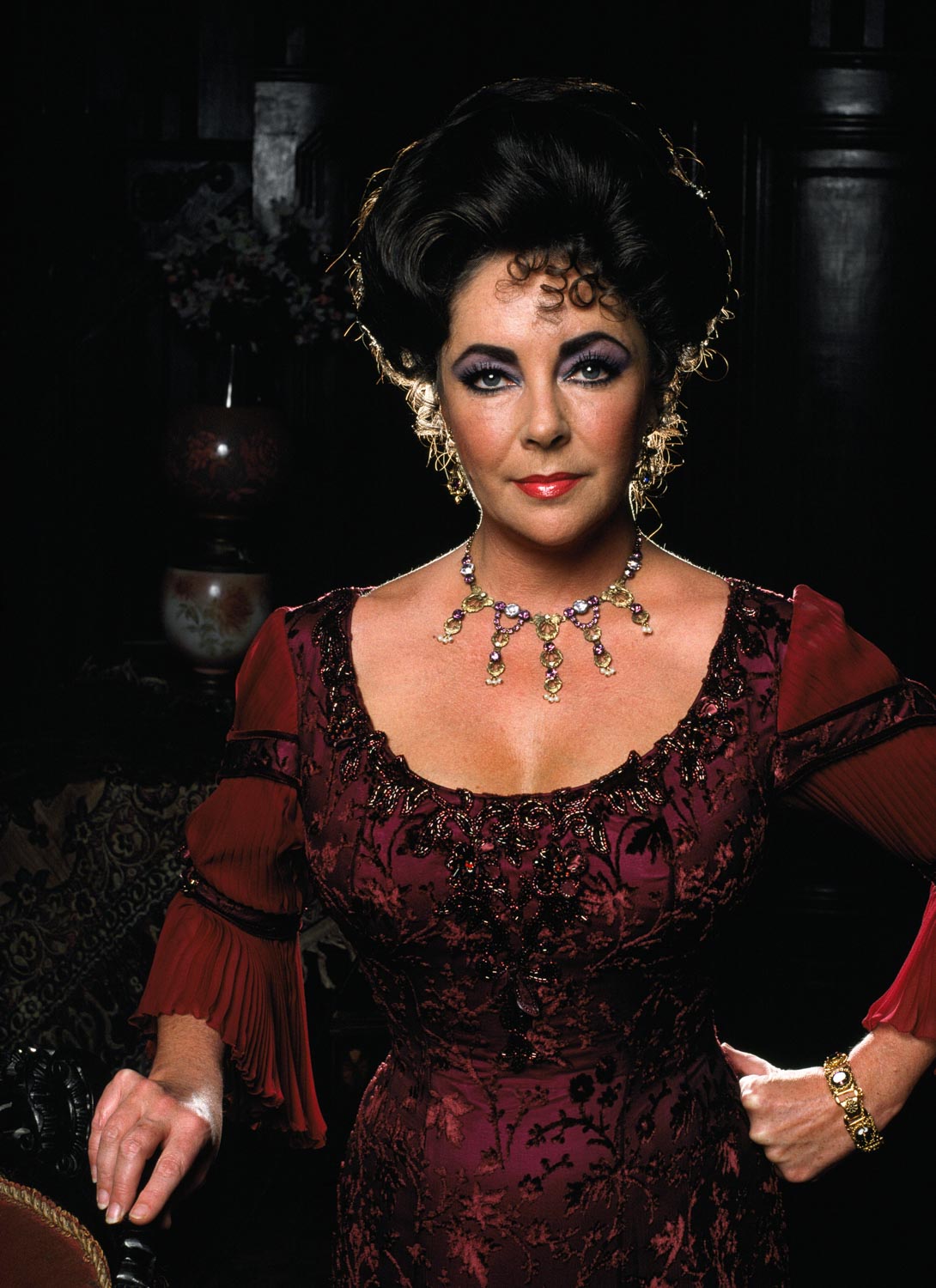
The role of the avaricious Regina Giddens had been brought to life on stage and on screen by two formidable actresses. Tallulah Bankhead originated the part on Broadway in 1939, and, two years later, Bette Davis starred in William Wyler’s screen adaptation. “I’m not trying to compete with other Reginas before me,” Elizabeth explained. “I want to give her a new dimension. She’s a woman who’s been pushed in a corner. She’s a killer—but she’s saying, ‘Sorry, fellas, you put me in this position.’”
Elizabeth would make the role all her own. “Regina is not just a total icicle and avaricious bitch, as she is usually portrayed,” she said. “I’ve found so many facets in her. There is also a certain vulnerability in Regina.” Elizabeth would play her more sympathetically, and in that approach she had a fan in playwright Lillian Hellman. “I like [Elizabeth’s] approach. Regina has frequently been played too much as a villainess.”
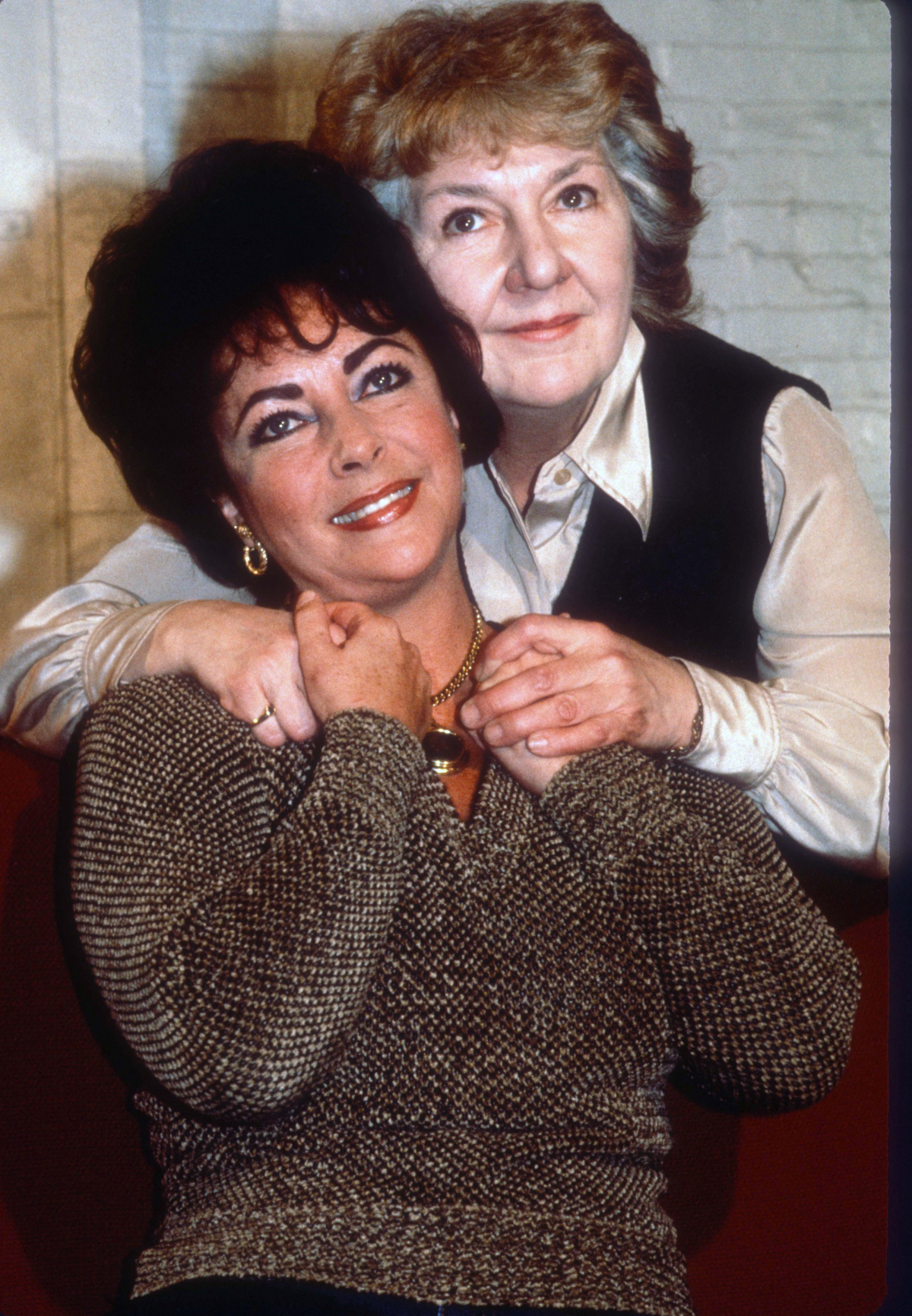
As the weeks of rehearsal wore on, said Pendleton, Elizabeth’s Regina took shape. “She kept growing in the role, growing into the ensemble”. She loved being part of a company of stage actors and grew especially close to Maureen Stapleton, who played Birdie. (The two would frequently dine together after a performance.)
Florida and Washington Tryouts
The date chosen for the play’s opening at Fort Lauderdale, Florida’s Parker Playhouse was an auspicious one—February 27, 1981, Elizabeth’s 49th birthday. The event was huge news all over the United States. “Elizabeth is the hottest draw I’ve ever seen in my twenty-two years as a producer,” Zev Buffman said. But, for Elizabeth, it had great significance, both personally and professionally. “I have a sense of accomplishment,” she said, “a feeling of doing something useful in my life—and the applause is wonderful.”
After three weeks at the Parker Playhouse, the company moved to the Kennedy Center’s Eisenhower Theater in Washington, D.C.—President Reagan and First Lady Nancy Reagan were in the Presidential box on opening night—for forty-seven performances over six weeks before transferring to Broadway.
The Toast of Broadway and Beyond
Broadway wasn’t always definite. However, when it was announced that The Little Foxes would play the Martin Beck Theater, a million dollars in ticket sales were logged a week after the Broadway run went on sale. And, just as she had when she became the world’s highest paid film star decades earlier for Cleopatra, Elizabeth’s salary would again shatter records. Her $50,000 a week for Foxes made her the highest-paid stage actress, and she would earn in excess of $1.5 million over nine months in the production.
Asked about the potentially harsh Broadway critics, Elizabeth said: “I’ve been gambling all my life. I’ve been rapped enough by movie critics and I can take it. If you’re rapped by theater critics, what’s the difference?”
There was no need to worry; both theatregoers and the critics alike were enchanted. The Little Foxes opened to glowing reviews on May 7, 1981, and Elizabeth became the toast of Broadway. “I was overwhelmed with waves of love which nourished me long after the curtain fell,” she said. Her performance as the rapacious Regina earned her nominations for a Tony Award for Best Performance by a Leading Actress in a Play and the Drama Desk Award for Outstanding Actress in a Play, and she took home a Special Outer Critics Circle Award for her debut.
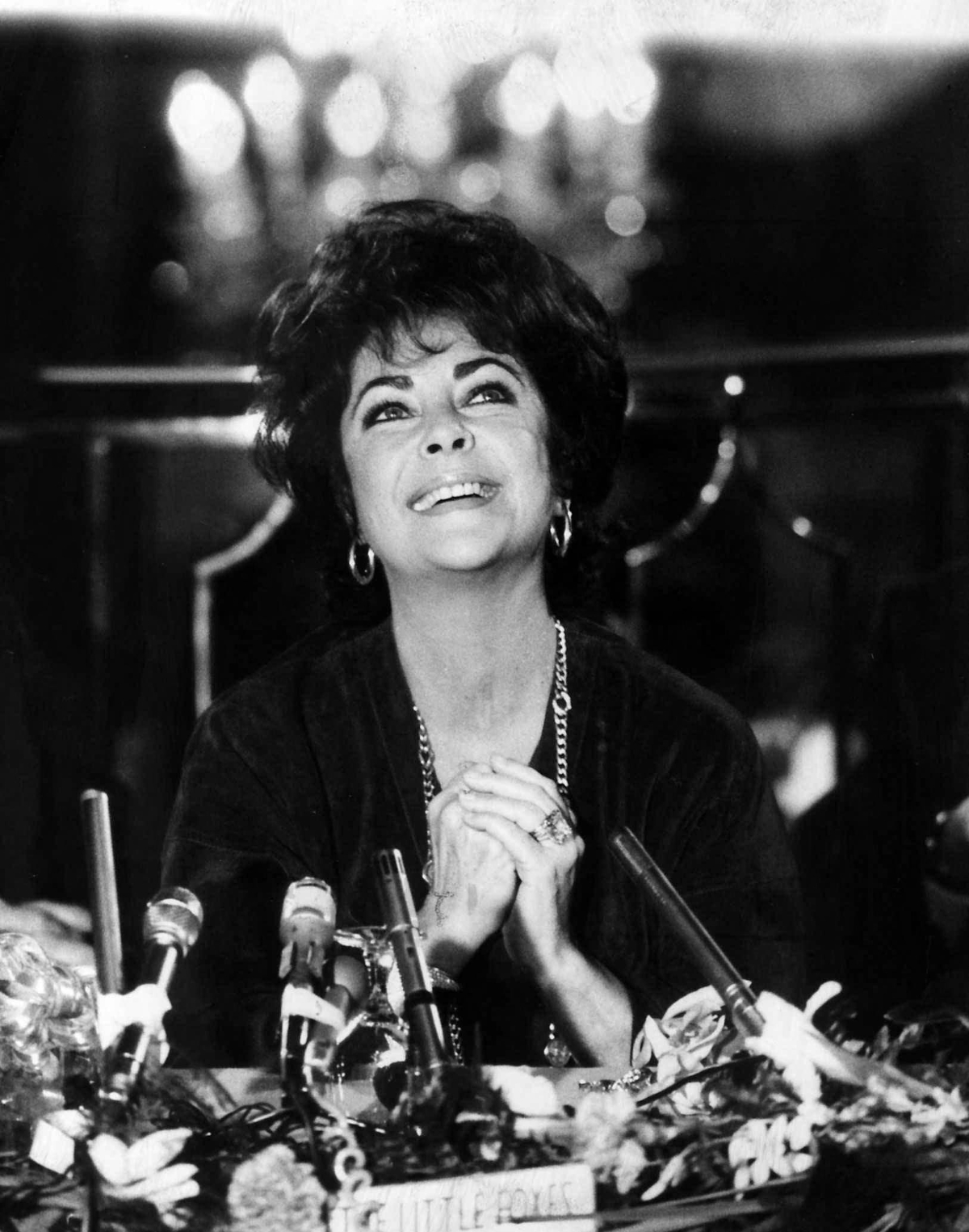
After 123 sold-out performances on Broadway, The Little Foxes would again hit the road, with stops in New Orleans and Los Angeles, before transferring to London’s West End for a sixteen week engagement at the Victoria Palace Theatre, beginning in March 1982. “She really does desperately want to have a success here,” Buffman said. “She feels it is her first home.” Elizabeth would celebrate her opening night in the city of her birth with her beloved mother, Sara. It was a full circle moment for mother and daughter, as Sara, who was instrumental in Elizabeth’s success as an actress, had herself triumphed on Broadway (1922-1923) and in the West End (1924) in Channing Pollock’s The Fool.
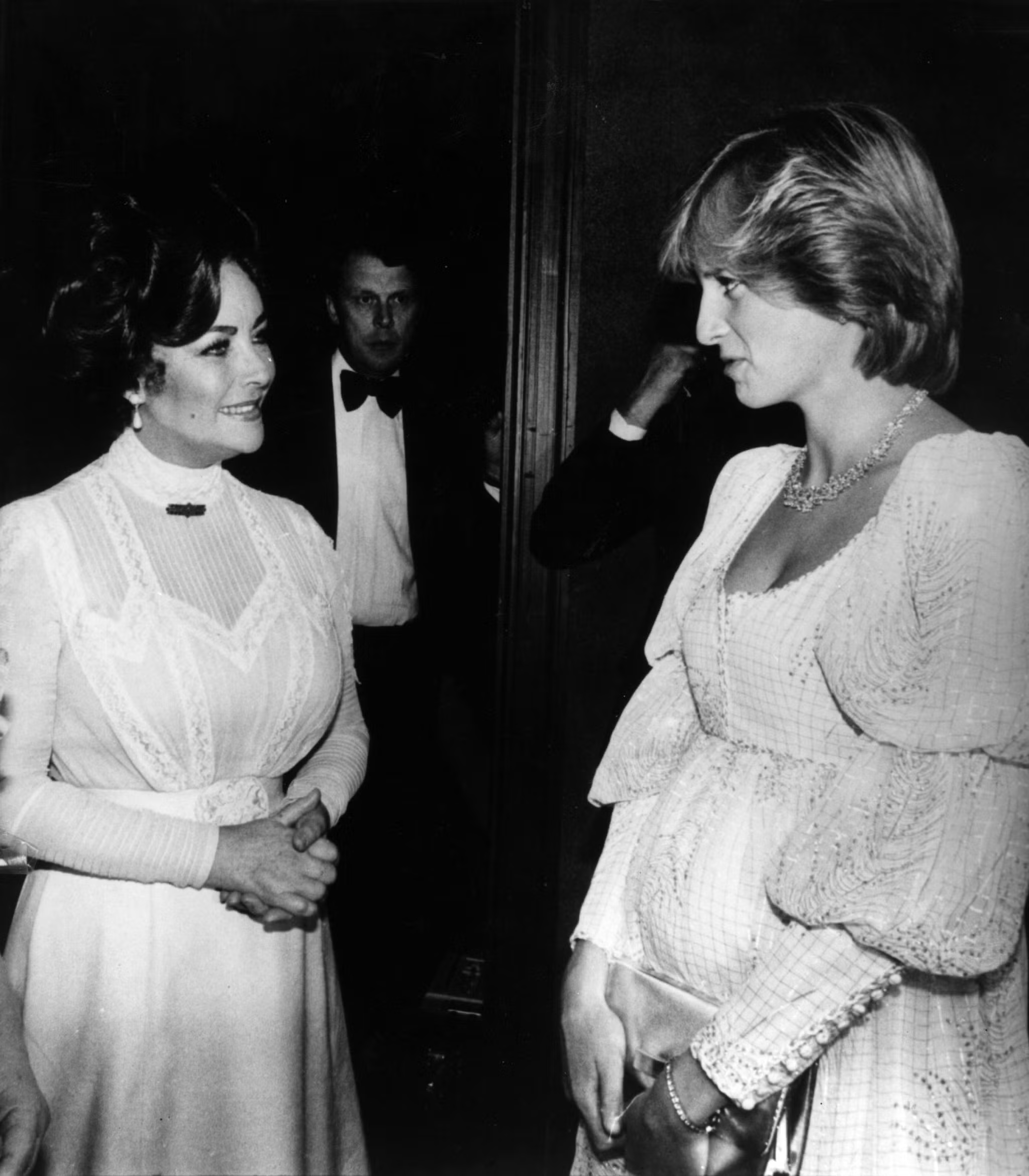
Days earlier, Princess Diana, who was then pregnant with Prince William, visited Elizabeth backstage following a charity performance of the play on March 9, 1982. She was one of many famous faces who came out to see Elizabeth’s theatrical debut over the nine months she played Regina. Others included Natalie Wood; Lauren Bacall; Princess Grace and Rainier III, Prince of Monaco; Liza Minnelli; Shirley MacLaine; Ann Miller; Joan Fontaine; Halston; and Bill Blass.
The Little Foxes was, Elizabeth said, “the biggest challenge in the world. And I loved it.”